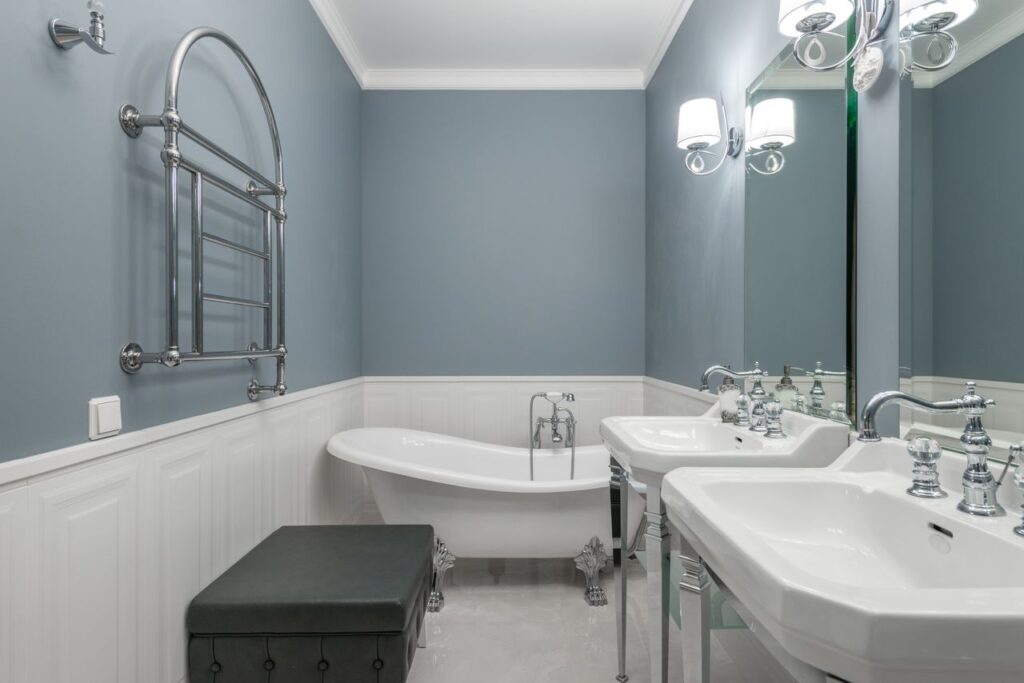
Picking a paint sheen for a steamy, splash-prone room is a bigger decision than picking the color. Using semi gloss for bathroom walls is a long-standing recommendation because its tighter, less porous finish stands up to moisture, resists mildew, and wipes clean easily. But that durability comes with one honest trade-off: the shinier the sheen, the more it highlights every dent, patch, and imperfection in your walls. Knowing how semi-gloss performs, and how it stacks up against satin, helps you choose the right finish for your space.
Part of our Bathroom Remodeling & Flooring guide — explore the full guide →
Why Sheen Matters in a Bathroom
Bathrooms are uniquely demanding for paint. Hot showers create humidity and condensation, water splashes onto walls near the sink and tub, and the room needs frequent cleaning. Flat and matte paints are porous, so they absorb moisture, stain easily, and can harbor mildew, which makes them a poor fit here.
Glossier finishes solve this because the higher the sheen, the harder and less porous the surface. That tighter finish repels moisture rather than soaking it up, which is exactly what a wet room needs.
Moisture and Mildew Resistance
The main reason semi-gloss is a bathroom favorite is its resistance to moisture. Its slick, non-porous surface does not absorb water the way flatter paints do, so condensation beads and wipes away instead of soaking in.
That same quality helps fight mildew, since mold has a harder time taking hold on a surface that does not stay damp and porous. While no paint is fully mildew-proof, and good ventilation still matters, semi-gloss gives you a meaningful advantage in a humid room. Many manufacturers also offer bathroom-specific paints with added mildew resistance in satin and semi-gloss sheens.
Easy to Clean and Wipe Down
Bathrooms get dirty in ways other rooms do not: toothpaste splatter, water spots, soap residue, and the occasional scuff. Semi-gloss is highly washable, and its smooth finish lets you wipe away grime, splashes, and stains with a damp cloth without dulling the paint.
- Wipes clean: handles regular cleaning and scrubbing far better than flat paint.
- Stain resistant: water spots and splashes lift off instead of soaking in.
- Durable: holds up to repeated cleaning over the years.
This cleanability is a major reason semi-gloss is also popular on bathroom trim, doors, and cabinets, which take the most handling.
The Honest Downside: It Shows Imperfections
Here is the trade-off you need to weigh. The same reflectivity that makes semi-gloss durable also makes it unforgiving of wall flaws. Its shine catches and bounces light, which highlights dents, nail pops, patched spots, roller marks, and any unevenness in the surface.
If your bathroom walls are older, textured, or imperfect, semi-gloss can draw attention to every flaw. Good surface prep, sanding, patching, and priming, becomes more important with a glossier sheen. On very smooth, well-prepped walls, semi-gloss looks crisp and clean; on rough walls, it can look busy.
Semi-Gloss vs. Satin
Satin is the main alternative for bathrooms, and choosing between them is the most common decision homeowners face. Satin has a lower sheen, a soft, subtle luster that still offers good moisture resistance and washability while hiding imperfections better than semi-gloss.
- Semi-gloss: shinier, most durable and wipeable, best moisture resistance, but shows flaws most.
- Satin: softer sheen, still washable and moisture-resistant, more forgiving of wall imperfections.
Many people split the difference: satin on the walls for a smoother look that hides minor flaws, and semi-gloss on trim, doors, and cabinets for maximum durability and a nice contrast. Both are valid bathroom choices.
Prep Tips for a Flawless Semi-Gloss Finish
Because semi-gloss spotlights every imperfection, the prep work is where you win or lose the job. Start by washing the walls to remove the soap film, hairspray, and grime that bathrooms accumulate, since paint will not bond well over residue. Let the surface dry completely before going further.
Next, fill any dents, nail holes, and dings with spackle, then sand them flush and feather the edges so patched spots disappear under the shiny finish. Sanding glossy old paint lightly also gives the new coat something to grip. Prime patched areas, or the whole wall if you are making a big change, so the topcoat goes on evenly without flashing, those dull spots where bare patches absorbed paint differently.
- Clean: remove soap scum and grime so paint adheres.
- Patch and sand: fill and smooth flaws that gloss would otherwise reveal.
- Prime: seal repairs and bare spots for an even finish.
Apply thin, even coats with a quality roller and brush, and give the recommended dry time between them. Careful prep is what makes semi-gloss look crisp rather than busy.
Where to Use Each Sheen
Matching the sheen to the surface gives the best results. Semi-gloss shines on trim, baseboards, doors, window casings, and cabinetry, where toughness and cleanability matter most and the surfaces are usually smooth.
For walls, choose based on their condition: semi-gloss for smooth walls and maximum moisture protection, or satin for slightly imperfect walls where you want durability without spotlighting every blemish. In a small powder room with little moisture, you have more flexibility; in a full bath with a shower, lean toward the more protective finishes.
Making the Right Choice
Semi-gloss for a bathroom remains a solid, time-tested option thanks to its moisture resistance, mildew defense, and easy cleanup, which are exactly the traits a wet room demands. The catch is that its shine reveals wall imperfections, so it rewards careful prep and smooth surfaces.
Keep in mind that no paint finish replaces good ventilation. A working exhaust fan that you run during and after showers does more to fight moisture and mildew than any sheen, so think of your paint choice and your ventilation as working together rather than one substituting for the other.
If your walls are flawless and you want the toughest, most wipeable finish, semi-gloss is excellent. If your walls have minor flaws or you prefer a softer look, satin offers most of the same benefits with more forgiveness. Either way, pair good paint with proper ventilation, and your bathroom will stay clean, fresh, and resistant to the moisture it faces every day.