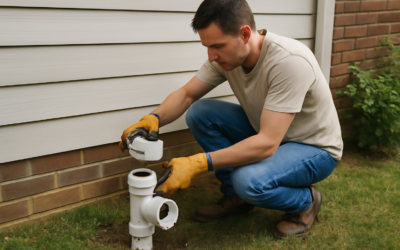
A sewer drain clean out is an accessible capped pipe fitting that gives you direct access to your home’s main sewer line, and it is the single most useful feature for clearing a serious clog. When multiple drains back up at once or your toilet gurgles while the washer drains, the clog is usually in the main line, and the clean-out is where you go to fix it.
Understanding what a clean-out is, where to find it, and how to use it safely can save you a $200 to $600 plumber visit for a simple blockage. This guide explains the whole process and, just as importantly, when to stop and call a professional.
- What Exactly Is a Sewer Clean-Out?
- How to Locate Your Clean-Out
- Tools and Supplies You Will Need
- How to Use the Clean-Out to Clear a Main Line
- Signs the Clog Is in the Main Line
- When to Call a Plumber
- What If You Have No Clean-Out?
- Safety Precautions When Working With Sewage
- Preventing Future Main-Line Clogs
- Frequently Asked Questions
What Exactly Is a Sewer Clean-Out?
A clean-out is a Y- or T-shaped fitting installed in the main drain line with a threaded, removable cap. It provides a straight-shot entry point so a plumber, or you, can insert a drain auger (a “snake”) or a pressure jetter into the line to clear obstructions. Without a clean-out, the only access might be through a toilet flange or a roof vent, both of which are far more awkward.
Most homes have at least one clean-out. Newer construction often has several: one near where the main line exits the house, one at the property line, and sometimes interior clean-outs in a basement or crawl space. The cap is typically a 3- or 4-inch diameter plug with a square nut on top or a threaded screw cap.
How to Locate Your Clean-Out
Clean-outs hide in predictable places. Check these spots:
- Outside near the foundation: Look for a round or square capped pipe sticking a few inches out of the ground, usually within 10 feet of the house on the side where the bathrooms are.
- In the basement or crawl space: A capped fitting on the largest horizontal drain pipe, often near where the pipe leaves through the foundation wall.
- In the garage or utility area: Some homes place the clean-out here.
- Near the property line: A city or “yard” clean-out may sit closer to the street.
The cap is often white PVC, black ABS, or brass, and may be labeled “C.O.” or “sewer.” If your yard is overgrown, the clean-out can be buried under a few inches of soil or mulch. In older homes built before the 1970s, there may be no accessible clean-out at all, which is a sign you may eventually want one installed.
Tools and Supplies You Will Need
- A pipe wrench or large adjustable wrench to loosen the cap.
- Rubber gloves and safety glasses.
- A bucket and old towels for overflow.
- A drain auger, either a hand-crank 25-foot model ($30 to $60) or a rented power auger ($60 to $100 per day).
- A garden hose for flushing.
- Penetrating oil like WD-40 for a stuck cap.
How to Use the Clean-Out to Clear a Main Line
Follow these steps carefully, because a backed-up main line can hold pressurized wastewater:
- Stop using water. Do not run any faucets, flush toilets, or run appliances while you work.
- Open the cap slowly. Stand to the side and back off the cap gradually with your wrench. If the line is backed up, water may spill out, so keep your bucket ready. Relieving this pressure is normal and expected.
- Feed the auger in. Push the auger cable into the pipe in the direction of the clog, which is usually toward the street. Crank steadily as you feed the cable.
- Work the clog. When you hit resistance, keep turning to break through or hook the obstruction. Push forward and pull back a few times.
- Flush the line. Once the auger moves freely, run a garden hose into the clean-out for a few minutes to flush debris downstream and confirm the water drains.
- Retract and reseal. Slowly pull the cable out, wipe it down, and thread the cap back on snugly. Wrap the threads with Teflon tape if the cap seeps.
A common cause of main-line clogs is tree roots infiltrating pipe joints, followed by grease buildup and flushed wipes. A basic auger handles most soft clogs; heavy root intrusion often needs a professional root-cutting head or hydro-jetting.
Signs the Clog Is in the Main Line
Not every backup means a main-line problem. You likely have a main-line clog if:
- Multiple fixtures back up at the same time.
- Your toilet gurgles when you run the sink or washing machine.
- Water backs up into a shower or tub when you flush a toilet.
- You smell sewage near floor drains.
If only one sink or toilet is affected, the clog is local to that fixture, and you should snake that drain instead.
When to Call a Plumber
Stop and call a professional if any of these apply:
- You cannot clear the clog after 30 to 45 minutes of augering.
- Sewage is actively backing up into your home.
- You suspect tree roots or a collapsed pipe, which require a camera inspection.
- Your home has no accessible clean-out.
- The blockage keeps recurring within weeks, suggesting a bigger structural issue.
A plumber can run a sewer camera to pinpoint the problem and use hydro-jetting or a mechanical root cutter. Camera inspections typically cost $150 to $400, and professional main-line clearing runs $200 to $800. If the pipe is cracked or root-choked, repair or trenchless relining can cost several thousand dollars, so early diagnosis saves money.
What If You Have No Clean-Out?
Homes built before the 1970s, or certain older additions, may lack an accessible clean-out entirely. If that describes your house, you have a few options. A plumber can access the main line through a pulled toilet or through the vent stack on the roof, though both are more difficult and messy. The better long-term fix is to have a clean-out installed. A plumber can add an exterior clean-out where the main line exits the house for roughly $600 to $2,000 depending on how deep the line sits and whether excavation is needed. It is one of the best investments you can make for future maintenance, since every subsequent clearing becomes faster and cheaper.
Safety Precautions When Working With Sewage
Raw sewage carries bacteria and pathogens, so protect yourself throughout the job:
- Always wear waterproof gloves and safety glasses, since backed-up water can splash when the cap releases.
- Work in a ventilated area, especially with interior clean-outs, because sewer gas contains methane and hydrogen sulfide.
- Never smoke or use an open flame near an open clean-out due to flammable gases.
- Wash your hands and any exposed skin thoroughly afterward, and disinfect tools and the surrounding floor with a bleach solution.
- Keep children and pets away from the work area until you have cleaned up and resealed the cap.
If sewage has already backed up into living space, treat it as a biohazard: remove porous materials it contacted and disinfect hard surfaces completely.
Preventing Future Main-Line Clogs
Reduce backups with a few habits: never pour grease down the drain, avoid flushing “flushable” wipes, install drain screens, and if you have mature trees near your sewer line, have the main line snaked or jetted annually as maintenance. An enzyme-based drain treatment monthly can help keep the line clear of organic buildup.
Frequently Asked Questions
What does a sewer clean-out look like?
It is a capped pipe, usually 3 or 4 inches in diameter, made of white PVC, black ABS, or brass, with a square nut or threaded cap on top. It sits a few inches above ground outside near the foundation, or on a horizontal drain pipe in a basement or crawl space.
Can I clear a main sewer line myself?
Often yes, for soft clogs. Open the clean-out cap slowly, feed a drain auger toward the clog, break it up, and flush with a hose. If you cannot clear it in about 45 minutes, or if roots or a collapsed pipe are involved, call a plumber.
Why does water come out when I open the clean-out?
Standing wastewater trapped behind a clog is under slight pressure. When you loosen the cap, that water is released. Open the cap slowly, stand to the side, and keep a bucket ready to catch the overflow.