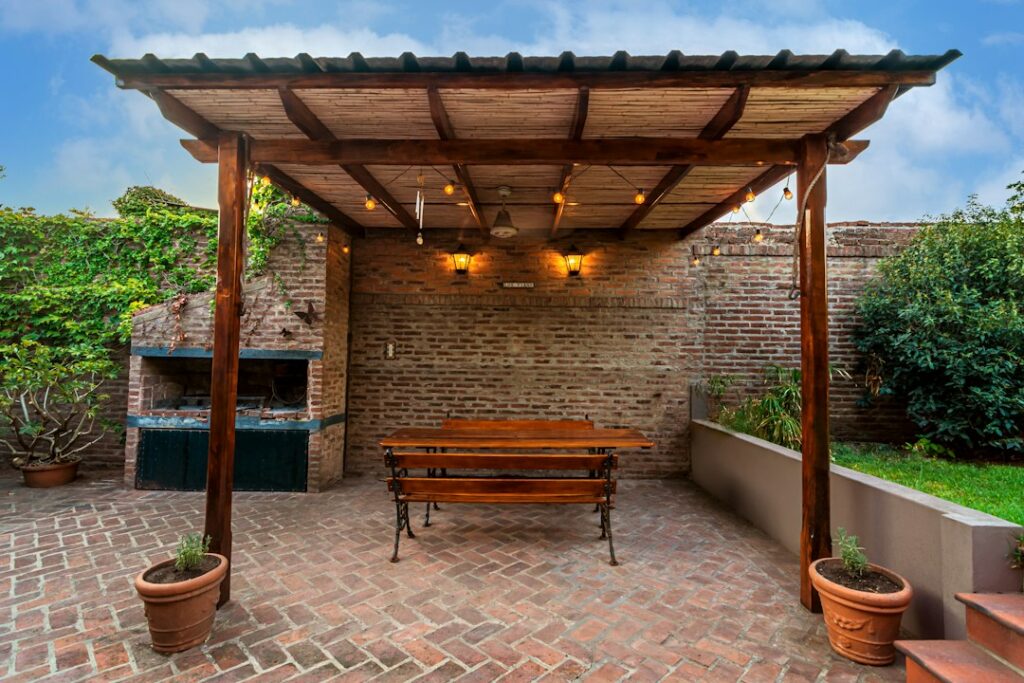
A patio that bakes in afternoon sun goes unused half the year, which is a waste of one of the best spots in any home. The right shade options for patio living come down to how much coverage you need, how permanent you want it, and your budget. From a simple umbrella to a built-in pergola, each choice has clear strengths and honest drawbacks. Here’s how the main options stack up so you can pick what actually fits your yard.
Part of our Decks & Outdoor guide — explore the full guide →
- Patio Umbrellas: Simple and Affordable
- Pergolas: Structure and Style
- Shade Sails: Modern and Flexible
- Awnings: Attached and Retractable
- Other Worthwhile Options
- How to Choose: Match Shade to Need
- Don't Forget Wind and Weather
- UV Protection and Fabric Choice
- Matching Shade to Your Climate
- Choosing a Patio Shade Cover That Lasts
- The Bottom Line
- Combining Multiple Shade Solutions
Patio Umbrellas: Simple and Affordable
The classic patio umbrella is the easiest entry point. It’s inexpensive, portable, and requires no installation beyond a sturdy base. Cantilever (offset) umbrellas free up the table area by placing the pole to the side, while standard center-pole umbrellas are cheaper and more stable in wind.
- Pros: low cost, movable, no construction, easy to store in winter.
- Cons: limited coverage, can tip in wind without a heavy base, needs periodic replacement.
For a small bistro setup or a spot you want shaded only sometimes, an umbrella is hard to beat.
Pergolas: Structure and Style
A pergola is a permanent overhead structure with open or slatted beams. On its own it offers partial, dappled shade, but you can boost it with climbing plants, a retractable canopy, or fixed louvers. Modern adjustable-louver pergolas let you angle the slats to control sun and even close against rain.
- Pros: adds real value and architecture, durable, customizable shade level.
- Cons: higher cost, requires installation or a build permit in some areas, basic versions don’t fully block sun.
Choose a pergola when you want a defined outdoor room and are willing to invest for the long term.
Shade Sails: Modern and Flexible
Shade sails are tensioned fabric triangles or squares anchored to posts, walls, or existing structures. They’ve surged in popularity for their clean, contemporary look and ability to cover odd-shaped areas. You can overlap several at different heights for a dynamic, designer effect.
- Pros: affordable, modern look, covers large or irregular spaces, good airflow.
- Cons: needs solid anchor points, fabric can sag or wear, usually taken down before winter and storms.
Sails work best where you have sturdy attachment points and want maximum coverage for the price.
Awnings: Attached and Retractable
An awning mounts to your house and extends over the patio, and retractable models let you deploy or roll up the cover on demand. Motorized versions add convenience with the push of a button. Because they attach to the home, awnings shade the patio while also blocking sun from entering nearby windows.
- Pros: adjustable coverage, protects the house too, retracts to avoid wind and snow damage.
- Cons: higher cost for retractable and motorized units, requires solid wall mounting, mechanisms need occasional maintenance.
Other Worthwhile Options
Beyond the big four, a few alternatives fill specific needs.
- Gazebos and canopy tents — fully covered, semi-permanent structures, good for defined seating areas.
- Solid patio roofs — permanent, fully weatherproof cover for year-round use.
- Outdoor curtains — paired with a pergola or frame to block low-angle sun and add privacy.
- Trees and tall plants — natural shade that improves over years, though slow to mature.
How to Choose: Match Shade to Need
Start with the practical questions. How much of the patio needs shade, and when, midday or late afternoon? Do you want something permanent or seasonal? What’s your budget, and are you comfortable with installation or a contractor? A renter or someone on a tight budget leans toward umbrellas and sails. A homeowner investing in an outdoor living space leans toward a pergola, awning, or solid roof.
Don’t Forget Wind and Weather
The most common regret with patio shade is underestimating wind. Umbrellas tip, sails sag, and lightweight canopies become sails of their own in a gust. Anchor everything properly, use weighted bases, and choose UV-stabilized fabrics that won’t fade in a single season. In snowy climates, plan to retract or remove fabric covers so weight doesn’t damage them.
UV Protection and Fabric Choice
Shade isn’t only about staying cool, it’s about blocking harmful UV rays. Look for fabrics with a published UV protection rating or UPF value, and choose solution-dyed acrylic or marine-grade polyester for the best fade resistance. These fabrics hold their color for years and resist mildew, which matters in humid climates where cheaper fabrics break down fast.
Color affects performance too. Darker fabrics block more UV but absorb heat, while lighter colors reflect heat but may let more light through. A tightly woven mid-tone fabric often strikes the best balance for a comfortable, cooler patio. Whatever you choose, confirm it’s rated for outdoor use, indoor fabrics fade and rot quickly outside.
Matching Shade to Your Climate
Where you live should steer your choice as much as your budget. In hot, sunny regions, prioritize maximum coverage and UV protection, a solid roof, pergola with louvers, or large awning. In windy areas, avoid lightweight umbrellas and flimsy canopies that become hazards, and favor anchored structures.
- Hot and sunny: louvered pergola, solid roof, or large awning for full coverage.
- Windy: permanent structures and heavily weighted bases over loose covers.
- Snowy: retractable or removable fabric so winter weight doesn’t cause damage.
- Rainy: waterproof louvers or solid roofing rather than open pergolas.
Buying for your actual climate prevents the expensive mistake of a shade structure that can’t survive your local weather past its first season.
Choosing a Patio Shade Cover That Lasts
A patio shade cover is a fixed or semi-fixed overhead structure, as opposed to an umbrella you move around. The right type depends on how much sun and rain you want to block, how your climate treats outdoor structures, and how the cover attaches to the house or ground.
Solid Covers
Solid roofs, built from wood framing with roofing, insulated aluminum panels or metal sheets, block sun and rain completely. They turn a patio into usable space in wet weather and protect furniture. The tradeoffs are a darker area underneath, possible loss of light to the rooms behind, and the need for proper slope and gutters so water drains away from the house.
Louvered Covers
Louvered systems use adjustable slats that tilt open for light and breeze or close to shed rain. Motorized versions add convenience, and any wiring for them belongs to a licensed electrician with outdoor-rated, GFCI-protected circuits. Clean the slat channels and gutters regularly, because debris prevents a tight seal.
Fabric Covers
Fabric canopies on a frame, including retractable and slide-wire styles, give filtered shade at a lower cost. Look for solution-dyed acrylic or high-density polyethylene with a stated UV block. Fabric should come down or retract before storms and be stored dry over winter in snowy regions.
Polycarbonate Covers
Multiwall or corrugated polycarbonate panels let light through while stopping rain. Choose panels with a UV-protective layer facing the sun, and pick a tinted or opal finish if clear panels make the space too hot. Allow for thermal expansion with oversized holes and the fasteners the panel maker specifies, or the sheets can crack.
Permits and Approvals
Many local building departments require a permit for attached covers and larger freestanding ones, and some want engineered drawings showing loads and footings. HOAs often control materials, colors and placement as well. Ask before you buy so the design you choose can actually be approved, and call 811 before digging any post footings.
Fastening Into the Framing
An attached cover should connect to the house through a ledger board bolted into the rim joist or wall framing, never just into siding, brick veneer or trim. Flash the ledger so water sheds away from the wall rather than collecting behind it. Posts need proper footings and post bases that hold them off the concrete to slow rot.
Planning for Wind and Snow
Overhead covers catch wind like a sail and collect snow weight. Size beams, rafters and connections for your area’s design loads, and use hurricane ties or rated connectors where wind is a concern. In snow country, a steeper pitch helps loads slide off, and you may need to clear heavy accumulations with a roof rake from the ground. If the design is large or unusual, have an engineer or experienced contractor confirm it.
The Bottom Line
Combining Multiple Shade Solutions
You don’t have to pick just one. Some of the most comfortable patios layer shade for flexibility throughout the day. A pergola provides the structural backbone and partial cover, while a retractable canopy or shade sail beneath it blocks direct sun when needed. Outdoor curtains added to a pergola handle the low-angle afternoon glare that overhead cover misses.
This layered approach lets you adjust to the sun’s position and the season. Open things up on a mild morning, close the canopy at the hottest part of the day, and draw the curtains as the sun drops in the west. The result is a space that stays usable from breakfast to evening rather than only during the few hours the sun cooperates.
There’s no single best patio shade, only the best fit for your space, climate, and budget. For quick, cheap flexibility, go with an umbrella or shade sail. For a permanent, value-adding upgrade, invest in a pergola, awning, or solid roof. Match the option to how you actually use the patio, and you’ll finally enjoy it through the hottest part of the day.