Wood floors and water have a complicated relationship, which makes cleaning-machine shopping trickier for hardwood owners than for anyone with tile or vinyl. Searching for a shark hardwood floor cleaner turns up several very different machines, steam mops, the disposable-pad VACMOP, and the HydroVac wet-dry line, plus bottled solutions, and not all of them belong on a wood floor. The uncomfortable truth is that most hardwood flooring manufacturers, and the National Wood Flooring Association, advise against steam cleaning wood, full stop. This guide sorts out which Shark products can be used safely on sealed hardwood, how to use them without risking your finish or warranty, and which alternatives the wood-flooring industry actually endorses.
- The Shark Lineup for Hard Floors
- The Steam Problem: What Flooring Manufacturers Actually Say
- If You Steam Anyway: The Lowest-Risk Method
- The Safer Sharks: VACMOP and HydroVac on Sealed Wood
- What the Wood-Flooring Industry Recommends Instead
- Machine Care: Keep Whatever You Buy Working
- Choosing the Right Tool for Your Situation
- The Bottom Line
The Shark Lineup for Hard Floors
Shark’s hard-floor cleaning family breaks into three distinct categories:
- Steam mops: the classic Shark Steam Mop (S1000 series, around $60 to $80), the Genius/Lift-Away models (S6002 and similar, $100 to $150), and the Steam & Scrub with rotating pads (S7000 series, $150 to $200). All convert tap water to steam and release it through a mop pad.
- VACMOP: a lightweight cordless spray-mop-plus-vacuum ($50 to $100) that sprays a cleaning solution and vacuums debris into a disposable pad. No steam involved.
- HydroVac: Shark’s cordless wet-dry floor washer (WD100/WD201 series, $200 to $300) that dispenses solution, scrubs with a roller, and vacuums dirty water back into a separate tank, again, no steam.
Shark also sells matching solutions, including a multi-surface concentrate and a hard-floor formula marketed as safe for sealed wood. Which machine suits your hardwood depends entirely on the steam question.


The Steam Problem: What Flooring Manufacturers Actually Say
Steam mops sanitize tile brilliantly, but wood is a different substrate. Steam is water vapor driven by heat, and it can penetrate the microscopic seams between boards and any thin spots in the finish, where it swells the wood fibers. Repeated exposure leads to cupped boards, whitened or cloudy polyurethane, peeling finish on worn areas, and glue stress in engineered floors. This is not internet folklore: the NWFA and most hardwood manufacturers, including major brands like Bruce, Shaw, and Mohawk, explicitly advise against steam mops on wood floors, and using one typically voids the floor’s finish warranty. Shark’s own steam mop manuals limit use to sealed hard floors and tell you to check your flooring manufacturer’s guidance, which, for wood, usually says no.
If a wood floor has any of these conditions, steam should be completely off the table: waxed or oiled finishes, unsealed or worn finish, gaps between boards, laminate that is not steam-rated, or any engineered floor whose paperwork does not expressly allow steam.
If You Steam Anyway: The Lowest-Risk Method
Plenty of homeowners do steam site-finished polyurethane floors for years without visible damage, and if you accept the warranty risk on a floor with a sound, well-sealed finish, technique determines how much moisture the wood sees. Use the lowest steam setting, always with a clean, dry pad attached, and keep the mop moving constantly, never letting it rest in one spot even for a few seconds. Work in the direction of the boards, and go over the area with a dry microfiber pad afterward so no visible moisture remains after 30 seconds. Skip steam entirely near known gaps, pet-scratch zones, and high-wear paths where finish is thinnest, because those are the entry points. Monthly or less is plenty; steam is a periodic deep-clean, not a daily habit, on wood.
The Safer Sharks: VACMOP and HydroVac on Sealed Wood
For routine hardwood cleaning, Shark’s non-steam machines are the better fit. The VACMOP sprays a modest, controllable amount of solution and picks up crumbs simultaneously, essentially a quicker Swiffer, and its light moisture output is appropriate for sealed wood if you use a wood-safe solution and do not over-spray. The HydroVac goes further: it washes with its roller and immediately vacuums the dirty liquid back up, leaving floors close to dry within minutes, and Shark markets its multi-surface solution for sealed hardwood specifically. Two cautions still apply to both machines. First, they are for sealed wood only, polyurethane-finished floors, not oiled, waxed, or unsealed ones. Second, moderation matters: use the minimum solution setting, and if you ever see standing liquid trailing the machine, slow down and make a dry pass.
What the Wood-Flooring Industry Recommends Instead
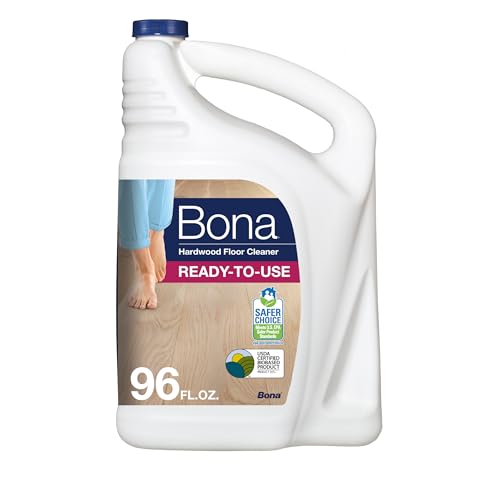
The endorsed routine for hardwood is duller than any gadget, and it works: vacuum or dust-mop a few times a week to remove the grit that acts like sandpaper underfoot, then damp-mop every week or two with a barely-moist microfiber pad and a pH-neutral hardwood cleaner, Bona Hardwood Floor Cleaner ($10 to $20), Bruce fresh-finish cleaner, or a comparable product. Avoid vinegar solutions (mildly acidic, dulls polyurethane over time), oil soaps and “polish” products that leave films, and anything applied by a soaking string mop. A Shark stick vacuum with the soft brushroll actually earns its keep here as the grit-removal half of that routine, arguably the most hardwood-safe “Shark floor cleaner” of all.
Machine Care: Keep Whatever You Buy Working
Every wet-cleaning machine lives or dies by maintenance, and hardwood adds a reason to care: a poorly maintained machine leaks and spits, and drips are exactly what wood cannot tolerate. For steam mops, use distilled water in hard-water areas, since mineral scale clogs the steam ports and causes sputtering that dumps hot water droplets onto the floor; flush the tank periodically per the manual. Wash microfiber pads after every couple of uses without fabric softener, which coats the fibers and smears residue across the finish. On a HydroVac, empty and rinse the dirty-water tank promptly and let the roller dry between sessions so the machine itself does not sour. Replace VACMOP pads before they are saturated, because an overloaded pad stops absorbing and starts pushing dirty liquid around. Five minutes of upkeep per session keeps the moisture output predictable, and predictable moisture is the entire game on wood.
Choosing the Right Tool for Your Situation
- Mostly tile and vinyl, a little wood: a Shark steam mop is a fine buy for the hard surfaces; use it sparingly and carefully, or not at all, on the wood.
- Mostly sealed hardwood: skip steam. A HydroVac or a stick vacuum plus a microfiber spray mop with Bona covers everything with far less risk.
- Quick daily pickup with kids and pets: the VACMOP handles crumbs and light grime; keep the spray light on wood.
- Oiled, waxed, or vintage floors: none of the wet machines belong here, dust mop, vacuum, and the finish maker’s recommended cleaner only.
The Bottom Line
There is no single shark hardwood floor cleaner; there is a lineup in which the steam mops are the riskiest choice for wood and the non-steam machines are the reasonable ones. Respect what the flooring industry says, steam and wood warranties do not mix, and reserve any steam use for well-sealed floors on the lowest setting with the mop constantly moving. For everything routine, grit removal plus a lightly damp microfiber pad and a pH-neutral cleaner protects the finish better than any amount of technology, and Shark’s vacuums and wet-dry machines slot into that routine far more safely than its steamers.
Prefer to explore on your own?
See how new flooring looks in your actual room in seconds — free, no signup.
Try the free Floor Studio →