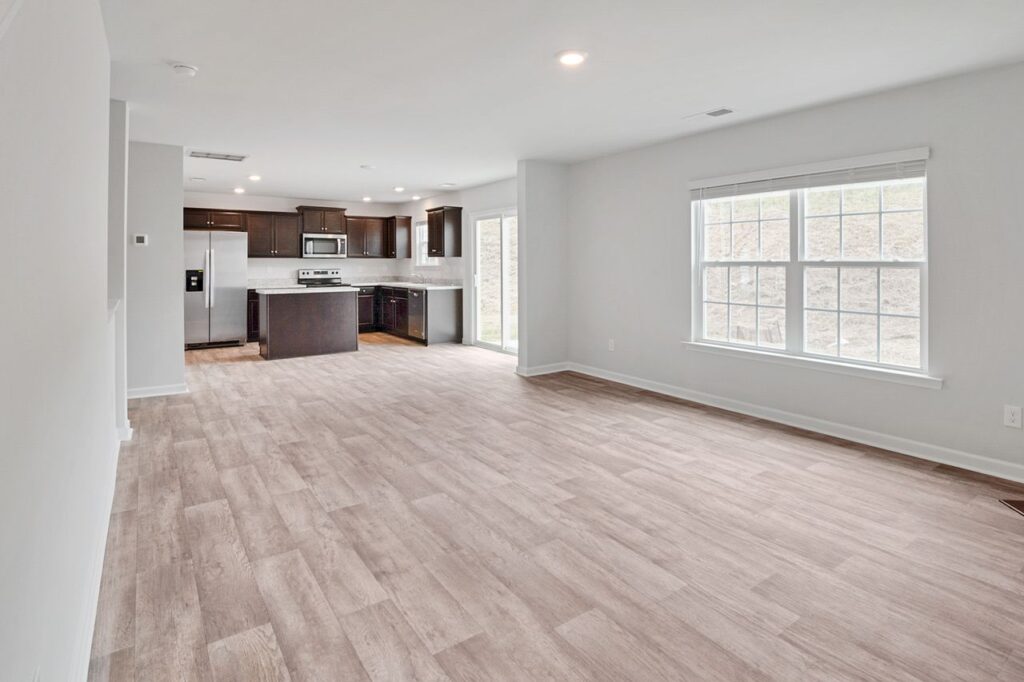
Shaw Industries is one of the largest flooring manufacturers in the world, and its vinyl product lineup reflects decades of engineering investment. Shaw vinyl flooring spans everything from budget-friendly peel-and-stick tiles to premium rigid-core planks with lifetime warranties. With so many collections, sub-brands, and product tiers, knowing which Shaw vinyl products are worth the money and which ones to skip requires a closer look at the details behind the marketing.
- Shaw’s Vinyl Flooring Collections Overview
- Floorte Pro: The Premium Choice
- Mid-Range Shaw Vinyl: Best Value in the Lineup
- Shaw Vinyl vs Competitors
- Installation and Warranty Details
- Where to Buy Shaw Vinyl Flooring
- Should You Choose Shaw Vinyl
- How to Shop Shaw Paladin Plus and Other Named Shaw Styles
Shaw’s Vinyl Flooring Collections Overview
Shaw’s own site currently groups its residential vinyl into a few series, each aimed at a different price point and performance level:
- Luxury Vinyl Pro Series: rigid-core products aimed at busy homes, many sold through flooring dealers. Roughly $4 to $6.50 per sq ft
- Luxury Vinyl Classic Series: mainstream residential planks and tiles with a wide range of wood and stone looks. Roughly $2 to $5 per sq ft
- Pet Perfect Luxury Vinyl: vinyl marketed for homes with pets
Many retailers and older sample tags still use the Floorte name for Shaw’s waterproof vinyl, so you will see both naming styles while shopping. Wear layer and core type vary from style to style inside each series, so check the spec sheet for the exact style rather than assuming a series-wide figure.
Floorte Pro: The Premium Choice
Floorte Pro, a Shaw name still common on sample tags and retailer listings, is where Shaw puts its best engineering and design work. The collection features SPC (stone polymer composite) rigid cores that resist dents, temperature swings, and heavy furniture loads better than WPC alternatives. Style names you will see on Floorte Pro sample tags and retailer listings include Paragon HD Plus, Anvil Plus, Endura Plus and Paladin Plus. Plank width, wear layer, attached pad and warranty differ from one style to the next, so compare spec sheets rather than relying on the style name.
Shaw markets its rigid-core vinyl as waterproof, meaning the plank itself is not damaged by water. That does not make the floor a moisture barrier: water that seeps between plank seams during a major spill can still reach the subfloor, so wipe spills promptly and follow the installation instructions for expansion gaps and moisture protection.
Mid-Range Shaw Vinyl: Best Value in the Lineup
For most homeowners, a mid-range Shaw style with a 12 to 20 mil wear layer hits the sweet spot between performance and price. These products use either SPC or WPC cores. The visual quality is close to the Pro Series, sometimes with less refined embossing or fewer wide-plank options.
Styles sold at big-box stores are often good values, with 12 mil wear layers at roughly $2.50 to $3.50 per square foot. They lack commercial ratings but handle residential traffic, pets, and kids well. For a whole-house installation on a budget, a 12 mil Shaw style delivers strong performance per dollar.
Shaw Vinyl vs Competitors
How does Shaw vinyl flooring stack up against other major brands at similar price points?
Shaw vs COREtec: COREtec pioneered the rigid-core LVP category and remains a benchmark for quality. COREtec’s premium lines (COREtec Plus, COREtec Pro) are slightly thicker and offer marginally better visuals than Shaw’s equivalent tiers, but at 10-20% higher prices. Shaw offers better value, while COREtec edges ahead on premium fit and finish.
Shaw vs Mohawk: As the two largest flooring companies, Shaw and Mohawk compete directly across every price point. Mohawk’s SolidTech vinyl is comparable to Shaw’s mid-range and Pro Series styles. Product quality is extremely similar; the decision often comes down to which retailer offers the better price or which specific color matches your design vision.
Shaw vs LifeProof: LifeProof is a big-box store brand made by outside manufacturers. LifeProof pricing ($2.00 to $3.50 per sq ft) undercuts Shaw’s equivalent products by 15-25%, but Shaw generally has thicker wear layers, better locking systems, and more consistent quality control. LifeProof is the budget winner; Shaw is the performance winner.
Installation and Warranty Details
Most Shaw rigid-core vinyl uses click-lock floating installation. Shaw’s locking system is proprietary but compatible with standard installation techniques: angle and press on the long edge, tap to close the short edge. Some styles also approve glue-down installation for situations where floating is not ideal (large open areas, rolling traffic), so check the style’s installation sheet.
Warranty terms vary by style. Many premium styles carry lifetime residential coverage, while entry-level products carry shorter fixed terms, so read the warranty document for the exact style you buy.
Read the warranty terms carefully because “lifetime” does not cover everything. Some flooring warranties are prorated, meaning the coverage decreases over time. They also require proper installation and maintenance per Shaw’s published guidelines. Failing to use recommended underlayment or cleaning products can void the warranty.
Where to Buy Shaw Vinyl Flooring
Shaw distributes through multiple channels, and pricing varies by retailer:
- Big-box home centers: Carry a selection of Shaw vinyl at competitive prices, often with installation services and frequent sales
- Authorized Shaw dealers: Access to the full product lineup including Pro Series styles and collections not available at big-box stores. Use Shaw’s dealer locator at shawfloors.com
- Warehouse clubs and flooring chains: Occasionally stock select Shaw products, sometimes at clearance pricing on discontinued colors
For the widest color selection and access to premium lines, visit an authorized Shaw dealer. For the best price on mainstream products, compare big-box regular and sale pricing against dealer quotes. Many dealers will price-match or come close to big-box pricing to earn your business.
Should You Choose Shaw Vinyl
Shaw’s biggest advantage is availability, warranty support, and product breadth. As one of the world’s largest flooring companies, Shaw has products are stocked everywhere, replacement planks are easy to source, and warranty claims go through an established process. You are unlikely to encounter a discontinued-product problem within the first several years of ownership.
Product quality across the lineup ranges from adequate (entry-level styles) to excellent (Pro Series styles). Avoid the cheapest Shaw vinyl products with wear layers under 12 mil unless they are going in a closet or guest room. In the mid-range and premium tiers, Shaw vinyl competes with or beats any competitor on the market in terms of combined value, durability, and design options.
How to Shop Shaw Paladin Plus and Other Named Shaw Styles
Shaw Paladin Plus appears on the maker’s own site as a named vinyl style, and searches for it, or for a single color name paired with the Shaw name, usually mean the shopper has already seen one specific product. The smart move is to pull that product’s spec sheet and compare it against the other Shaw styles you are considering before deciding. A catchy style name tells you nothing about wear layer or core, so the numbers have to do the deciding.
Style names vs. color names
Shaw labels vinyl with a style name and number plus a color name and number. The style sets the construction: core type, plank width, wear layer, attached pad and warranty. The color only changes the visual. Two colors inside one style share the same performance, while two similar oak colors from different styles can perform very differently. When a sample tag shows both numbers, write them down, since that pair is what a dealer needs to quote, reorder or match replacement planks later.
Specs to confirm before you buy
| Spec | What to look for | Why it matters |
|---|---|---|
| Wear layer | 12 mil minimum for main rooms, 20 mil for pets and busy families | Sets scratch and wear life more than any other number |
| Core | SPC for dent resistance, WPC for a softer, quieter feel | Affects heavy furniture loads and comfort underfoot |
| Attached pad | Present or not, and the type | Changes whether a separate underlayment is allowed |
| Plank width and length | 7 inch and wider suits open rooms | Wider planks show subfloor flaws more readily |
| Warranty | Lifetime residential vs. a fixed term, and whether it is prorated | Tells you which tier the style really sits in |
Avoiding color and supply surprises
- Order a full plank sample, not a small chip, and view it in morning and evening light in the actual room.
- Pull planks from several boxes during installation to break up print repeats.
- Buy 10 to 15 percent extra from one production run and keep a sealed box for future repairs.
- Ask the dealer whether the style is current or being phased out. Named styles get retired, and a discontinued color can be hard to match five years on.
- Check that the installation method on the style’s sheet matches your subfloor, since some styles approve glue-down and others are float only.
If the style you love has a wear layer under 12 mil, treat it as a bedroom or guest room floor and look within the same color family for a thicker option for kitchens and hallways.
Prefer to explore on your own?
See how new flooring looks in your actual room in seconds — free, no signup.
Try the free Floor Studio →