Sheet flooring remains one of the most practical and affordable options for homeowners who want a waterproof, seamless surface in moisture-prone rooms. Unlike planks or tiles that create seams where water can seep through, sheet flooring covers large areas with minimal joints, making it ideal for kitchens, bathrooms, laundry rooms, and basements.
Whether you are renovating on a budget or looking for a low-maintenance solution that stands up to heavy foot traffic, this guide covers everything you need to know about sheet flooring in 2026, from materials and roll widths to installation methods and brand comparisons.
- What Is Sheet Flooring?
- Sheet Flooring Roll Widths and Sizing
- Benefits of Sheet Flooring
- Installation Methods for Sheet Flooring
- Best Rooms for Sheet Flooring
- Top Sheet Flooring Brands in 2026
- Sheet Flooring Pricing Guide
- Sheet Flooring vs Other Flooring Types
- Maintenance and Care Tips
- How Long Does Sheet Flooring Last?
- Final Thoughts on Sheet Flooring
- Rubber and Cork Sheet Flooring
- Subfloor Requirements for Sheet Flooring
- Drawbacks and Limitations of Sheet Flooring
- Frequently Asked Questions
- Can I install sheet flooring over my existing floor?
- Does sheet flooring need underlayment?
- Is sheet flooring waterproof at the seams and edges?
- Is sheet flooring a good choice for kitchens?
- Can sheet flooring be repaired if it gets damaged?
- Is rubber or cork sheet flooring good for a home gym or basement?
What Is Sheet Flooring?
Sheet flooring is a resilient flooring product sold in large, continuous rolls rather than individual planks or tiles. It is manufactured in widths of 6, 12, or 13.2 feet, allowing installers to cover most rooms with a single piece and no seams. The two primary types of sheet flooring are vinyl and linoleum, each with distinct characteristics.
Sheet Vinyl Flooring
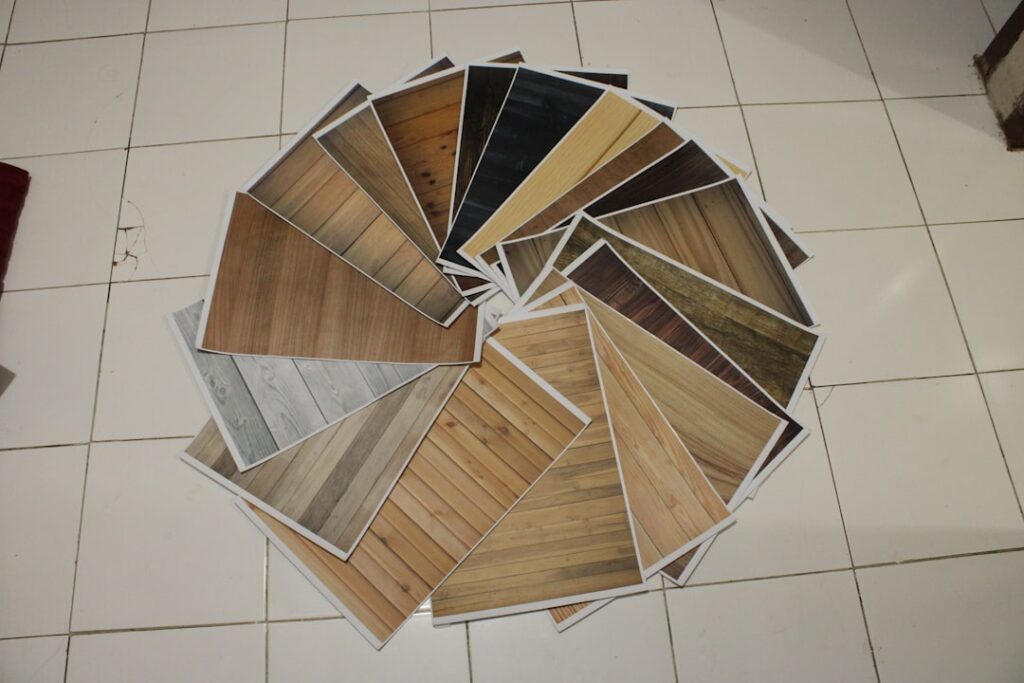
Sheet vinyl is made from synthetic PVC (polyvinyl chloride) with a printed design layer and a clear wear layer on top. Modern sheet vinyl uses advanced photographic printing to replicate the look of hardwood, stone, and decorative patterns with impressive realism. It is 100% waterproof, making it the go-to choice for wet areas.
Sheet vinyl comes in two main constructions. Felt-back vinyl has a felt or fiberglass backing that provides cushioning and warmth underfoot. Fiberglass-core vinyl features a fiberglass reinforcement layer in the middle that adds dimensional stability and prevents the material from expanding or contracting with temperature changes.
Sheet Linoleum Flooring
Linoleum is made from natural materials including linseed oil, wood flour, cork dust, limestone, and jute backing. It has been used in homes since the late 1800s and has experienced a resurgence thanks to growing demand for eco-friendly building products. Unlike vinyl, linoleum is biodegradable and does not release harmful VOCs during manufacturing.
Linoleum is naturally antimicrobial thanks to the linseed oil content, which continues to oxidize over time. The color runs through the full thickness of the material rather than sitting on the surface, so scratches and scuffs are less visible. However, linoleum is not waterproof and requires sealing at seams and edges to prevent moisture damage.
Sheet Flooring Roll Widths and Sizing
One of the biggest advantages of sheet flooring is the ability to minimize or eliminate seams entirely. Standard roll widths include:
- 6-foot rolls: Best for narrow spaces like hallways, small bathrooms, and utility rooms. Easier to transport and handle during DIY installation.
- 12-foot rolls: The most common width, suitable for covering most kitchens, bathrooms, and bedrooms without any seams.
- 13.2-foot rolls: Also called 4-meter rolls, common in commercial-grade products and some premium residential lines.
Roll lengths typically range from 30 to 100 linear feet. When ordering, you will need to calculate your room dimensions and add 3 to 6 inches of overage on each side for trimming. For L-shaped rooms or spaces wider than 12 feet, a seam will be necessary, and professional installers use heat-welding or seam-sealing tape to create a watertight joint.
Benefits of Sheet Flooring
Seamless Waterproof Surface
The primary advantage of sheet flooring over vinyl plank or tile alternatives is the seamless installation. In a typical bathroom or kitchen, a single piece of sheet vinyl eliminates the dozens of seams that exist with plank or tile installations. This seamless surface prevents water from reaching the subfloor, which is critical in rooms with plumbing fixtures, sinks, and appliances that may leak.
Affordable Pricing
Sheet flooring is one of the most budget-friendly options on the market. Basic sheet vinyl starts at $0.50 per square foot for materials, while premium options with thicker wear layers and realistic designs top out around $4 per square foot. Even with professional installation, the total cost rarely exceeds $6 per square foot, significantly less than most luxury vinyl plank flooring or tile.
Comfort and Warmth
The flexible, cushioned construction of sheet flooring makes it comfortable to stand on for extended periods, an important consideration for kitchens where you spend time cooking and cleaning. Felt-backed products offer the most cushioning, while fiberglass-core products prioritize dimensional stability. Both types feel warmer underfoot compared to ceramic tile or concrete.
Easy Maintenance
Sheet flooring requires minimal maintenance. Regular sweeping or vacuuming followed by damp mopping with a mild cleaner is all that is needed. There are no grout lines to scrub, no wax to apply (for most modern products), and no special sealants required. The smooth, non-porous surface resists stains and does not harbor bacteria or allergens.
Installation Methods for Sheet Flooring
Full-Spread Adhesive
The most common professional installation method involves applying a thin layer of adhesive over the entire subfloor using a notched trowel. The sheet is then carefully positioned and pressed into the adhesive, working from the center outward to eliminate air bubbles. This method creates the strongest bond and is recommended for high-traffic areas and rooms with heavy appliances.
Full-spread adhesive installation works on concrete, plywood, and existing vinyl or linoleum subfloors (as long as the old floor is smooth and well-adhered). The adhesive typically requires 24 hours of curing time before the room can be used normally.
Perimeter-Bond Installation
Perimeter-bond or modified loose-lay installation uses adhesive only along the edges and seams of the sheet. The center of the floor is held in place by double-sided tape or the weight of the material itself. This method is faster, uses less adhesive, and makes future removal much easier.
Perimeter-bond is best suited for smaller rooms (under 150 square feet) and areas with light to moderate traffic. It is not recommended for rooms with heavy rolling loads, like utility rooms with wheeled carts, because the center of the floor can shift or buckle.
Loose-Lay Installation
Some premium sheet flooring products are designed for true loose-lay installation, where the material is simply cut to size and laid in place without any adhesive. These products feature a heavy, non-slip backing and are dimensionally stable enough to stay flat without glue. Loose-lay is the fastest installation method and allows for easy replacement or removal.
DIY Tips for Sheet Flooring Installation
Installing sheet flooring yourself can save $1 to $3 per square foot in labor costs. Here are key tips for a successful DIY installation:
- Make a paper or cardboard template of your room, including cutouts for toilets, cabinets, and door frames. Transfer the template to the sheet before cutting.
- Allow the sheet to acclimate in the room for 24 to 48 hours before installation. Unroll it and let it relax to prevent waves and wrinkles.
- Use a sharp utility knife with a hooked blade for clean, precise cuts. Change blades frequently.
- Leave a 1/8-inch gap along walls and fixed objects to allow for expansion. This gap will be covered by baseboards or quarter-round molding.
- Roll the installed floor with a 75-pound floor roller to ensure full adhesive contact and remove trapped air.
Best Rooms for Sheet Flooring
Kitchens
Sheet flooring is one of the best kitchen flooring options because it handles spills, splashes, and dropped items without damage. The seamless surface prevents water from reaching the subfloor around dishwashers, sinks, and refrigerators. Modern sheet vinyl designs realistically mimic the look of hardwood, stone, and decorative tile, so you do not have to sacrifice style for practicality.
Bathrooms
Bathrooms benefit enormously from the seamless, waterproof nature of sheet flooring. In a small bathroom, a single piece of sheet vinyl can cover the entire floor with zero seams, providing complete water protection around the toilet, tub, and sink. The cushioned surface also reduces the risk of injury from slips and falls.
Laundry Rooms and Mudrooms
These high-moisture, high-traffic areas are ideal candidates for sheet flooring. Washing machine leaks, wet boots, and muddy shoes are no match for a properly installed sheet vinyl floor. The low cost also makes it a sensible choice for utility spaces where you may not want to invest in premium materials.
Basements
Sheet vinyl works well in basements because it tolerates the moisture that often seeps through concrete slabs. Unlike laminate flooring, which can swell and buckle when exposed to moisture from below, sheet vinyl acts as a moisture barrier. For basement installations, fiberglass-core products are preferred because they resist the slight moisture vapor that passes through concrete.
Top Sheet Flooring Brands in 2026
Armstrong Flooring
Armstrong has been a leader in resilient flooring for over a century. Their CushionStep and Duality Premium lines offer a wide range of designs with wear layers up to 25 mil thick. Armstrong sheet vinyl is known for its realistic visuals and Diamond 10 Technology scratch-resistant surface.
Tarkett
Tarkett produces both vinyl and linoleum sheet flooring. Their residential vinyl lines include FiberFloor (fiberglass-backed) and ValueFloor (felt-backed). Tarkett is also a major supplier of commercial sheet flooring for healthcare, education, and hospitality settings.
Mannington
Mannington’s Benchmark and Sobella collections are popular choices for residential installations. Their products feature fiberglass construction for dimensional stability and are available in widths up to 13.2 feet. Mannington offers some of the most realistic wood and stone patterns in the sheet flooring market.
IVC/Mohawk
IVC, now part of Mohawk Industries, produces affordable sheet vinyl under several brand names including IVC Blueprint and Mohawk Puretech. These products are widely available at major home improvement retailers and offer solid performance at competitive price points.
Forbo Marmoleum
For homeowners who prefer natural linoleum, Forbo’s Marmoleum line is the gold standard. Available in sheet, tile, and click formats, Marmoleum is made from 97% natural raw materials and is carbon neutral. The marbled and solid color options work well in contemporary and mid-century modern interiors.
Sheet Flooring Pricing Guide
Understanding the full cost of sheet flooring helps you budget accurately. Here is a breakdown of typical pricing in 2026:
Material Costs Per Square Foot
- Basic felt-back vinyl: $0.50 to $1.50
- Mid-range fiberglass-core vinyl: $1.50 to $3.00
- Premium vinyl with thick wear layer: $3.00 to $5.00
- Natural linoleum: $3.00 to $6.00
Installation Costs Per Square Foot
- Professional full-spread adhesive: $1.50 to $3.00
- Professional perimeter-bond: $1.00 to $2.00
- Subfloor preparation (if needed): $0.50 to $2.00
- Old flooring removal: $0.50 to $1.50
Total Installed Cost
For a typical 150-square-foot kitchen, the total installed cost ranges from $300 for a basic DIY installation to $1,200 for a premium product with professional installation. A 50-square-foot bathroom typically costs $100 to $500 fully installed. These figures make sheet flooring one of the most cost-effective options compared to tile, hardwood, or even luxury vinyl planks.
Sheet Flooring vs Other Flooring Types
Sheet Vinyl vs Luxury Vinyl Plank
LVP has gained massive popularity in recent years, but sheet vinyl still has key advantages. Sheet vinyl is cheaper, completely seamless, and better at preventing water infiltration. LVP looks more realistic due to individual plank formats and textured surfaces, is easier to replace if a section is damaged, and feels more rigid and substantial underfoot. For wet areas where waterproofing is the top priority, sheet vinyl is the better choice. For living rooms and open-concept spaces where aesthetics matter most, LVP typically wins.
Sheet Vinyl vs Ceramic Tile
Ceramic and porcelain tile are extremely durable and add resale value, but they are cold, hard, and expensive to install. Sheet vinyl is warmer, softer, and far more affordable. Tile requires grout maintenance and can crack if heavy objects are dropped on it. Sheet vinyl handles impacts better and requires virtually no maintenance. For bathrooms and kitchens on a budget, sheet vinyl delivers excellent value.
Sheet Linoleum vs Sheet Vinyl
Linoleum is the eco-friendly alternative, made from renewable materials and fully biodegradable. It is more durable than vinyl in terms of through-body color (scratches do not show white substrate), and it naturally resists bacteria. However, linoleum costs more, requires periodic resealing, and is not waterproof without proper edge treatment. Vinyl is more forgiving for DIY installation and better for high-moisture environments.
Maintenance and Care Tips
Proper maintenance extends the life of sheet flooring and keeps it looking fresh:
- Daily care: Sweep or vacuum with a soft brush attachment to remove dirt and grit that can scratch the surface.
- Weekly mopping: Use a damp mop with a pH-neutral vinyl floor cleaner. Avoid excessive water, which can seep under edges.
- Stain removal: Most stains wipe up easily. For stubborn marks, use a paste of baking soda and water or a manufacturer-approved cleaner.
- Prevent damage: Use felt pads under furniture legs, avoid dragging heavy objects across the floor, and place mats at entryways.
- Avoid harsh chemicals: Do not use bleach, ammonia, abrasive cleaners, or steam mops on sheet vinyl, as these can damage the wear layer.
- Linoleum-specific care: Apply a thin coat of manufacturer-recommended polish or wax every 12 to 18 months to maintain the protective surface.
How Long Does Sheet Flooring Last?
The lifespan of sheet flooring depends on the quality of the product, the thickness of the wear layer, and the level of foot traffic. Basic felt-back vinyl typically lasts 5 to 10 years in high-traffic areas. Mid-range fiberglass-core vinyl with a 15 to 20 mil wear layer can last 15 to 20 years. Premium products with 25+ mil wear layers and commercial-grade construction can last 25 years or more with proper care.
Natural linoleum is exceptionally durable and routinely lasts 25 to 40 years when properly maintained. Many linoleum floors in historic buildings have been in service for over 50 years, a testament to the material’s longevity.
Final Thoughts on Sheet Flooring
Sheet flooring offers a unique combination of affordability, waterproof performance, and seamless installation that no other flooring type can match. Whether you choose modern sheet vinyl for its waterproof convenience or natural linoleum for its eco-friendly credentials, you get a practical floor that works hard in the rooms that need it most. For kitchens, bathrooms, basements, and utility spaces, sheet flooring continues to be one of the smartest investments a homeowner can make in 2026.
Rubber and Cork Sheet Flooring
Vinyl and linoleum are the most common sheet products, but two other resilient materials are also sold in rolls and worth knowing about, especially if you are outfitting a specialty space rather than a standard kitchen or bath.
Sheet Rubber Flooring
Rubber sheet flooring is the toughest option in the resilient category, made from natural or synthetic rubber and prized for its impact absorption, slip resistance, and sound dampening. It is the standard surface in commercial gyms, hospitals, and industrial facilities, but it also works well at home in gyms, workshops, playrooms, and mudrooms. Rubber absorbs a significant share of impact force, resists chemicals and stains, and holds traction even when wet.
Rubber sheets come in smooth, textured, and raised-coin or diamond-plate patterns. Color choices are more limited than vinyl or linoleum, with black, grey, and earth tones being the most common. Synthetic rubber typically runs about $3.50 to $7 per square foot, while natural rubber costs more, roughly $6 to $12 per square foot, but is more durable and more eco-friendly.
Sheet Cork Flooring
Cork sheet flooring delivers a warm, cushioned surface with natural thermal and acoustic insulation, which makes it a comfortable alternative to laminate in bedrooms and living areas. Cork can meaningfully reduce impact noise and stays comfortable underfoot in every season. It is harvested from the bark of cork oak trees without cutting them down, and the bark regenerates over several years, so cork is one of the more sustainable flooring materials available. Expect prices in the range of $3 to $9 per square foot. The trade-off is that cork is sensitive to moisture and UV fading, so it needs periodic sealing and protection from direct sunlight, and it is not a fit for bathrooms or below-grade wet areas.
Subfloor Requirements for Sheet Flooring
Because sheet flooring is thin and flexible, it takes on the shape of whatever is beneath it. Every bump, ridge, nail head, or gap telegraphs through the surface over time, so a smooth, flat, clean subfloor matters more with sheet goods than with thicker rigid planks.
Plywood, concrete, and existing well-adhered vinyl or linoleum are all acceptable substrates as long as they are level and free of debris. Keep these requirements in mind before you install:
- Fill cracks, seams, and low spots with a patching or self-leveling compound, and sand down any high spots so the surface is uniform.
- Over a textured or embossed existing floor, apply an embossing leveler so the old pattern does not print through the new sheet.
- On concrete slabs, test for moisture before installing and use a primer where the manufacturer calls for one, particularly below grade.
- Remove or securely fasten anything loose. Sheet flooring should not be installed over carpet, and damaged existing flooring should be repaired or torn out first.
Drawbacks and Limitations of Sheet Flooring
Sheet flooring is a strong value, but it is not the right answer for every room. Weigh these limitations against the benefits before you commit:
- Hard to repair. Unlike plank flooring, where a single damaged piece can be swapped out, a cut, tear, or gouge in a sheet floor usually means patching or replacing the entire sheet.
- Vulnerable to punctures and dents. Sharp objects can cut the surface, and heavy furniture or appliances can leave permanent indentations without protective pads.
- Tricky in complex layouts. Large, heavy rolls are awkward to handle, and rooms with many cutouts, angles, or widths over 12 feet demand precise templating and seams to get a clean fit.
- Lower perceived value. Some buyers still associate sheet flooring with dated, low-end products, so it rarely adds resale value the way hardwood or quality tile can.
- Check the certification. If indoor air quality is a concern, look for FloorScore-certified products to confirm low emissions.
Frequently Asked Questions
Can I install sheet flooring over my existing floor?
In most cases, yes. Sheet flooring can go over existing vinyl, linoleum, concrete, or plywood as long as the surface is clean, smooth, level, and firmly adhered. It should not be installed over carpet, and any loose or damaged flooring must be repaired or removed first. Over a textured or embossed old floor, apply an embossing leveler so the pattern does not show through.
Does sheet flooring need underlayment?
Usually not. Most vinyl sheets with felt or fiberglass backing install directly over smooth plywood or concrete without a separate underlayment. If the subfloor has minor imperfections, a thin plywood or hardboard underlayment creates a smoother surface and helps prevent bumps from telegraphing through. Always follow the manufacturer’s recommendation for your specific product.
Is sheet flooring waterproof at the seams and edges?
Sheet vinyl is 100% waterproof as a material, and a single seamless piece keeps water off the subfloor. Water can still work its way in at seams, along walls, and around fixtures if those areas are not sealed. For a fully watertight floor, seal any seams with a manufacturer-approved seam sealer and finish the perimeter carefully around toilets, tubs, and cabinets. Linoleum is not inherently waterproof and needs its seams and edges sealed to keep moisture out.
Is sheet flooring a good choice for kitchens?
Yes. Sheet flooring is one of the best budget kitchen options because the seamless surface keeps spills and appliance leaks from reaching the subfloor, the cushioned backing is comfortable to stand on while cooking, and it wipes clean with no grout lines. Modern wood- and stone-look patterns let you keep the practicality without giving up style.
Can sheet flooring be repaired if it gets damaged?
Small surface marks often clean up, but cuts, tears, and deep gouges are difficult to fix invisibly because there are no individual pieces to replace. Minor damage can sometimes be patched with a matching offcut and seam sealer, though noticeable damage usually calls for replacing the sheet. Keeping a leftover remnant from installation makes future patch repairs much easier.
Is rubber or cork sheet flooring good for a home gym or basement?
Rubber sheet flooring is the standard choice for home gyms and workshops because it absorbs impact, protects the subfloor from dropped weights, reduces noise, and grips well even when wet. For basements, waterproof sheet vinyl is generally the safer pick because it tolerates the moisture that can pass through a concrete slab. Cork is warm and quiet but moisture-sensitive, so it is better suited to dry, above-grade rooms than damp basements.
Prefer to explore on your own?
See how new flooring looks in your actual room in seconds — free, no signup.
Try the free Floor Studio →