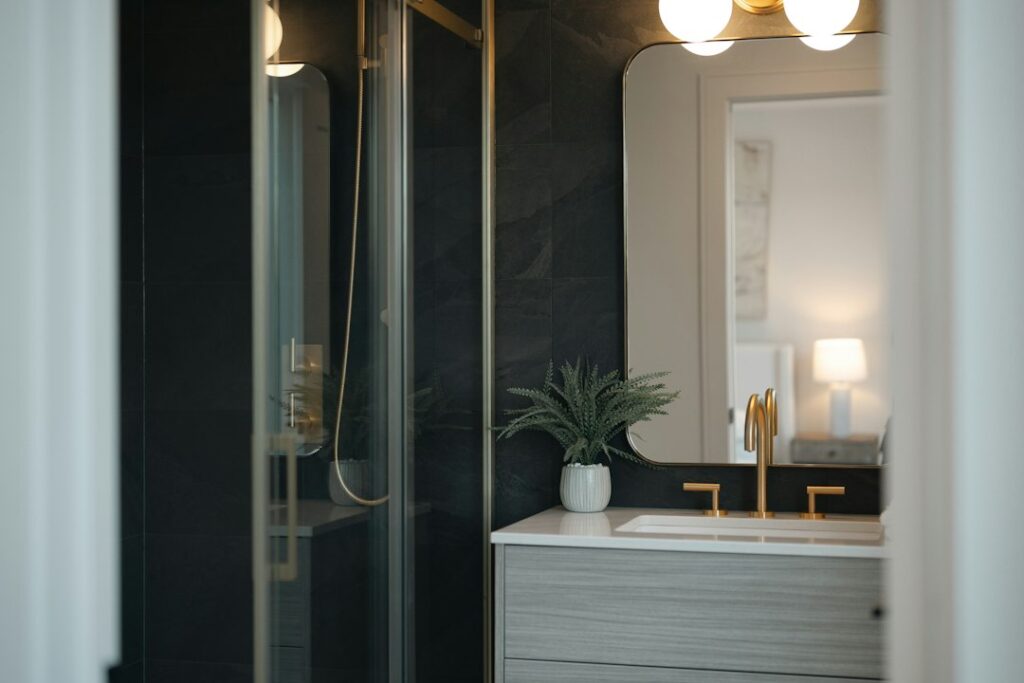
A puddle outside the shower is easy to blame on a bad seal, but a shower door leaking water can be failing in at least four different places. The bottom sweep might be worn. Water might be running out along the hinge side. The caulk where the frame meets the tile might have cracked. Or the door may have drifted out of plumb so it no longer closes against its seals. Each problem looks similar on the bathroom floor, and each has a different fix.
Part of our Bathroom Remodeling & Flooring guide — explore the full guide →
The fastest route is a simple diagnosis: dry everything, run water at one area at a time, and watch where it escapes. Most leaks turn out to be a worn sweep or failed caulk, both of which are inexpensive weekend repairs. Hinge and alignment problems take more care, and any leak that has been going on for months deserves a look at the floor and subfloor for hidden damage.
- How to Diagnose a Shower Door Leaking Onto the Floor
- Fix 1: Shower Door Leaks at the Bottom
- Fix 2: Leaks on the Hinge Side
- Fix 3: Failed Caulk Around the Frame
- Fix 4: Door Out of Plumb or Misaligned
- Check for Hidden Water Damage
- Troubleshooting Quick Reference
- Cost to Fix a Leaking Shower Door
- When to Call a Professional
- Frequently Asked Questions
Glass shower doors are heavy, even small ones. Before you lift or remove a door, read the safety notes in the hinge and alignment sections, and plan to have a helper.
How to Diagnose a Shower Door Leaking Onto the Floor
Start with a dry bathroom. Towel off the door, frame, curb and floor completely. Then test one zone at a time with a handheld shower head or a cup of water:
- Bottom edge: With the door closed, spray along the bottom of the glass from inside for 30 seconds. Check the floor outside.
- Hinge side: Spray the vertical gap on the hinge side, aiming at the seal. Watch the outside for drips.
- Latch side: Spray the gap where the door meets the strike jamb or fixed panel.
- Frame and curb caulk: Pour water slowly along the curb and the bottom track. Watch for water appearing outside the shower or at the base of the wall.
Note where water shows up first. If none of the tests produce a leak but the floor still gets wet during showers, the problem may be splash over the top of a short door, water running down the outside of the glass from the shower head angle, or a leak in the valve or supply behind the wall. That last case is plumbing, not the door.
Fix 1: Shower Door Leaks at the Bottom
When the shower door leaks at bottom, the sweep or drip rail is the prime suspect. The sweep is the vinyl or polycarbonate strip clipped to the bottom edge of the glass. Over time it hardens, splits, yellows or loses its flexible fin. Some frameless doors also use a drip rail, a rigid strip on the outside of the glass with a lip that sheds water back into the shower.
Tools and Materials
- Replacement shower door bottom sweep sized to your glass thickness (commonly 3/8 or 1/2 inch for frameless, 1/4 inch for framed)
- Tape measure
- Fine-tooth hacksaw or sharp utility knife
- Rubbing alcohol and a clean rag
- Work gloves
Steps
- Measure the glass thickness and the width of the door. Buy a sweep that matches the thickness exactly; a loose sweep slides off and a tight one can stress the glass edge.
- Slide or pry the old sweep off the bottom of the glass. Wear gloves, and do not lever against the glass edge with a metal tool.
- Clean the bottom edge of the glass with rubbing alcohol to remove soap film.
- Cut the new sweep to length, usually 1/16 to 1/8 inch shorter than the glass so it does not drag on the frame.
- Press the sweep onto the glass with the fin angled toward the inside of the shower, so water drips back into the pan.
- Close the door and check that the fin touches the curb lightly without bunching.
If water still gets past, look at the curb. A curb that slopes toward the bathroom instead of into the shower will push water out regardless of the sweep. A shower door leak guard, a short clear dam that attaches at the corner of the curb near the hinge, can help on frameless doors where water tracks along the bottom corner.
Fix 2: Leaks on the Hinge Side
On frameless and semi-frameless doors, the gap between the door and the wall or fixed panel on the hinge side is closed by a vertical seal, often a soft vinyl strip with a bulb or fin. When this seal shrinks, tears or slips, water sprays straight through. On framed pivot doors, the hinge rail may have a gasket that has worn out.
- Inspect the vertical seal along its full length. Look for tears, gaps at the bottom, and hardened sections.
- Measure the glass thickness and the gap you need to close, then buy a matching seal profile.
- Pull off the old seal, clean the edge with alcohol and slide on the new one.
- Check the bottom corner where the vertical seal meets the sweep. A small gap here is one of the most common leak points. Trim both seals so they meet tightly.
Also check the hinges. Loose hinge screws let the door sag, opening the gap at the top or bottom. Tighten them gently with a hex key; overtightening against glass can crack it. If the hinge is mounted into tile with anchors that have loosened, or the glass clamp has slipped, stop and call a glass professional.
Fix 3: Failed Caulk Around the Frame
Framed doors rely on a bead of silicone where the side jambs meet the wall and where the bottom track meets the curb. When that caulk cracks or peels, water behind the frame runs out onto the floor or into the wall.
- Cut out the old caulk with a plastic scraper or razor blade. Remove every trace; new silicone will not bond to old silicone.
- Clean the joint with rubbing alcohol and let it dry completely, ideally overnight.
- Inspect the joint for black mold. Surface mildew on caulk can be cleaned, but mold that has spread behind the caulk or into grout signals moisture getting into the wall.
- Apply 100 percent silicone sealant rated for kitchens and baths, with mold and mildew resistance.
- Caulk the outside of the frame along the walls and the outside of the track on the curb. Leave the inside of the bottom track’s weep holes uncaulked, since they let water drain back into the shower.
- Smooth the bead and let it cure fully, often 24 hours, before showering.
Never caulk the inside of a framed track solid. Blocked weep holes cause water to overflow the track and spill outside, which is a common reason a newly caulked door starts leaking more.
Fix 4: Door Out of Plumb or Misaligned
If the door does not close flush, rubs on one corner, or leaves a tapered gap on the latch side, it is out of plumb. Houses settle and hinges loosen, and even a 1/8 inch shift opens a path for water. Hold a level against the door edge and the wall to check.
Many frameless hinges have small adjustment screws, and framed pivot doors often have adjustable top and bottom pivots. Make small adjustments, one quarter turn at a time, and recheck with the level. If the door needs to be lifted off its hinges or the glass clamps need repositioning, that is a two-person job at minimum.
Glass Handling Safety
Shower doors are made of tempered glass, which is strong across its face but vulnerable at the edges and corners. A single 3/8 inch frameless door can weigh 50 to 80 pounds. Work with a helper, wear cut-resistant gloves and eye protection, and never strike, twist or flex the glass, especially near the edges. Set a removed door on a padded surface, standing on its long edge against a wall, never flat on a hard floor. If tempered glass breaks, it shatters into many small pieces all at once, so keep children and pets out of the room while you work.
Check for Hidden Water Damage
A leak that has gone on for weeks may have done damage you cannot see. Press on the floor next to the shower. Soft, spongy spots, lifting vinyl, cupped or darkened wood, loose tiles or cracked grout all suggest water has reached the subfloor. Check the ceiling below if the bathroom is on an upper floor; a stain there confirms it.
Fix the leak first, then let the area dry. Damage confined to the surface often recovers. A soft subfloor, rotted framing or mold growing on wood or drywall usually means removing the flooring to repair the substrate. Mold covering more than about 10 square feet should be handled by a mold remediation professional, and always address the moisture source before cleaning so it does not return.
Troubleshooting Quick Reference
- Puddle centered under the door: worn sweep or missing drip rail.
- Puddle at the hinge corner: gap where vertical seal meets sweep; try a leak guard.
- Water at the base of the wall: failed frame caulk or blocked track weep holes.
- Tapered gap on the latch side: door out of plumb or hinges loose.
- Wet floor but no leak during testing: spray angle, overspray, or a plumbing leak behind the wall.
Cost to Fix a Leaking Shower Door
Most fixes are inexpensive. A bottom sweep or vertical seal typically runs $10 to $40. A tube of quality silicone costs well under $15. A leak guard is a few dollars. Professional glass shop visits for hinge adjustment or seal replacement often fall between $100 and $300, while repairing a damaged subfloor can range from a few hundred dollars to well over $1,000 depending on how far the water spread.
When to Call a Professional
Call a glass installer if the glass is chipped at the edge, a hinge has pulled out of the tile, a clamp has slipped, or you need to remove and rehang a heavy frameless panel. Call a plumber if water appears even when the shower door is open and the shower is off, or if testing points to the valve or supply line. Call a flooring contractor or remodeler when the subfloor is soft, and a remediation pro for significant mold. For the typical shower door leaking from a worn sweep or tired caulk, though, an hour of careful work usually ends the puddles.
Frequently Asked Questions
Why is my shower door leaking at the bottom corner?
The corner where the vertical hinge seal meets the bottom sweep is a common gap. Trim the seals so they meet tightly, or add a small leak guard at the curb corner.
Should I caulk the inside of my shower door frame?
Caulk the outside of the frame and track. Leave the inside of the bottom track and its weep holes open so water drains back into the shower.
How do I know what size sweep to buy?
Measure the glass thickness, usually 1/4, 3/8 or 1/2 inch, and the door width. Buy a sweep made for that exact thickness and trim it to length.
Can a leaking shower door cause mold?
Yes. Repeated leaks keep caulk, grout, drywall and subfloor damp, which feeds mold. Fix the leak, dry the area, and call a pro for growth larger than about 10 square feet.
Is it safe to take a glass shower door off myself?
Only with a helper, gloves and eye protection. Tempered glass is heavy and can shatter if the edge is struck. For large frameless panels, a glass installer is the safer choice.