Say “shuffleboard floor” and two very different things come to mind depending on who you ask. To one person it is the long, glossy maple playing surface of a table shuffleboard; to another it is the smooth, painted concrete court where pucks are pushed with a cue. Both are legitimate, and both have their own materials, maintenance, and quirks. This guide clears up which shuffleboard floor you are dealing with and how to care for each, so you can keep your game fast, fair, and lasting for years.
Two Games, Two Surfaces
It helps to start by separating the two:
- Table shuffleboard is played indoors on a long, raised wooden table, typically 9 to 22 feet, where players slide weighted metal-and-resin pucks down a polished playfield.
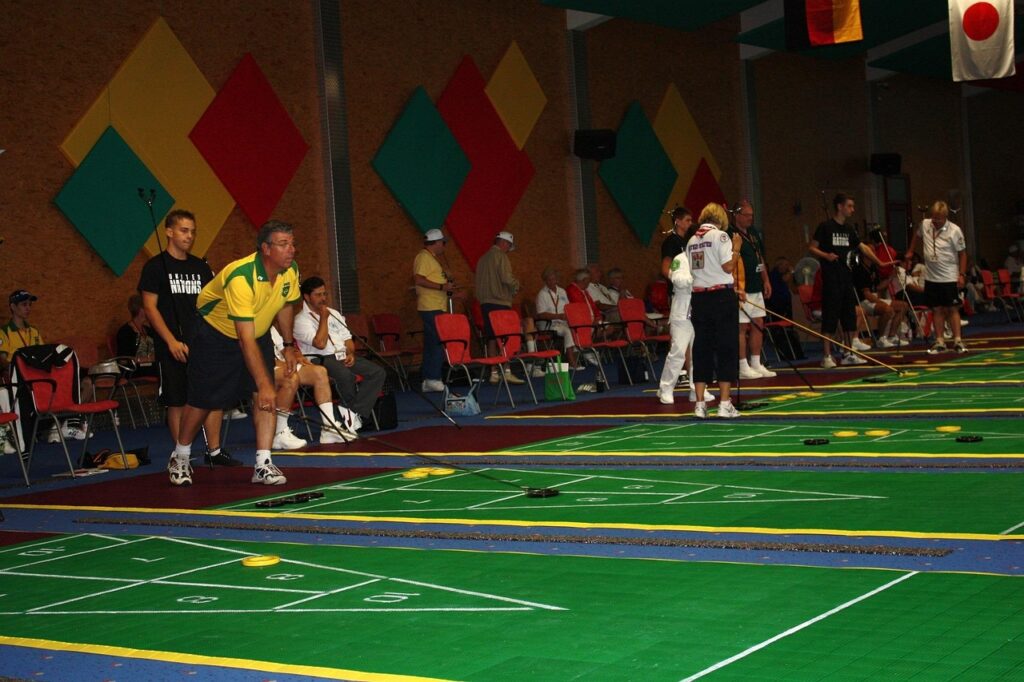
- Court (or deck) shuffleboard is played on a flat ground-level court, often painted concrete, where players use a long cue to push disks toward a scoring triangle.
The surfaces could hardly be more different. One is a precision hardwood plank with a slick finish; the other is a large troweled-and-painted slab. Knowing which one you mean changes everything about materials and care.
The Table Shuffleboard Playfield
The heart of a table shuffleboard is the playfield, and quality boards use solid hardwood. North American hard maple is the classic and premerred choice because it is dense, stable, and takes a glassy finish that lets pucks glide. The board is built thick, often 1.75 to 3 inches, to resist warping, and the better boards are a single solid plank or carefully laminated for stability.
On top of the wood sits a durable clear finish, usually a tough polymer or epoxy-style coating. This finish is what makes the surface play fast: pucks ride on a thin layer of silicone-based shuffleboard wax over that hard, slick coating. The finish also protects the maple from moisture and wear. A scratched or worn finish kills the glide and exposes the wood, which is why protecting it matters so much.
Climate Adjusters: Keeping the Maple Flat
Wood moves with humidity, and a long maple playfield is especially prone to cupping or crowning as moisture changes. That is why quality tables include climate adjusters, threaded rods or turnbuckles mounted along the underside of the board. By tightening or loosening them, you counteract the natural bowing of the wood and keep the surface flat and level.
A board that is slightly crowned will send pucks drifting toward the gutters; a slightly cupped board pulls them to the center. Learning to read the play and make small adjuster tweaks is part of owning a serious table. Keeping the room’s humidity stable, ideally in a moderate, consistent range, reduces how often you need to adjust.
Caring for a Table Playfield
A maple playfield rewards consistent, gentle care:
- Wax regularly with shuffleboard wax (the silicone-based “sand” or powder, not furniture wax) to keep the glide consistent and protect the finish.
- Wipe with a board-safe spray and a soft cloth to remove old wax buildup and grime before re-waxing.
- Never use water or household cleaners directly on the finish; moisture is the enemy of both the wood and the coating.
- Control humidity in the room to minimize warping and the need for adjuster tweaks.
- Cover the board when not in use to keep dust off and protect the finish.
Over many years a heavily used finish can be professionally refinished, but good waxing habits delay that for a long time.
The Court Shuffleboard Surface
Court shuffleboard is a different animal. The playing surface is a long, flat court, regulation courts run 52 feet, typically built from a smooth-troweled concrete slab. The slab must be very flat and level, because dips or high spots throw off the disks. After curing, the court is painted with the scoring triangles, lines, and numbers, and coated with a finish that controls speed.
Speed on a court is managed with a powdered shuffleboard “sand” or silicone bead sprinkled on the surface, much like wax on a table, to let the disks slide smoothly. Too little and the disks stick; too much and they fly past the scoring zone.
Caring for a Court Surface
An outdoor or indoor court needs upkeep aimed at flatness, cleanliness, and the right glide:
- Sweep the surface clear of dirt, leaves, and grit before every session; debris ruins the slide.
- Refresh the powdered bead or sand to maintain consistent speed.
- Repaint lines and scoring areas as they wear.
- Seal and patch the concrete as needed to keep the surface smooth and crack-free, especially on outdoor courts exposed to weather.
Buying a Table: What to Look For
If you are shopping for a table shuffleboard, the playfield is where your money should go. Prioritize these features:
- Solid hardwood, ideally hard maple, over thinner composite or laminate playfields, which do not play as true or last as long.
- Board thickness in the 1.75-to-3-inch range; thicker boards resist warping better.
- Climate adjusters underneath, a sign of a serious table that lets you keep the surface flat.
- A durable polymer or epoxy-style finish, which determines how fast and smooth the play is.
- Length that fits your room, with several feet of clearance at each end for players to stand and shoot comfortably.
Remember that a longer board plays faster and is more challenging, while a shorter board suits casual play and tight spaces. Measure your room before you fall in love with a 22-footer.
Which Shuffleboard Floor Do You Have?
If you are buying or maintaining a tabletop unit with a long wooden plank you slide pucks across by hand, you have a table playfield, think maple, polymer finish, wax, and climate adjusters. If you are dealing with a ground-level painted court played with cues, you have a court surface, think flat concrete, paint, and powdered glide. Both are correctly called a shuffleboard floor, but they demand different materials and care. Identify which one you have, match the maintenance to it, and your game will stay smooth and competitive for the long haul.
Prefer to explore on your own?
See how new flooring looks in your actual room in seconds — free, no signup.
Try the free Floor Studio →