The exterior color of a home is the first thing anyone sees, and choosing among the many siding colors for houses is one of the highest-impact decisions a homeowner makes during a renovation or new build. The right color boosts curb appeal, complements your roof and landscape, fits your neighborhood, and even affects resale value, while the wrong one can make a house look dated or clash with everything around it. Because siding is expensive and lasts decades, it pays to choose thoughtfully rather than on a whim.
- Why Siding Color Matters So Much
- Popular Siding Color Families
- Coordinating Siding, Trim, and Accents
- How Light and Climate Affect Color
- Considering Your Neighborhood and Resale
- Testing Colors Before You Commit
- Understanding Warm and Cool Undertones
- How Long Siding Colors Last
- Common Mistakes to Avoid
- Matching Color to Architectural Style
Why Siding Color Matters So Much
Siding covers the largest visible surface of a house, so its color sets the entire mood of the exterior. Unlike a can of interior paint you can redo in a weekend, siding color is a long-term commitment, especially with pre-finished materials like vinyl, fiber cement, and metal that are colored at the factory. The color you choose interacts with your roof, trim, front door, stone or brick accents, and even the landscaping, and it must also read well in your climate’s light. A color that looks perfect on a small chip can feel very different spread across an entire two-story wall.
Popular Siding Color Families
- Whites and creams: Timeless, bright, and versatile, pairing with almost any roof and trim; classic for farmhouse and traditional homes.
- Grays: The dominant modern neutral, from light dove to deep charcoal, reading clean and contemporary.
- Blues: Soft slate and navy blues have surged in popularity, especially for coastal and Craftsman styles.
- Greens: Sage, olive, and forest greens blend with natural surroundings and feel warm and grounded.
- Beiges and tans: Safe, warm neutrals that hide dirt and suit many architectural styles.
- Dark and black: Bold, dramatic charcoals and blacks make a striking modern statement, though they absorb heat.
Coordinating Siding, Trim, and Accents
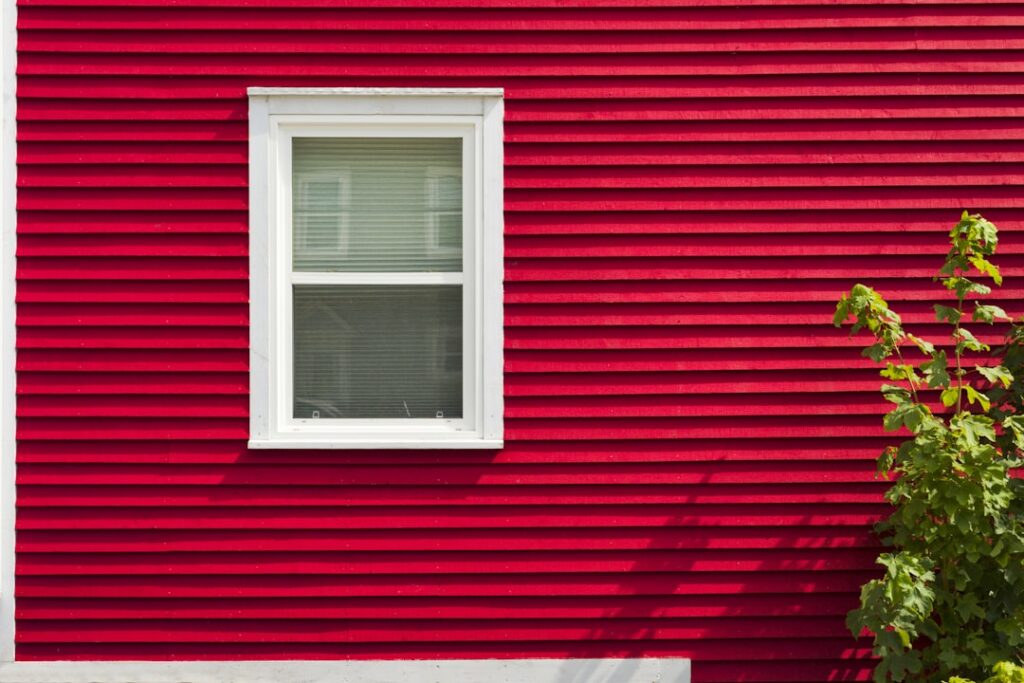
A polished exterior usually uses three colors: a field color for the main siding, a trim color for windows, corners, and fascia, and an accent color for the front door and shutters. A reliable formula is a neutral field, a crisp contrasting trim (white against gray or blue is a perennial favorite), and a bolder accent door in a color like navy, red, or black. Keep the roof color in mind, since it is essentially a fourth color you cannot easily change. A warm brown roof pairs better with beiges and greens, while a cool gray or black roof suits grays and blues.
How Light and Climate Affect Color
Exterior colors read lighter in bright, direct sun and darker in shade, so a mid-tone gray can look nearly white on a sunny southern wall and much deeper on a shaded northern one. Dark colors absorb heat, which can be a drawback in hot climates and can, on some materials, accelerate fading and expansion. Coastal areas favor light, breezy colors that resist showing salt and sun fade, while wooded lots often suit earthy greens and browns that harmonize with the trees. Always evaluate samples in your own light, at different times of day.
Considering Your Neighborhood and Resale
A home should stand out for the right reasons. A color wildly different from every neighbor can hurt resale and, in HOA communities, may not even be permitted. Study the palette of your street and aim to complement it while still expressing your taste. Neutrals like gray, white, beige, and soft blue are the safest for resale because they appeal to the widest range of buyers, while very bold or trendy colors narrow the pool. If you plan to sell within a few years, lean neutral; if this is your forever home, you have more freedom to choose a color you simply love.
Testing Colors Before You Commit
Never choose from a small chip alone. Order large samples or, for painted siding, buy sample quarts and paint a few square feet on different walls of the house. View the samples in morning, midday, and evening light, and next to your roof, trim, and any brick or stone. For factory-finished materials like vinyl and fiber cement, request full-size sample boards from the manufacturer and hold them against the house. Photograph the samples too, since a camera sometimes reveals undertones your eye glosses over. This testing step prevents the expensive regret of a color that looks wrong once it covers the whole house.
Understanding Warm and Cool Undertones
The most subtle and most frequently overlooked aspect of choosing a siding color is its undertone, the faint hue hiding beneath the main color. A gray, for example, can lean warm with a beige or taupe undertone (often called a greige) or cool with a blue or green undertone, and the two read completely differently on a house. A cool gray can look crisp and modern against a black roof but turn cold and lifeless next to warm brick or a brown roof. A warm greige feels inviting and pairs beautifully with earth tones but can look muddy against cool stone. The same principle applies to whites, which range from warm creams to stark cool whites, and to beiges and greens. The safest way to identify an undertone is to place a sample next to a pure version of the suspected hue and next to your fixed elements like brick, stone, and roofing. Matching undertones across the whole exterior, so the siding, trim, roof, and masonry all lean the same warm or cool direction, is what makes a color scheme feel harmonious rather than slightly off in a way people cannot quite name.
How Long Siding Colors Last
Color longevity varies by material and matters for a decades-long decision. Vinyl siding color is molded throughout the material, so it never needs repainting, but darker vinyl colors can fade over many years of sun exposure and, in cheaper products, may show fading unevenly. Modern premium vinyl uses UV-resistant formulations and fade warranties to address this. Fiber cement like James Hardie comes with baked-on factory finishes such as ColorPlus that resist fading for 15 years or more and can be repainted when desired. Painted wood siding offers unlimited color choice but needs repainting every 5 to 10 years. Metal siding holds color well with quality coatings. When choosing, factor in how the color will age: very dark and highly saturated colors show fading and heat effects sooner than mid-tone neutrals, which is one more reason neutrals dominate. Choosing a quality product with a strong fade warranty protects your investment and keeps the color you loved looking fresh for the long life of the siding.
Common Mistakes to Avoid
- Choosing from a tiny chip: Colors intensify across a large surface; always test big samples.
- Ignoring the roof color: A clashing roof undermines even a beautiful siding color.
- Forgetting undertones: A gray with a blue or green undertone can clash with warm brick.
- Going too trendy: A very fashionable color can look dated in a decade and hurt resale.
- Overlooking the HOA: Many communities restrict exterior colors; check before you buy.
- Skipping the accent: A striking door and trim make even a neutral field feel intentional.
Matching Color to Architectural Style
Certain colors reinforce a home’s architecture. White or soft gray with black windows suits modern farmhouses. Earthy greens, browns, and warm neutrals flatter Craftsman and bungalow styles. Crisp whites and pastels fit Colonial and coastal homes. Bold charcoals and blacks amplify sleek contemporary designs. Matching your color to your home’s style makes the whole exterior feel cohesive and considered rather than arbitrary. When siding colors for houses are chosen with the roof, trim, style, light, and neighborhood all in mind, the result is an exterior that looks polished, holds its value, and gives you a home you are proud to pull up to every day.