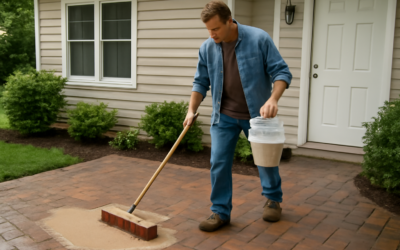
A glossy epoxy floor looks stunning right up until someone steps on it with wet shoes and goes down hard. That single hazard is why nearly every commercial garage, workshop, and wash bay relies on silica sand for epoxy flooring to build traction into the surface. Silica sand is a clean, dried, graded quartz aggregate that you broadcast into wet epoxy to create a textured, slip-resistant profile. Get the grit and the application right and you end up with a floor that grips like fresh asphalt; get it wrong and you either trap haze or build a surface that shreds knees and mops alike.
Part of our Epoxy, Concrete & Garage Floors guide — explore the full guide →
What Silica Sand Actually Does in an Epoxy System
Epoxy on its own cures to a smooth, almost frictionless film. Silica sand changes that in two ways. First, it raises the coefficient of friction, which is the technical measure of slip resistance. Second, it adds physical body to the coating, helping bridge minor surface imperfections and giving thin self-leveling layers more mechanical strength underfoot.
Because silica is roughly 99 percent quartz, it is chemically inert, hard (about 7 on the Mohs scale), and will not react with the resin or yellow over time. That inertness is the whole point. You want an aggregate that holds its shape and edge for years, not one that crushes into dust the first winter.

Grit Sizes and What Each One Delivers
Silica sand is sold by mesh size, and the number matters more than almost any other spec. Smaller mesh numbers mean larger grains. Here is how the common grades behave on a floor:
- 16-30 mesh: Coarse and aggressive. Best for ramps, loading docks, and exterior wash areas where heavy slip resistance beats comfort.
- 20-40 mesh: The workhorse for garages and shops. Noticeable grip without feeling like a cheese grater.
- 30-60 mesh: A medium texture that hides dirt and gives light traction for kitchens and light-traffic commercial spaces.
- 60-90 mesh (fine): Subtle micro-texture, mostly used to take the glare off a coating or add a faint slip break in living spaces.
If you are unsure, 20-40 mesh is the safe default for most residential garages. It cleans easily, feels right under work boots, and still takes a topcoat well.
Full Broadcast vs. Partial Broadcast
How much sand you throw down defines the entire character of the floor. The two approaches are not interchangeable.
Full Broadcast (Reject)
In a full or “broadcast to reject” method, you fling sand into the wet base coat until the surface can absorb no more and dry sand sits on top. After cure, you sweep or vacuum the excess and apply one or two topcoats. This builds maximum texture and is standard for industrial and wet environments. Expect to use significantly more sand, often 0.5 to 1 pound per square foot for the broadcast plus reclaim.
Partial Broadcast (Broadcast to Refusal of a Set Rate)
Here you scatter a measured, lighter amount of sand evenly so it partially embeds and the resin still self-levels somewhat. This yields a softer, easier-to-clean texture suited to garages and showrooms. Coverage is more like 0.1 to 0.25 pound per square foot.
Mixing Ratios: Broadcast vs. Slurry
There are two ways to introduce silica into the system, and they serve different goals.
- Broadcast method: Sand is thrown onto the wet coating, not mixed into it. This keeps the resin workable and puts the grit where it counts, at the wear surface.
- Slurry method: Sand is blended directly into the epoxy, typically at a ratio of 1 part epoxy to 0.5 to 1 part sand by volume. Slurry coats build thickness and patch divots but bury much of the texture, so they often still need a light broadcast on top for grip.
Always check the manufacturer’s data sheet. Some self-leveling resins specify a maximum sand load before the mix gets too stiff to flow.
How to Broadcast Silica Sand the Right Way
Timing is everything. Sand has to land while the base coat is still wet and tacky, usually within the first 10 to 20 minutes of working time.
- Mix and pour your epoxy base coat and spread it to the recommended film thickness with a notched squeegee, then back-roll.
- While the coat is wet, broadcast the sand by tossing it upward and letting it rain down evenly. Throwing it up, not out, prevents heavy clumps.
- Work in manageable sections so you can reach wet resin before it sets.
- Let the coat fully cure, then sweep and vacuum all loose, unembedded sand.
- Apply one or two clear or pigmented topcoats to lock the grit in place and dial the texture to taste. Two topcoats over a heavy broadcast produce a smoother feel.
Pros and Cons of Adding Silica Sand
The benefits are real, but so are the trade-offs.
- Pro: Major boost in slip resistance, the single biggest safety upgrade you can make to an epoxy floor.
- Pro: Inexpensive, roughly $10 to $25 for a 50-pound bag, covering a lot of floor.
- Pro: Hides minor subfloor flaws and adds coating strength.
- Con: Aggressive textures trap dirt and need more scrubbing to clean.
- Con: Too coarse a grit feels harsh underfoot and can be hard on bare feet or knees.
- Con: Improper timing leaves sand sitting on the surface or sinking out of reach.
Buying Guide: What to Look For
Not all bagged sand is floor-grade. Buy product labeled kiln-dried and washed, sold specifically for coatings or sandblasting. Damp sand clumps and refuses to broadcast evenly, and unwashed sand brings silt that weakens adhesion. Confirm the mesh range printed on the bag rather than guessing from the photo. For a standard two-car garage of about 400 square feet using a partial broadcast, plan on roughly 40 to 80 pounds; a full reject broadcast can run 200 pounds or more before reclaim.
One safety note worth taking seriously: dry silica dust is a respiratory hazard. Wear an N95 or better respirator while broadcasting, and keep the area ventilated. Done carefully, silica sand for epoxy flooring turns a slick decorative coating into a durable, genuinely safe working surface that will outlast the resin around it.
Frequently Asked Questions
Can you put non-slip grit down before the first coat of epoxy?
No. Sand spread on bare concrete has nothing to bond to and keeps the epoxy from wetting the slab, which weakens adhesion. Broadcast the sand into a wet base coat within its working time so each grain embeds in resin, then lock it in with one or two topcoats after the base cures and the loose sand is removed.
Is quartz sand the same as silica sand for epoxy floors?
Mostly, yes. Silica sand is about 99 percent quartz, so the two names often describe the same aggregate. In flooring, quartz sand often means colored quartz, granules coated with pigment for decorative broadcast floors, while plain silica sand keeps its natural color and is used mainly for traction. Both are hard, inert, and broadcast the same way.
What size in mm are silica sand grits for epoxy?
The common 20-40 mesh grade has grains of roughly 0.4 to 0.85 mm. Coarse 16-30 mesh runs about 0.6 to 1.2 mm, 30-60 mesh about 0.25 to 0.6 mm, and fine 60-90 mesh about 0.16 to 0.25 mm. Once the loose sand is swept off, a broadcast layer is roughly one grain deep before the topcoats go on.
Can you mix silica sand into the epoxy topcoat?
Only fine grades, and with care. A small amount of 60-90 mesh sand can be stirred into a topcoat for a light anti-slip texture, but sand is heavy and sinks, so the mix needs constant stirring to stay even. Many installers use a fine anti-slip additive made for topcoats instead, or broadcast lightly into the wet topcoat.