
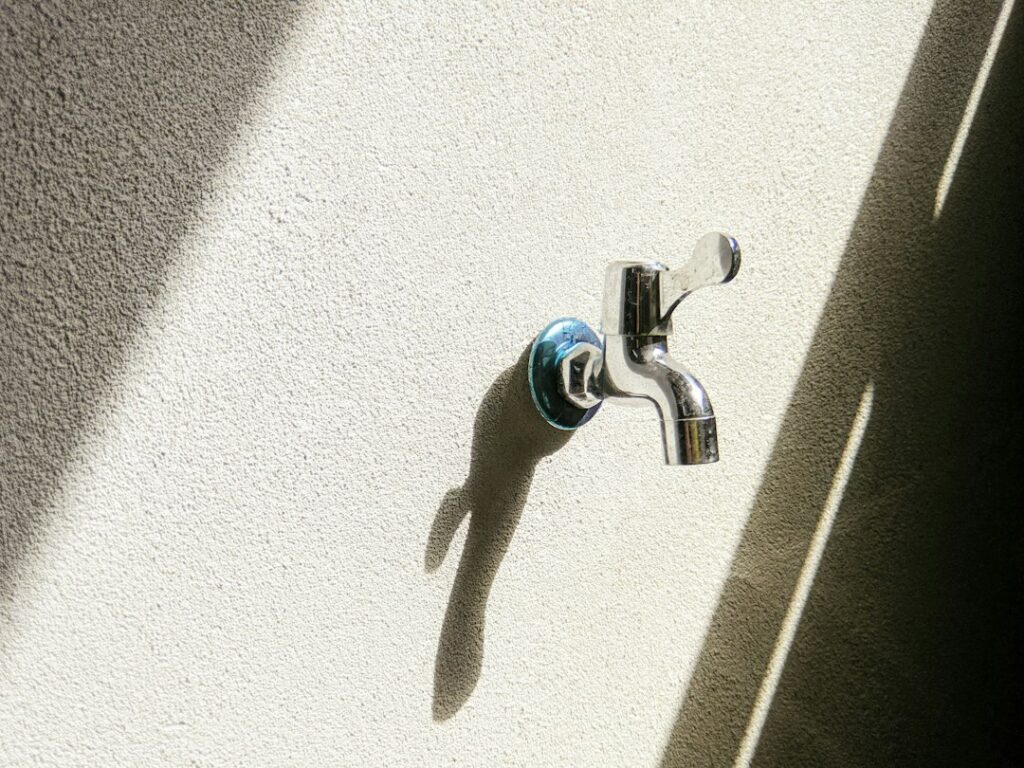
The cleanest, most modern look on a bathroom vanity comes from a fixture that does more with less. A single faucet bathroom setup uses one spout and one lever to control both temperature and flow, mounted through a single hole in the sink or countertop, and it has become the go-to choice for contemporary vanities, powder rooms, and space-tight layouts. Fewer parts on the deck mean easier cleaning, a streamlined appearance, and often a simpler installation than the sprawling three-piece widespread faucets of the past.
Part of our Bathroom Remodeling & Flooring guide — explore the full guide →
This guide explains what single-hole faucets are, how they differ from other configurations, how to size and choose one, and how to install and maintain it so your vanity stays leak-free and looking sharp.
- What "Single Faucet" Really Means
- Matching the Faucet to Your Sink
- Understanding the Valve Inside
- Choosing Height, Reach, and Finish
- Installing a Single-Hole Faucet
- Keeping It Working
- Vessel, Wall-Mount, and Specialty Styles
- Finish and Style Coordination
- Cost and Value Considerations
- Is It Right for Your Bathroom
What “Single Faucet” Really Means
The term describes a single-hole, single-handle faucet: everything, spout and control, mounts in one hole and operates from one lever. This differs from the two other common bathroom configurations. A centerset faucet combines spout and two handles on a single 4-inch base, mounted through three holes but joined as one unit. A widespread faucet spreads the spout and two separate handles across 8 to 16 inches, using three independent holes.
Single-hole faucets win on simplicity and modern style. The one-lever control mixes hot and cold intuitively, and with no separate handles collecting grime, the deck wipes clean in seconds. They are especially popular on small vanities, floating sinks, and vessel bowls where deck space is precious.
Matching the Faucet to Your Sink
The number of holes in your sink or countertop dictates what fits, so identify that before shopping. A sink drilled for a single hole obviously takes a single-hole faucet. But you can also install a single-hole faucet on a sink drilled for three holes by adding a deck plate (also called an escutcheon), a cover plate that spans the outer holes and hides them while the faucet mounts through the center.
- Single-hole sink: install a single-hole faucet directly.
- Three-hole sink (4-inch centers): use a single-hole faucet with a matching deck plate, or switch to a centerset.
- No sink holes (vessel or wall-mount): a countertop-mounted single-hole faucet or a wall-mount faucet works.
Measure your setup and confirm the faucet you want either matches the drilling or includes a deck plate. Many single-hole faucets ship with an optional deck plate for exactly this flexibility.
Understanding the Valve Inside
What controls the water beneath the handle determines reliability. The best single-handle bathroom faucets use a ceramic disc cartridge, two polished ceramic plates that slide against each other to mix and meter water. Ceramic discs resist wear and hard-water grit and can last decades without dripping, which is why they dominate quality faucets.
Cheaper faucets may use ball or compression valves with rubber washers that wear out and drip within a few years. When shopping, favor brands with readily available replacement cartridges, such as Moen, Delta, Kohler, and Grohe, so a future repair is a quick, inexpensive swap rather than a whole-faucet replacement.
Choosing Height, Reach, and Finish
Fit the faucet to how you use the sink. Standard single-hole faucets suit most drop-in and undermount sinks. For a vessel sink that sits on top of the counter, you need a taller vessel faucet so the spout clears the raised bowl rim, typically with a spout height of 10 inches or more. Check the spout reach as well, so water lands in the center of the bowl and not against the back wall or over the front edge.
Finish is both style and upkeep. Brushed nickel and spot-resistant stainless hide water spots and fingerprints well. Chrome is bright and easy to clean but shows every smudge. Matte black and brushed gold are on-trend and hide spots, though they can reveal hard-water scale in mineral-rich areas. Choose a durable PVD-coated finish for the longest-lasting good looks, and coordinate it with your shower trim, towel bars, and cabinet hardware.
Installing a Single-Hole Faucet
Installing a single-hole faucet is one of the easier bathroom projects, often faster than a widespread because there is only one connection point to seat and seal. Plan on one to two hours for a first attempt.
- Shut off the hot and cold supply valves under the sink and open the old faucet to drain the lines.
- Disconnect the supply lines, loosen the mounting nut, and remove the old faucet from above.
- Clean the deck, then set the new faucet (with deck plate if needed) into the hole, feeding the supply lines and any mounting hardware through.
- Secure the faucet from below with its mounting nut or bracket, keeping the spout straight and centered.
- Connect the flexible supply lines to the correct hot and cold valves, turn the water back on slowly, and check every joint for leaks.
Run the faucet for a minute to flush out debris, and check the connections again after the first day, since fittings can seep slightly as they settle. If your faucet includes a pop-up drain assembly, install it while you have access under the sink.
Keeping It Working
Single-hole faucets need little care, but a few habits keep them trouble-free. Wipe the finish with a soft, damp cloth and avoid abrasive or ammonia-based cleaners that can dull or strip it. If flow weakens, the aerator at the spout tip has likely collected mineral scale; unscrew it, soak it in white vinegar for an hour, and rinse it clear.
A drip at the spout means the cartridge is worn, so shut off the water, pull the handle and cartridge, and drop in a matching replacement, usually a 15-minute fix. A leak around the base points to a worn O-ring, another cheap part swap. Because a single-hole faucet has fewer connections than a widespread, there are simply fewer places for it to fail.
Vessel, Wall-Mount, and Specialty Styles
Single-handle bathroom faucets come in more than the standard deck-mount form, and matching the style to your sink is essential. A vessel faucet is tall, built to serve a bowl that sits on top of the counter, and needs a spout height of roughly 10 to 14 inches so water clears the raised rim. Measure your vessel bowl’s height and add clearance before choosing, or you will end up with a spout that pours against the bowl’s edge.
Wall-mount single-handle faucets mount to the wall above the sink rather than the deck, freeing the countertop for a clean, minimalist look and easy cleaning. They require the valve and supply lines to be roughed into the wall, so they are best planned during a remodel rather than added later. Single-hole faucets also come in short, standard, and gooseneck spout heights; a low spout suits a shallow sink, while a taller arc gives more room to wash your hands or fill a cup. Choose the height and mount that fit both your sink type and your daily habits.
Finish and Style Coordination
Because a single faucet is the visual centerpiece of a small vanity, its finish carries real design weight. Coordinate it with the other metals in the room, the drain, towel bars, robe hooks, cabinet hardware, and the shower and tub trim, so the bathroom reads as a designed space rather than an assortment of parts. You do not need a flawless match, but keeping the metals in one family looks intentional.
- Chrome and polished nickel: bright, classic, easy to clean, but show water spots.
- Brushed nickel and stainless: warm-toned, spot-resistant, and forgiving of fingerprints.
- Matte black: bold and modern, hides spots, pairs well with white and light stone.
- Brushed gold and bronze: warm and on-trend, flattering in traditional and transitional baths.
Whatever you choose, favor a durable PVD-coated finish, which resists scratching and tarnishing far better than cheap electroplating and holds its color for the life of the faucet.
Cost and Value Considerations
Single-hole bathroom faucets span a broad price range, and understanding it helps you spend wisely. Budget models start around $40 to $80, mid-range faucets from reputable brands run $80 to $200, and premium or designer pieces climb to $250 to $500 or more. The jump in price usually buys a better ceramic-disc cartridge, a heavier solid-brass body, a more durable finish, and readily available replacement parts.
The value case for spending a bit more is strong at a fixture you use every day. A quality faucet from a serviceable brand rarely leaks, and when a part finally wears, a cheap cartridge or O-ring restores it rather than forcing a full replacement. Skimping on a no-name bargain often means a drip within a year and no parts to fix it, so a solid mid-range faucet is usually the smartest long-term buy for the money.
Is It Right for Your Bathroom
A single-hole faucet is the strongest choice for small vanities, modern and minimalist designs, powder rooms, and any sink where easy cleaning and a clean profile matter. Widespread faucets still suit larger, more traditional vanities where the spread-out look feels appropriate and there is room for it. But for the majority of today’s bathrooms, the simplicity, style, and easy maintenance make the single-handle option the practical winner.
Choose a ceramic-disc faucet from a serviceable brand, match it to your sink’s drilling and depth, pick a durable finish, and install it in an afternoon. A well-chosen single faucet bathroom setup gives you effortless one-hand control, a tidy vanity, and years of leak-free service, all from a fixture that looks better precisely because it does more with less.


