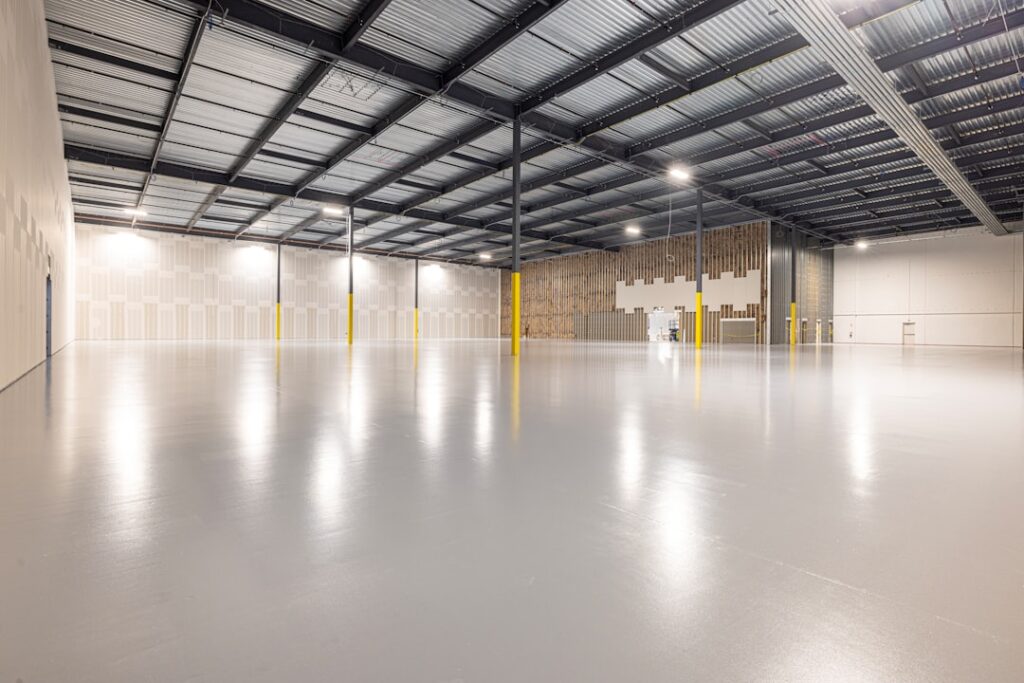
Slip resistant epoxy flooring takes an ordinary two-part epoxy coating and turns it into a surface you can walk on with confidence, even when it is soaking wet. Standard epoxy cures to a glassy, almost mirror-like finish that looks great in a showroom but behaves like an ice rink the moment water, oil, or grease hits it. Contractors solve that problem by mixing or broadcasting gritty aggregates into the coating. Done right, the floor keeps its chemical resistance and shine while gaining the traction a garage, kitchen, or wash bay needs.
What Makes Epoxy Slip Resistant
Three additives do most of the heavy lifting. Aluminum oxide is the toughest option, a hard mineral grit that resists wear for years and works well in high-traffic industrial spaces. Silica sand is the budget-friendly workhorse, cheap and easy to broadcast at roughly 20 to 40 mesh. Polymer or plastic grit sits at the softer end, giving a subtle texture that is gentler on bare feet and easier to clean, which is why it shows up around pools and locker rooms.
Grit size drives everything. A coarse 16-grit aluminum oxide creates aggressive bite for a loading dock, while a fine 100-grit polymer bead adds just enough tooth for a residential garage. I usually spec a medium sand for home projects because it balances traction against comfort. Push the grit too coarse and you build a surface that shreds knees and grinds dirt into itself.
The Broadcast Method Explained
Broadcasting is the most reliable way to build traction into an epoxy floor, and it is the technique most pros default to. After the primer cures, you roll out the base coat of pigmented epoxy at the full wet-film thickness. While that coat is still tacky, you hand-cast or use a hopper to throw the aggregate up and let it rain straight down. Casting upward matters because it settles evenly instead of clumping where your hand sweeps.
You broadcast to refusal, meaning you keep adding grit until the wet epoxy will not absorb any more and the surface looks uniformly dry. Once it cures overnight, you scrape and vacuum the loose, unbonded aggregate, sometimes reclaiming a pound or two per hundred square feet. Then you lock everything in with one or two clear topcoats. The topcoat thickness controls the final texture: a heavy flood coat buries the grit for a smoother feel, while a thin topcoat leaves the peaks exposed for maximum grip.
DCOF and Coefficient of Friction Targets
Slip resistance is not a guess; it is measured. The current benchmark is Dynamic Coefficient of Friction, or DCOF, tested under the ANSI A326.3 method. For any floor expected to get wet, aim for a wet DCOF of 0.42 or higher. That number is the widely accepted threshold for interior spaces where water is present, and it is what most building inspectors and insurance carriers want to see documented.
- Dry interior areas: 0.42 DCOF is comfortable and safe.
- Wet interior areas, kitchens, entries: target 0.42 or above.
- Ramps, exterior slopes, and wash areas: push toward 0.50 to 0.60 for extra margin.
- Older static COF ratings called for around 0.60, so treat that as a rough historical equivalent.
Ask your coating supplier for the tested DCOF value of their broadcast system rather than trusting a marketing word like “textured.” Numbers hold up; adjectives do not.
Where Slip Resistant Epoxy Shines
Garages top the residential list. Snow-melt, tracked rain, and the occasional oil drip make a smooth garage floor genuinely dangerous, and a broadcast silica finish fixes that for a few hundred dollars in materials. Commercial kitchens rely on it too, where grease and dishwater film the floor all shift long and health codes demand traction.
Ramps are another obvious candidate. Any sloped surface multiplies slip risk, so wheelchair ramps, parking-deck transitions, and dock inclines almost always get an aggressive grit. Wash bays and vehicle detailing stalls stay wet by design, making a high-DCOF floor mandatory rather than optional. You also see these systems in breweries, food-processing plants, and veterinary clinics where hoses run daily.
Safety, PPE, and Ventilation
Uncured epoxy is a serious chemical, and the fumes deserve respect. Wear a properly fitted respirator rated for organic vapors, not a paper dust mask, because the amine hardeners off-gas compounds that irritate lungs and can sensitize you over time. Nitrile gloves are non-negotiable since epoxy resin causes contact dermatitis, and a single bad exposure can leave you allergic for good.
- Organic-vapor respirator with fresh cartridges.
- Chemical-resistant nitrile gloves, plus long sleeves.
- Safety glasses to guard against splatter and flying grit.
- Cross-ventilation: open doors, run box fans, and never coat a sealed room.
Broadcasting adds airborne dust, so keep that respirator on during the throw. If you feel lightheaded or your eyes sting, you do not have enough air movement. Stop and fix the ventilation before continuing.
The Cleaning Tradeoff
Every bit of traction you add makes the floor harder to clean, and that tension never fully disappears. A coarse aluminum-oxide finish grips beautifully but traps grime in its peaks and valleys, chews up mop heads, and often needs a stiff deck brush or auto-scrubber to get truly clean. Fine polymer grit mops more easily but offers less bite.
Match the aggressive of the texture to how much cleaning labor you can commit to. A restaurant with a nightly scrubber can run coarse grit; a homeowner who wants a quick weekly mop should lean toward medium or fine. Rinse thoroughly, because leftover cleaner residue can actually reduce the DCOF you paid to build.
Cost, Lifespan, and Final Verdict
Expect materials to run roughly $2 to $5 per square foot for a solid broadcast system, with professional installation pushing the total to $5 to $12 depending on prep and topcoat count. A well-installed floor lasts 10 to 20 years indoors, though the anti-slip texture will gradually wear at pivot points and doorways where feet twist hardest.
For anyone weighing traction against maintenance, slip resistant epoxy flooring remains one of the best values in commercial and garage flooring. It delivers documented safety, chemical resistance, and a long service life, as long as you respect the safety gear during install and accept a little extra scrubbing afterward. Spec the DCOF, broadcast to refusal, and you get a floor that earns its keep every wet day.
Prep and Common Installation Mistakes
Traction lives or dies on surface prep, and this is where most failures start. Concrete has to be mechanically profiled, either by diamond grinding or shot blasting, until it reaches roughly a CSP 2 to 3 texture that looks and feels like medium sandpaper. Skip that step and the whole system, grit included, can delaminate in sheets a year later no matter how carefully you broadcast.
Moisture is the other silent killer. Run a calcium chloride or relative-humidity test before you open a single kit, because vapor pushing up through a slab will blister even a perfect coating. I have seen homeowners rush a garage over a damp slab in spring and watch the floor bubble by summer. A few common errors show up again and again:
- Broadcasting into epoxy that has already skinned over, so the grit never bonds.
- Flooding too heavy a topcoat and burying the texture you paid to build.
- Coating in direct sun or over 90 degrees, which flashes the epoxy too fast.
- Skipping the vacuum step and sealing loose grit that later sheds underfoot.
Take your time on the base, respect the pot life printed on the kit, and the finished floor will hold its rated traction for years instead of months.