
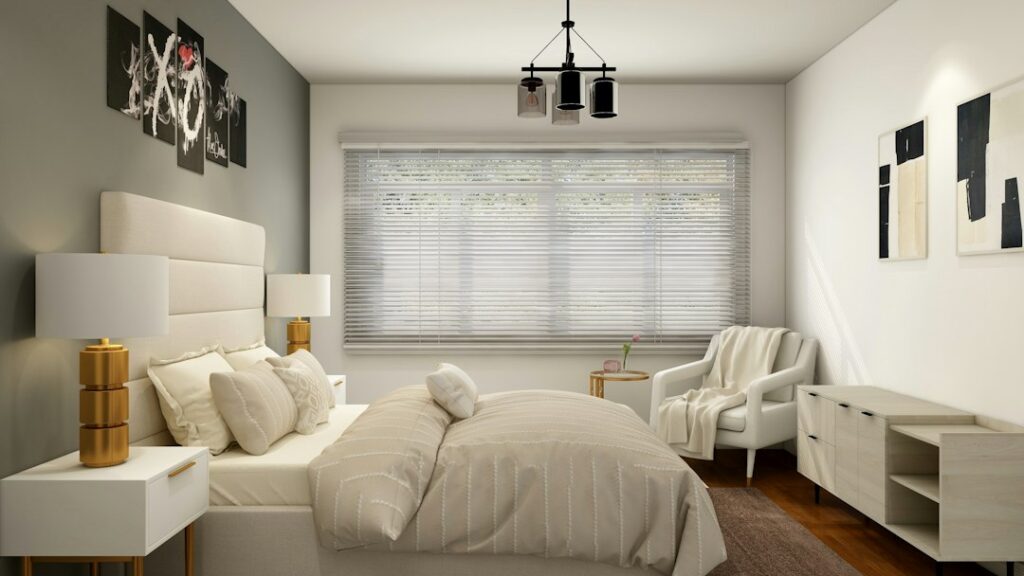
Most people buy a small humidifier for bedroom use by looks alone, then wonder why it runs dry at 3 a.m. or leaves a damp ring on the nightstand. The fix is simple: match the unit’s daily output and tank size to your room’s square footage before you think about color or shape. A typical 10×12-foot bedroom needs far less moisture than a 14×16-foot primary suite, and a compact unit that fits one can struggle in the other.
For most bedrooms under 250 square feet, a unit with a 0.5- to 1-gallon tank and an output of roughly 1 to 2 gallons per day is plenty. That size usually runs 8 to 16 hours on a medium setting, which covers a full night. Rooms between 250 and 400 square feet call for 1.5 to 2 gallons of tank capacity or a model rated for “medium rooms.” Your goal is indoor relative humidity between 30 and 50 percent, not a steamy room.
Placement matters just as much as size. A bedside humidifier should sit on a flat, water-resistant surface, at least a foot or two above the floor, and away from walls, curtains, wood furniture and electronics. Get those two things right, sizing and placement, and even an inexpensive compact model will do its job quietly all winter.
How to Size a Small Humidifier for Bedroom Spaces
Manufacturers list three numbers that matter: tank capacity, output (usually in gallons per day or milliliters per hour), and a recommended room size. Those numbers only mean something together. A small humidifier for bedroom corners with a 0.3-gallon tank and high output might empty in four hours, while the same tank on a low setting can last all night.
Use this rough guide as a starting point:
- Under 150 sq ft (small guest room, nursery, dorm): 0.25 to 0.5 gallon tank, about 1 gallon per day output. Mini humidifiers and personal units fit here.
- 150 to 250 sq ft (standard bedroom): 0.5 to 1 gallon tank, 1 to 2 gallons per day.
- 250 to 400 sq ft (primary bedroom): 1 to 2 gallon tank, 2 to 3 gallons per day.
- Over 400 sq ft or open to a hallway: step up to a medium or large-room unit rather than stacking two minis.
Adjust for your conditions. Vaulted ceilings, forced-air heat, drafty older windows and very cold climates all dry a room faster, so bump up one size. A tight, newer home with a heat pump may need less. Ceiling height counts because you are humidifying volume, not floor area; a 9-foot ceiling holds about 12 percent more air than an 8-foot one.
Run Time and Refill Math
Divide tank capacity by the hourly output to estimate run time. A 1-gallon tank (about 3,785 mL) at 200 mL per hour lasts roughly 19 hours. At 350 mL per hour, you get about 11 hours. If you sleep eight hours and want the unit running before bed, aim for at least 10 to 12 hours of run time on your normal setting so you are not refilling every evening and morning.
Types of Compact Bedroom Humidifiers
Compact units come in three main styles, and each has tradeoffs for a room where you sleep.
Ultrasonic Cool Mist
An ultrasonic cool mist humidifier uses a vibrating plate to create a fine, visible mist. These are usually the quietest option, often just a faint hum, which makes them the most popular choice for a bedside humidifier. They draw little power, typically 20 to 35 watts. The downside: with hard tap water, they can release mineral “white dust” that settles on furniture. Using distilled or demineralized water largely solves that.
Evaporative (Wick)
Evaporative models pull air through a wet wick with a small fan. They naturally limit themselves because evaporation slows as humidity rises, so over-humidifying is less likely. The fan adds background noise some sleepers like and others do not, and wicks need replacing every one to three months.
Warm Mist
Warm mist units boil water and release steam. They are quiet and the boiling kills many microbes, but they use far more electricity and the hot water can scald. In a bedroom with young children or pets, a cool mist design is usually the safer compact choice.
Style is fine to consider once the function is right. Many shoppers look for a cute humidifier for bedroom decor, such as shapes, soft night lights or wood-look bases. Just confirm the decorative model still has the tank size and output your room needs, an easy-open tank and an auto shut-off.
Features Worth Paying For
A mini humidifier for bedroom use does not need many extras, but a few features make a real difference at night:
- Auto shut-off when the tank runs dry, so the unit does not run empty or overheat.
- Built-in humidistat or target humidity setting that cycles the unit off near your chosen level, typically 40 to 45 percent.
- Dimmable or switchable display lights so the glow does not keep you awake.
- Wide tank opening you can reach into with a brush for cleaning.
- Top-fill design so you can pour water in without carrying the tank to the sink.
- Noise rating in the 25 to 35 decibel range for light sleepers.
Skip features that add cleaning work without much benefit, like aromatherapy pads built into the water path. Essential oils in a tank not designed for them can damage plastic and encourage residue buildup.
Where to Place a Bedside Humidifier
The best bedside humidifier position is on a stable, flat surface about 2 to 4 feet off the floor, so the mist disperses into the room before it settles. Floor placement lets mist condense on carpet or hardwood, and moisture pooling on wood floors can lead to cupping, stains or finish damage over time.
Follow these placement rules:
- Set the unit on a waterproof tray or coaster, especially on a wood nightstand.
- Keep it at least 12 inches from walls and 3 feet from your face if you sleep on that side, so mist is not blowing directly on you.
- Point the nozzle away from curtains, bedding, books and electronics.
- Plug the cord directly into a wall outlet and route it so no one trips over it at night.
- Avoid placing it under a window where cold glass will collect condensation.
- Keep it out of reach of toddlers and pets who might tip it over.
If you notice fog on windows, damp spots on the nightstand or a musty smell, the unit is either too large for the room, set too high or too close to a surface.
Managing Moisture and Preventing Mold
A humidifier adds water to the air, and too much of it invites mold on window frames, closet walls and behind furniture. The most important accessory you can buy is an inexpensive digital hygrometer. Keep bedroom humidity between 30 and 50 percent; in very cold weather, stay closer to 30 to 40 percent to avoid window condensation.
If mold already exists in the room, fix the moisture source first, such as a roof leak, a failed window seal or poor bathroom ventilation next door, before adding a humidifier. Small spots can be cleaned with a detergent solution while wearing gloves and eye protection. Mold that covers more than about 10 square feet, or keeps coming back, calls for a professional mold remediation contractor.
Mold can also grow inside the humidifier itself. Empty the tank every day, rinse and let it air dry. Once a week, clean the tank and base with white vinegar to dissolve mineral scale, rinse well, then disinfect per the maker’s instructions. Never mix vinegar with bleach or other cleaners.
Troubleshooting Common Problems
The unit runs out overnight. Either the tank is undersized or the output setting is too high. Lower the setting, switch to a humidistat mode or move up to a larger tank.
White dust on furniture. That is minerals from hard water in an ultrasonic unit. Switch to distilled water or add a demineralization cartridge if your model accepts one.
Humidity will not rise above 30 percent. The room may be too large for the unit, the door may be open to a big hallway, or forced-air heat is drying the space faster than the unit can keep up. Close the door or size up.
Water on the floor or nightstand. Check for a cracked tank, a bad seal or a unit sitting on an uneven surface. Mist falling close by also means the air is saturated nearby; lower the output or raise the unit.
Musty or sour smell. Biofilm is growing in the tank or wick. Clean thoroughly, replace the wick and start fresh water daily.
What Compact Humidifiers Cost
Mini and personal humidifiers generally run in the low tens of dollars. Standard bedroom ultrasonic cool mist units with humidistats usually fall in the roughly $30 to $80 range, while evaporative bedroom models with quiet fans tend to cost somewhat more. Ongoing costs include replacement wicks or filters (a few dollars to around $20 each), distilled water if you use it and a small amount of electricity. An ultrasonic unit running nightly all winter typically adds only a few dollars to your power bill; warm mist units cost noticeably more to operate.
When to Call a Pro
A portable unit is a do-it-yourself purchase, but some situations point to a bigger issue. If you need several humidifiers to keep multiple rooms comfortable, an HVAC contractor can evaluate a whole-house humidifier tied into your furnace. Call a professional if you see recurring window condensation, peeling paint or mold growth beyond a small area, since these signal ventilation or moisture problems a portable unit can make worse. Persistent dryness despite a correctly sized humidifier may also point to air leaks that weatherization or an energy audit can address.
Frequently Asked Questions
What size humidifier do I need for a 12×12 bedroom?
A 12×12 room is 144 square feet, so a compact unit with a 0.5-gallon tank and roughly 1 gallon per day of output is usually enough. Size up one step if you have high ceilings or forced-air heat.
Is it safe to sleep with a humidifier running all night?
Yes, as long as it has an auto shut-off, sits on a stable surface away from your face and bedding, and you keep humidity between 30 and 50 percent. Clean it regularly so you are not breathing mist from a dirty tank.
Should a bedroom humidifier go on the floor or a nightstand?
A nightstand or dresser 2 to 4 feet high is better. Floor placement lets mist settle on carpet or wood flooring before it spreads, which can cause damp spots and damage.
How often should I clean a small bedroom humidifier?
Empty and rinse the tank daily and let it air dry. Descale and disinfect the tank and base about once a week, and replace wicks or filters on the schedule in the manual.
Can a mini humidifier make a room too humid?
It can if it is left on high in a small, closed room. Use a hygrometer or a model with a built-in humidistat to keep levels under 50 percent and prevent condensation and mold.


