A cluttered desk costs you more than peace of mind; studies on workspace habits suggest the average person loses several minutes a day just hunting for misplaced items. Smart small office storage turns a cramped, frustrating corner into a workspace that actually functions. The trick in a tight room is to stop thinking in terms of furniture footprints and start thinking in cubic feet. When floor space runs out, you build up, under, and into the walls.
Go Vertical First
The wall above your desk is the most underused real estate in any small office. Floating shelves, a pegboard, or a tall narrow bookcase reclaim storage without eating a single square inch of floor. A 12-inch-deep shelf mounted at eye level holds binders, reference books, and small bins while keeping the desk surface clear.
Pegboards deserve special mention. A 2-by-4-foot pegboard with hooks, cups, and small baskets can hold scissors, charging cables, sticky notes, and headphones, all visible and within arm’s reach. They typically run $25 to $60 and install with a few anchors in under an hour.
Use the Space Under Your Desk
The void beneath a desk is prime territory. A rolling file cabinet on casters tucks away completely and rolls out when you need it. Look for a unit roughly 15 inches wide so it fits most desk openings while still holding hanging folders.
- Rolling drawer carts: $40 to $90, great for supplies and paperwork.
- Under-desk hammocks or trays: hold a laptop bag or power strip off the floor.
- Slim foot-rest with hidden storage: doubles as ergonomic support and a stash spot.
Choose Furniture That Multitasks
In a small office, every piece should earn its keep twice. A desk with built-in drawers eliminates the need for a separate cabinet. A storage ottoman gives you a guest seat and a place to hide cables or printer paper. A bookcase with a fold-down section can serve as a standing desk surface when you need a change of posture.
Corner desks are another quiet win. They use an awkward, often-wasted angle of the room and free up the longer walls for shelving. If you buy one, measure the diagonal carefully so the unit clears your doorway during delivery.
Tame the Cables
Nothing makes a small office feel chaotic faster than a snarl of cords. Cable management is storage in disguise because controlling wires reclaims surface and visual space alike.
- Mount a power strip to the underside of the desk with adhesive brackets.
- Run cables through a fabric sleeve or spiral wrap to bundle them into one clean line.
- Use adhesive clips along the desk edge to guide charging cables so they never fall behind the desk.
- Label each cord at the plug end with a small tag so you never unplug the wrong device.
A full cable kit costs around $15 to $30 and pays for itself in reduced frustration the first week.
Maximize Drawers and Bins
Open drawers tend to become junk pits. Drawer dividers and small bins keep categories separate so you can actually find a stapler or a flash drive. Group items by how often you use them: daily essentials in the top drawer, weekly items lower down, and rarely used supplies in the least convenient spot.
Clear bins beat opaque ones in a small space because you can see contents at a glance without pulling everything out. Stackable shoebox-size bins, around $3 to $6 each, are the workhorses of any compact office.
Hide Storage in Plain Sight
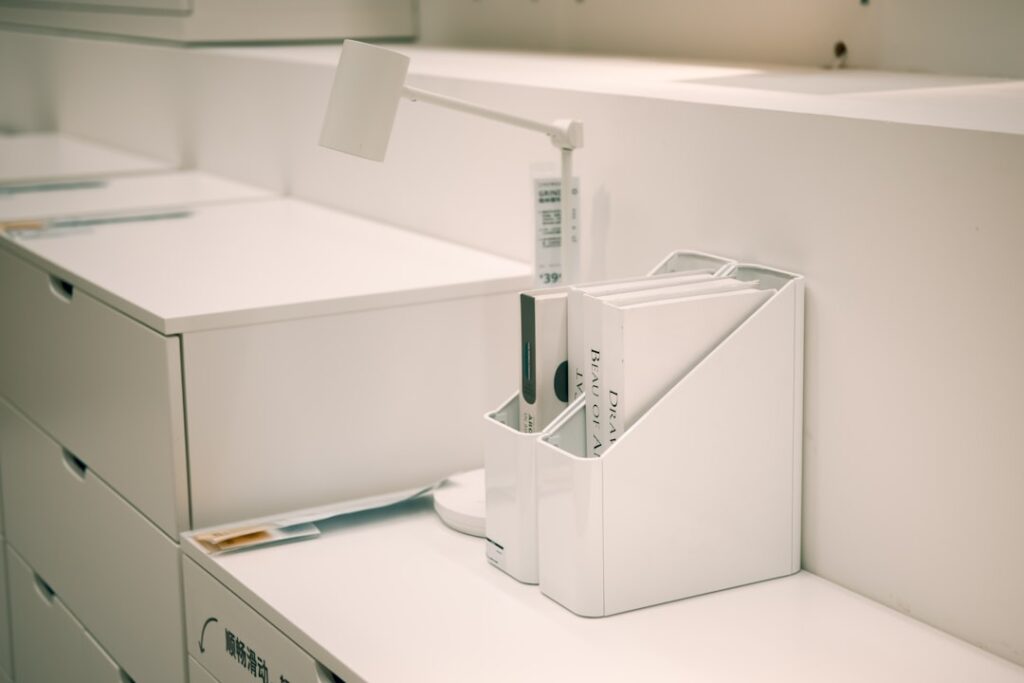
Decorative boxes, woven baskets, and matching binders turn necessary storage into something that looks deliberate. A row of three matching magazine files on a shelf reads as tidy rather than utilitarian. Choose a consistent color or material so the storage blends into the room instead of fighting it.
A closet near the office, even a shared hall closet, can absorb bulky overflow like reams of paper, spare equipment, and shipping supplies. Add a single inexpensive wire shelf inside to double its capacity.
Budget-Friendly Quick Wins
You do not need a renovation to fix a cluttered office. Some of the highest-impact changes cost very little.
- A $20 monitor riser frees the space beneath the screen for a keyboard or supplies.
- A magnetic strip holds scissors, clips, and small metal tools on the wall.
- Over-the-door organizers hold supplies on an otherwise dead surface.
- A tension rod inside a cabinet creates a second tier for hanging small items.
Light and Layout Tweaks That Free Up Space
Storage is not only about adding containers; it is also about arranging what you have so the room breathes. Pushing the desk against a window or wall, rather than floating it in the middle, instantly opens a path and creates room for a slim shelf behind your chair. A wall-mounted, fold-down desk can disappear entirely when the workday ends, turning a multipurpose room back into a guest space or hobby corner.
Good lighting also reduces the urge to pile supplies on the desk for visibility. A clamp-on task lamp clears the surface that a bulky base lamp would occupy, and it directs light exactly where you work. If natural light is limited, a daylight-temperature LED bulb around 5000K keeps the small space feeling open rather than closed in, which subtly makes clutter feel less oppressive.
Plan Before You Buy
The fastest way to waste money on a small office is to buy storage that does not fit. Measure the room, the wall heights, and the desk opening before purchasing anything, and sketch a rough plan of where each piece will live. Note the locations of outlets and the door swing so a new cabinet does not block either one.
Buy in stages rather than all at once. Solve your single biggest pain point first, live with the change for a week, then address the next one. This prevents you from cramming the room with furniture that looks organized on day one but fights the way you actually work by day ten.
Keep It Maintained
Even the best storage system collapses if you never reset it. Spend five minutes at the end of each workday returning items to their homes. Once a month, do a quick edit and remove anything you have not touched. A small office stays functional only when its storage matches the way you actually work, so adjust the layout whenever your routine changes. The goal is not a magazine-perfect room; it is a space where everything you reach for is exactly where you expect it to be.