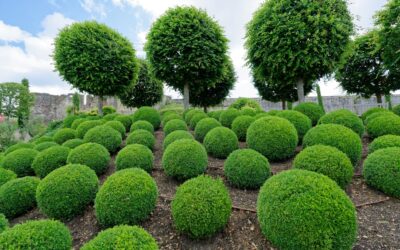
The most common landscaping regret is a cute nursery tree that turns into a 50-foot giant shading the whole lot. Small ornamental trees fix that problem by giving you flowers, color or year-round structure on a frame that stays under about 25 feet. Choose by mature size first, then by what you want the tree to do: bloom in spring, hold color all season, or stay green through winter.
Quick picks: for flowers, look at serviceberry, redbud, dogwood and crabapple. For evergreen structure, consider a columnar holly, dwarf magnolia or compact juniper. For colored leaves, Japanese maple and purple-leaf plum are reliable. Each is profiled with its mature height and width, so you can match a tree to a bed, a patio corner or a narrow side yard.
- How to Choose Small Ornamental Trees for Your Lot
- Mature Size Comparison Table
- Best Flowering Picks
- Evergreen and Year-Round Choices
- Colored-Leaf Ornamentals
- Design Tips for Placing Ornamental Trees
- Planting Steps for Small Trees
- Troubleshooting
- Costs and When to Call a Pro
- Frequently Asked Questions
How to Choose Small Ornamental Trees for Your Lot
Start with the space, not the plant tag photo. Measure the spot and note what is overhead and underground. Small ornamental trees still need room for their mature spread, and many labels list the size at 10 years, not full maturity.
- Mature height and width: Allow at least half the mature spread between the trunk and any wall, fence or other tree.
- Light: Most flowering trees need six or more hours of sun. Dogwoods, redbuds and Japanese maples tolerate part shade.
- Hardiness zone: Check your USDA zone and pick trees rated at least one zone colder for safety.
- Soil and drainage: Crabapples and serviceberries handle clay. Dogwoods and magnolias prefer rich, well-drained soil.
- Mess factor: Fruiting trees can stain patios. Choose fruitless or small-fruited forms near hardscape.
- Season of interest: The best ornamental trees for landscaping offer two or more seasons, such as spring flowers plus fall color or winter bark.
Mature Size Comparison Table
| Tree | Height x width | Main feature | Zones |
|---|---|---|---|
| Serviceberry | 15 to 25 x 15 to 20 ft | White spring flowers, berries, fall color | 4 to 8 |
| Eastern redbud | 20 to 25 x 20 to 25 ft | Pink-purple spring flowers | 4 to 9 |
| Flowering dogwood | 15 to 25 x 15 to 25 ft | White or pink bracts, red fall leaves | 5 to 9 |
| Crabapple (compact) | 10 to 20 x 10 to 20 ft | Spring flowers, small fruit | 4 to 8 |
| Kousa dogwood | 15 to 25 x 15 to 25 ft | Early summer bracts, bark | 5 to 8 |
| Japanese maple | 6 to 20 x 6 to 20 ft | Colored, lacy leaves | 5 to 8 |
| Crape myrtle (semi-dwarf) | 10 to 20 x 8 to 15 ft | Summer flowers, peeling bark | 6 to 10 |
| Columnar holly | 15 to 20 x 4 to 8 ft | Evergreen, red berries | 6 to 9 |
| Dwarf southern magnolia | 15 to 25 x 8 to 12 ft | Evergreen, fragrant flowers | 6 to 10 |
Sizes vary with climate, soil and cultivar, so confirm the specific variety’s tag before buying.
Best Flowering Picks
Ornamental flowering trees deliver the biggest spring payoff on a small footprint.
Serviceberry
A native multi-stem tree with white flowers in early spring, edible blue berries in June and orange to red fall color. It handles clay and partial shade and suits informal or naturalistic beds.
Redbud
Rosy purple blossoms line bare branches in early spring, followed by heart-shaped leaves. Weeping and purple-leaf forms add options for small spaces. Redbuds are short-lived compared with oaks, often 20 to 30 years, but grow quickly.
Dogwoods
Flowering dogwood blooms in spring, while kousa dogwood follows a few weeks later and resists the anthracnose disease that troubles the native species. Both give red fall color.
Small flowering cherry tree options
A small flowering cherry tree, such as a compact columnar or weeping form, gives the classic pink spring cloud in 15 to 20 feet. Cherries need full sun and good drainage and tend to live 20 to 40 years.
Crabapples and crape myrtles
Modern disease-resistant crabapples bloom heavily and hold small fruit into winter for birds. In warm climates, semi-dwarf crape myrtles flower all summer and show off cinnamon bark in winter. Never cut crape myrtles back to stubs; thin them instead.
Evergreen and Year-Round Choices
Ornamental evergreen trees give privacy and winter structure. Small ornamental evergreen trees work well as anchors at house corners or as a backdrop for flowering shrubs.
- Columnar holly: Narrow, glossy and berry-bearing, ideal for side yards. Most hollies need a male pollinator nearby for berries.
- Dwarf southern magnolia: Large leathery leaves with brown undersides and fragrant white summer flowers, in a form that stays far smaller than the species.
- Upright junipers: Tough, drought tolerant and narrow, good in hot, dry sites.
- Dwarf Alberta spruce and similar conifers: Slow-growing cones for formal beds, though they dislike hot, dry summers.
- Sweet bay magnolia: Semi-evergreen in the South, tolerant of wet soil, with lemony flowers.
Colored-Leaf Ornamentals
Short ornamental trees with colored foliage give color from spring to frost, not just for a two-week bloom.
- Japanese maple: Red, burgundy, orange or green lacy leaves. Dwarf forms stay under 8 feet; upright forms reach 15 to 20 feet.
- Purple-leaf plum: Deep purple leaves and pale pink spring flowers, 15 to 20 feet tall. Short-lived but fast.
- Purple-leaf redbud: Burgundy heart-shaped leaves that fade toward green in summer heat.
- Golden-leaf locust (compact forms): Bright chartreuse foliage that lights up dark corners of a yard.
Pair colored-leaf trees with dark evergreens or neutral siding so the foliage stands out. Decorative outdoor trees read best when they have a plain backdrop.
Design Tips for Placing Ornamental Trees
Placement changes how a tree performs as much as variety does. In a small yard, one well-sited tree usually looks better than three crowded together. Set a single specimen where it frames the front door, softens a house corner or anchors a bed seen from the kitchen window.
Group small ornamental trees in odd numbers if you have room for more than one, and stagger them rather than lining them up like fence posts. Underplant with low shrubs, ferns or groundcovers that tolerate the same light, which keeps mowers away from the trunk. Think about winter, too: peeling bark, red stems or evergreen leaves keep the scene alive after flowers and leaves are gone. Finally, step back to the street and look at the mature size against the roofline. A tree that tops out at roughly one-half to two-thirds of the eave height usually looks in scale with a one-story home.
Planting Steps for Small Trees
Early fall is the best planting window in most of the country, with early spring a close second.
Tools and materials
- Shovel, garden fork and tape measure
- Shredded hardwood mulch
- Hose or a tree watering bag for slow, deep watering
- Bypass hand pruners
Steps
- Call 811 to mark utilities before digging.
- Dig a wide, shallow hole two to three times the root ball width and no deeper than the ball.
- Set the root flare at or slightly above grade.
- Loosen circling roots, then backfill with native soil.
- Water thoroughly, then mulch 2 to 3 inches deep in a wide ring, keeping mulch off the trunk.
- Water about 5 to 10 gallons per week for the first season, adjusting for rain.
Troubleshooting
- Leaf scorch on maples or dogwoods: Too much afternoon sun or not enough water. Mulch well and water deeply during heat.
- Powdery mildew on crape myrtles or dogwoods: Improve air flow and choose resistant cultivars.
- Apple scab on crabapples: Spotted leaves that drop early. Plant resistant varieties and rake leaves in fall.
- Few flowers: Often from shade, late frost or pruning at the wrong time. Prune spring bloomers right after flowering.
- Tree outgrowing the space: The cultivar was larger than expected. Thinning helps for a while, but replacement may be the long-term fix.
Costs and When to Call a Pro
Small container ornamentals often cost $30 to $150, while larger balled-and-burlapped trees range from about $150 to $500 or more. Professional planting for a single tree usually adds $100 to $400.
Call a certified arborist for pruning that needs a ladder or saw overhead, for trees near power lines or roofs, and for signs of serious disease such as cankers, large dead limbs or a split trunk. A local nursery or extension office can also confirm which species thrive in your soil before you buy.
Frequently Asked Questions
What is the best small ornamental tree for a front yard?
Serviceberry, kousa dogwood and Japanese maple are reliable choices because they offer several seasons of interest and stay in scale with most homes.
Which ornamental trees have non-invasive roots?
Japanese maple, dogwood, serviceberry and redbud have relatively modest root systems and are safe 10 to 15 feet from foundations.
How close to the house can I plant a small tree?
Plan on at least half the mature width plus a few feet. For a tree that spreads 20 feet, keep the trunk about 12 to 15 feet from the house.
Are there small evergreen trees that flower?
Yes. Dwarf southern magnolia and sweet bay magnolia bloom in late spring or summer, and some hollies have tiny flowers followed by bright berries.
When should I prune small flowering trees?
Prune spring bloomers right after flowering. Summer bloomers like crape myrtle are best pruned in late winter before new growth.