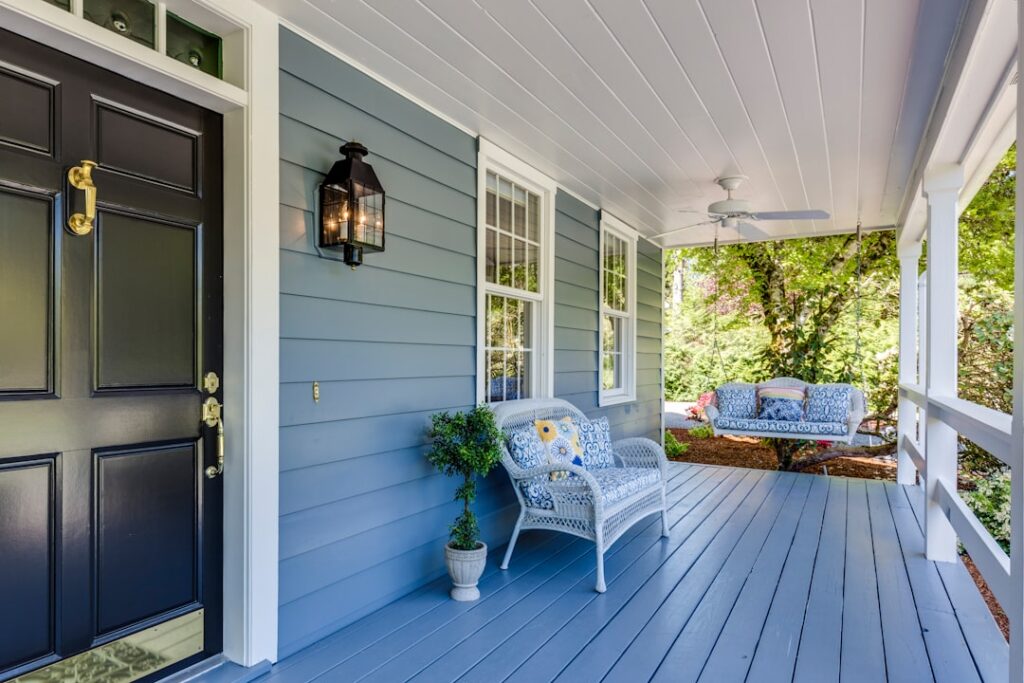
A porch only needs to be a few feet deep to completely change how your home greets the world. Thoughtful small porch design proves that square footage matters far less than how you use it; a tight entry can feel just as warm and inviting as a sprawling wraparound when the proportions and details are right. The secret is restraint. Choose a few well-scaled pieces, lean on vertical space, and let function lead, and even a four-foot landing becomes a place people want to linger.
Start With Scale
The number-one mistake on a small porch is oversized furniture. A bulky sofa or wide rockers swallow the space and block the path to the door. Scale everything down: a single bistro set, a slim bench, or two compact chairs with a tiny side table will feel comfortable rather than cramped.
Leave a clear walking path of at least 36 inches to the front door. If the porch is truly small, prioritize one comfortable seat over trying to cram in a full conversation set. A single chair that fits beats three chairs that crowd.
Choose the Right Flooring
Porch flooring sets the tone and takes a beating from weather and foot traffic, so durability matters as much as looks. Your choice depends on whether the porch is covered.
- Painted wood or porch paint: Affordable and classic. A fresh coat of porch-and-floor enamel refreshes worn boards for under $50 a gallon.
- Outdoor tile or pavers: Durable and elegant on a covered porch; choose a textured, slip-resistant finish.
- Composite decking: Low maintenance and rot-resistant, ideal for exposed entries.
- Outdoor rug over existing flooring: The fastest, cheapest way to add color and define a seating zone.
Use Vertical Space
When the floor is limited, build upward. Hanging plants, wall-mounted planters, and a tall narrow shelf add greenery and personality without consuming precious floor area. A trellis or climbing vine along a post draws the eye up and softens hard edges.
Wall hooks near the door hold a wreath, a hat, or a small basket for mail. Vertical elements make a small porch feel fuller and more intentional while keeping the walking path clear.
Define the Space With a Rug
An outdoor rug instantly anchors a small porch and signals that this is a room, not just a step. Choose a size that fits the seating area without running into the door swing. A weather-resistant polypropylene rug stands up to rain and sun and typically costs $30 to $80 in small sizes.
Stick to a pattern or color that complements the front door and trim. The rug is one of the cheapest ways to inject style and tie the whole entry together.
Layer in Lighting
Lighting makes a small porch feel finished and welcoming after dark. A single wall sconce beside the door is the baseline, but layering adds warmth and depth.
- Mount a sconce or lantern at eye level beside the entry.
- Add string lights along the ceiling or railing for a soft glow.
- Use a solar lantern on a side table or the floor for portable accent light.
- Consider a smart bulb so the porch light can turn on automatically at dusk.
Add Personality With Details
Small spaces let small touches shine. A bold front door color, a seasonal wreath, and a pair of coordinated planters give a tiny porch instant curb appeal for very little money. Cushions and a throw pillow in a weather-resistant fabric add comfort and a pop of color.
A house number plaque, a vintage mailbox, or a simple welcome mat completes the look. Because the area is small, every accessory carries visual weight, so choose pieces that genuinely please you and skip the rest.
Maximize Function
A small porch can still work hard. A slim bench with storage underneath holds shoes or garden tools while giving you a place to sit and remove muddy boots. A wall-mounted folding shelf provides a spot to set keys or a coffee cup and folds flat when not needed.
If you receive frequent deliveries, a discreet parcel box near the door adds security without clutter. Designing for how you actually use the entry keeps a small porch practical rather than purely decorative.
Add Greenery the Right Way
Plants bring a small porch to life, but the wrong ones quickly create clutter. Choose a few statement plants in coordinated containers rather than a scattered collection of mismatched pots. A pair of matching planters flanking the door reads as polished and symmetrical, while a single tall plant in a corner draws the eye upward without crowding the floor.
Match the plants to your light conditions and your willingness to water. A covered north-facing porch suits shade-tolerant ferns and pothos, while a sunny south-facing entry handles geraniums and succulents. Self-watering pots reduce upkeep, and seasonal swaps, such as mums in fall and pansies in spring, keep the porch feeling fresh year-round.
Weatherproof Your Choices
A small porch is exposed to sun, rain, and temperature swings, so every material you choose should be built for the outdoors. Look for powder-coated or aluminum furniture frames that resist rust, and select cushions in fade-resistant, quick-dry outdoor fabric. Indoor pieces brought outside deteriorate fast and end up costing more in replacements.
Protect your investment with a few simple habits. Bring cushions inside during heavy storms or store them in a weatherproof deck box, and apply a fresh coat of sealant or paint to wood elements every couple of years. A little maintenance keeps a small porch looking sharp through many seasons rather than fading after one.
Pull It All Together
The most successful small porches feel curated, not stuffed. Begin with a clear path and one well-scaled seat, add durable flooring or a rug to ground the space, build greenery and storage upward, and finish with layered lighting and a few personal details. Keep the color palette tight, two or three coordinated tones, so the eye reads calm rather than chaos. Done this way, a modest porch punches well above its size and becomes the warm, welcoming first impression every home deserves.