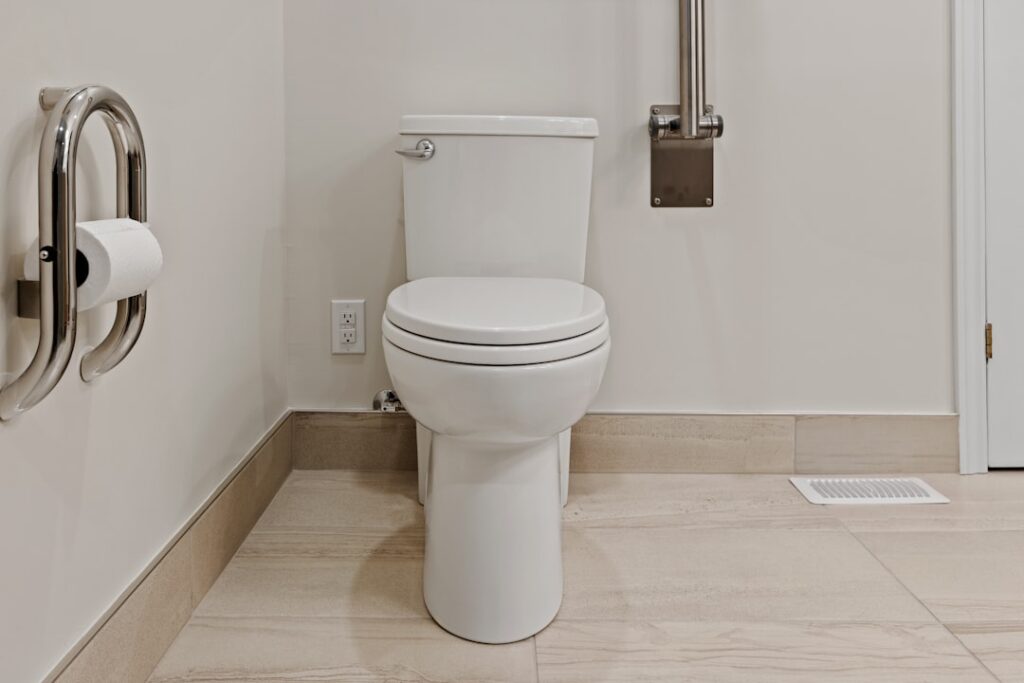
A soft close toilet seat uses a small hydraulic hinge that catches the lid and lowers it over three to five seconds instead of letting it slam. If you have ever been jolted awake by a bathroom crash at 2 a.m., or you have watched a cheap seat lid crack at the hinge, this upgrade solves both problems for roughly $25 to $60. A soft close toilet seat is one of the easiest bathroom improvements you can do yourself, usually in under 15 minutes with no tools beyond your hands or a single wrench.
Part of our Bathroom Remodeling & Flooring guide — explore the full guide →
- How the soft-close mechanism actually works
- Round versus elongated: measure before you buy
- Materials: plastic versus molded wood
- Quick-release and top-mount hinges are worth it
- How to install a soft-close toilet seat
- Why a soft-close seat stops closing slowly
- Comfort and safety extras
- What to spend
- Common fit problems and how to solve them
- Cleaning and getting the longest life
- Bottom line
How the soft-close mechanism actually works
Inside each hinge sits a rotary damper filled with viscous silicone oil. When you push the lid or seat past its balance point, the damper resists the motion, bleeding the force off gradually. There are no batteries, no electronics, and nothing to charge. The only wearing part is that oil-filled cartridge, and quality units are rated for tens of thousands of cycles.
Cheaper seats put the damper on the lid only. Better ones damp both the lid and the ring, so neither piece can drop hard. When you shop, look for the phrase “soft close on both lid and seat” rather than just “quiet close.” A seat that only damps the lid still lets the ring clunk down.
Round versus elongated: measure before you buy
Toilets come in two bowl shapes, and buying the wrong one is the single most common mistake. Measure the bowl before ordering:
- Round bowl: about 16.5 inches from the seat bolt holes to the front lip of the bowl.
- Elongated bowl: about 18.5 inches from bolt holes to front lip — roughly two inches longer and more oval.
Also check the bolt-hole spacing. On nearly all standard American toilets the two mounting holes sit 5.5 inches apart center to center. Measure it anyway if your toilet is old or imported. Chair-height or “comfort height” bowls use the same seat sizes; height refers to the bowl, not the seat.
Materials: plastic versus molded wood
Two materials dominate the market, and they feel different under you:
- Molded polypropylene (plastic): $25 to $45. Lighter, warms up faster against skin, resists chips, and is easy to wipe clean. Most soft-close seats are this type.
- Molded wood (MDF core with enamel): $40 to $70. Heavier and more rigid, with a solid, substantial feel. The enamel can chip if you drop something on it, and a cracked coating can swell if water gets into the core.
For a busy family bathroom, plastic is the practical pick. For a guest bath where feel matters, molded wood looks and sounds more upscale. Brands like Kohler, Bemis, and Mayfair (Bemis’s value line) cover both ends. A Kohler Cachet or Bemis 1200SLOWT runs about $35 to $55.
Quick-release and top-mount hinges are worth it
Two hinge features make a real difference in daily life. Quick-release hinges let you pop the whole seat off with a button or slide catch so you can scrub the bolt area and the hinge crevices — the spots that turn yellow and grimy on older seats. Top-mount (top-tightening) hinges let you install and tighten from above the bowl, so you never have to lie on the floor and reach up behind the porcelain to hold a nut. If you have arthritis or a tight space behind the toilet, insist on top-mount hardware.
How to install a soft-close toilet seat
Plan on 10 to 15 minutes. You may need nothing, or a basic adjustable wrench, depending on the old seat’s hardware.
- Remove the old seat. Pop the plastic caps at the back, then unscrew the two bolts. If the nuts underneath spin freely and won’t loosen, hold the nut with a wrench while you turn the bolt, or cut a stubborn plastic bolt with a hacksaw.
- Clean the mounting area. Wipe the two bolt holes and surrounding porcelain now, while it is exposed. This is your one easy chance.
- Set the new hinges. Drop the rubber-gasketed bolts through the holes. Many top-mount kits use a plastic anchor that expands as you tighten.
- Align and tighten. Center the seat, then tighten by hand plus a quarter turn. Do not overtighten — cracking porcelain is a real risk and the plastic threads strip easily.
- Test the close. Lift the lid fully and let go. It should catch and drift down over three to five seconds. If it slams, the mechanism is not engaged or the seat is mounted backward.
Why a soft-close seat stops closing slowly
When an older soft-close seat starts dropping fast again, the fix is usually simple:
- The damper is worn out. After years of use the silicone oil thins. Many seats let you replace just the hinge cartridge for $10 to $20 instead of the whole seat.
- Cleaning chemicals got inside. Bleach and harsh cleaners degrade the seals. Wipe hinges with mild soap, not straight bleach.
- It was over-lifted. Slamming the lid up hard, past its stop, can damage the damper. Lift gently.
- Cold temperatures. In an unheated bathroom the oil thickens and the lid closes even slower — normal, and it speeds back up when warm.
Comfort and safety extras
A few features are worth paying a little more for. A heated seat with a built-in nightlight adds real comfort in winter but requires a nearby outlet — that crosses into bidet-seat territory. For most buyers the useful add-ons are non-slip bumpers that keep the seat from shifting, and antimicrobial surface treatments that slow staining. Skip novelty features like slow-close seats with printed graphics; the coating wears through at the contact points within a year.
If small children use the bathroom, the soft-close feature is genuinely protective — it removes the pinch-and-slam hazard entirely, since a lid that cannot slam cannot catch little fingers.
What to spend
Here is a realistic budget breakdown:
- $25-$35: Basic plastic soft-close, round or elongated, top-mount hinges. Fine for a rental or secondary bath.
- $40-$60: Name-brand plastic with quick-release and a firmer damper. The sweet spot for most homes.
- $60-$120: Molded wood or premium plastic with slow-close on both pieces, antimicrobial finish, and a longer warranty.
Avoid the very cheapest no-name seats under $20. Their dampers often fail within a year and the hinges rarely offer top-mount tightening, which puts you right back on the bathroom floor.
Common fit problems and how to solve them
Most installations go smoothly, but a handful of quirks catch people out. If your new seat rocks side to side, the bumpers are not making even contact — some seats include stick-on spacer bumpers to level a seat on an uneven bowl rim. If the seat sits too far forward or back, check that you bought the right bowl shape; there is no adjusting a round seat onto an elongated bowl. On a few French-curve or one-piece designer toilets the bolt holes sit closer together or the tank crowds the hinges, so measure the 5.5-inch bolt spacing and the clearance behind the holes before ordering.
Another frequent complaint is a seat that shifts under you. Modern seats fight this with rubber-tipped, self-adjusting bumpers and, on better models, a stability bracket that locks the seat to the bowl. If yours still drifts, the bolts have loosened — retighten by hand plus a quarter turn, and add a dab of removable thread locker if it keeps working loose.
Cleaning and getting the longest life
Two habits stretch a soft-close seat from a few years to a decade. First, use quick-release to lift the whole seat off every couple of weeks and clean the bolt seats, where mildew and mineral scale collect. Second, keep aggressive chemicals off the hinges. Bleach, thick gel cleaners, and abrasive scrubs shorten the life of the damper seals and can dull a molded-wood finish. Warm water with a little dish soap or a mild all-purpose spray does the job. Never stand on the seat or let it take a hard drop while open, since a sudden overload is the fastest way to blow a hinge damper.
Bottom line
A quality soft-close toilet seat costs about the price of a takeout dinner, installs in a quarter hour, and quietly earns its keep every day. Measure your bowl shape and bolt spacing first, choose plastic for durability or molded wood for feel, and insist on top-mount, quick-release hinges. When the slow close eventually fades after years of service, a $15 replacement cartridge usually brings it back rather than forcing a whole new seat.