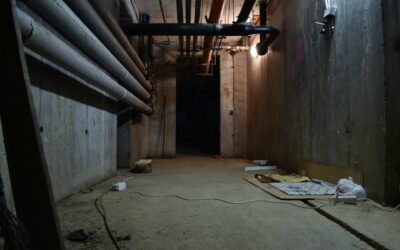
The worst basement floods happen exactly when the power is out, because the storm that overwhelms your sump pit is the same storm that knocks down the lines. A solar sump pump breaks that dangerous link by running on sunlight and stored battery power instead of the grid. For homes in flood-prone areas, it is one of the few backup systems that keeps working when everything else goes dark.
How a Solar Sump Pump Works
The system pairs a DC pump with a solar panel and a battery. During the day, the panel charges the battery, and the pump draws from that stored energy whenever the float switch detects rising water in the pit. Because the battery buffers the power, the pump runs at night and during cloudy stretches too, not only when the sun is shining.
Most solar sump setups are designed as backups rather than primary pumps. Your main AC pump handles everyday groundwater, and the solar unit takes over the moment grid power fails, giving you a fully off-grid layer of protection.
Primary vs Backup Configurations
How you use a solar pump depends on your situation:
- Backup only: The most common setup. A standard AC pump runs daily, and the solar-charged battery system kicks in during outages. This is the safest, most reliable arrangement.
- Off-grid primary: In a remote cabin or outbuilding with no reliable power, a properly sized solar system with ample battery can serve as the main pump.
- Hybrid: The battery charges from both the solar panel and grid power, drawing on sunlight to reduce electricity use and falling back to the panel during outages.
For most homeowners, treating solar as a backup to a conventional pump gives the best balance of cost and peace of mind.
The Critical Role of the Battery
The battery, not the panel, is what actually protects you during a multi-day storm. A larger-capacity battery pumps more water and lasts longer between charges, which matters when heavy clouds cut solar input for days. Deep-cycle AGM and lithium batteries are the two common choices.
Lithium batteries cost more upfront but last far longer, handle deep discharges better, and weigh less. AGM batteries are cheaper and proven, but you will replace them more often. Size the battery to run the pump through the longest outage your area realistically sees, then add margin.
Sizing the System for Your Needs
An undersized system is worse than none because it lulls you into false confidence. Three factors drive sizing:
- Pumping demand: How much water enters your pit during a heavy storm, measured in gallons per hour. A high water table needs a stronger pump.
- Head height: How high the pump must lift water to reach the discharge, which reduces effective flow.
- Runtime target: How many hours of continuous pumping you need the battery to support during an outage.
When in doubt, oversize the battery and panel. The extra capacity is cheap compared to a flooded finished basement.
What It Costs
A quality solar sump pump backup system typically runs $300 to $900 depending on pump capacity, battery type, and panel size. Lithium-battery systems and higher-flow pumps land at the top of that range. Compared with the $3,000 to $10,000 cost of remediating a flooded basement, the math favors installing one well before you need it.
Add a modest amount for mounting hardware and any electrician help if you are integrating it with existing plumbing and discharge lines.
Installation and Placement
The pump installs in your sump pit just like a conventional backup, usually alongside the primary pump with its own float switch set slightly higher, so it only activates if the main pump falls behind or fails. The battery and charge controller sit nearby in a dry spot in the basement.
The solar panel is the part that needs planning. Mount it where it gets strong, unobstructed sun, typically on a south-facing roof or wall, and run the low-voltage wire down to the charge controller. Keep the panel clear of shade from trees and chimneys, since even partial shading cuts output sharply.
Solar vs Battery-Only Backup
It is worth understanding how a solar system differs from the more common battery-only backup pump. A standard battery backup charges from your household AC power and runs off the battery during an outage, but once that battery drains, you are out of protection until the grid returns. In a prolonged outage, that window can run out mid-storm.
A solar sump pump recharges its battery from sunlight even while the grid is down, which is the crucial advantage during multi-day storms and extended outages. The tradeoff is the added cost and the need to mount and maintain a panel. For homes that lose power often or for long stretches, the solar option buys genuine independence that a battery-only unit cannot match.
Discharge and Freeze Considerations
The discharge line deserves attention regardless of power source. It must slope away from the foundation and terminate far enough from the house that pumped water does not simply drain back toward the basement. A common mistake is discharging too close to the wall, which recycles the same water into the pit.
In cold climates, a frozen discharge line will stop even a perfectly working pump, so many homeowners add a freeze-relief fitting or route the line to avoid ice buildup. Check that the check valve holds properly too, since a failed valve lets pumped water fall back into the pit, forcing the pump to work twice as hard and draining your battery faster than expected.
Maintenance and Reliability
Test the system quarterly by pouring water into the pit to confirm the float triggers the pump and the battery holds a charge. Wipe the solar panel clean a few times a year, and check the battery terminals for corrosion. Replace AGM batteries roughly every three to five years and lithium far less often.
A solar sump pump is not a set-and-forget device, but the routine is light. Keep the battery healthy and the panel clean, and you gain a genuinely independent line of defense that keeps pumping through the exact conditions that defeat everyone else’s basement.