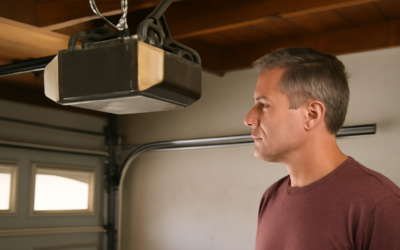
A Sommer garage door opener stands apart from the American brands most homeowners know, and if your garage sits under a bedroom, that difference matters. Sommer is a German manufacturer whose direct-drive design moves the motor along the rail instead of driving a chain or belt, which makes these among the quietest openers you can buy. For anyone tired of the clatter that comes through the ceiling at 6 a.m., that alone is worth a look.
Part of our Garage Doors guide — explore the full guide →
I have installed openers from every major brand, and Sommer’s engineering earns its reputation. Here is what you should know before you buy one.
What Makes Sommer Different
Most residential openers use a chain, belt, or screw drive with a stationary motor at the back of the rail. Sommer flips that concept. In its direct-drive system, the motor travels along a fixed toothed chain enclosed in the rail, so there is essentially one moving part. Fewer moving parts means less noise, less vibration, and less to wear out.
The result is an opener that operates at a very low decibel level, which is why direct-drive Sommer units are popular in homes with living space above or beside the garage.
Popular Sommer Models
Sommer’s residential lineup in North America centers on a few direct-drive units. Here is how they compare:
- Sommer Direct Drive 1042V — the flagship, rated for doors up to roughly 550 pounds, whisper quiet, with a strong motor for heavier sectional doors.
- Sommer Direct Drive 1026V — a lighter-duty version for standard single and double doors, still using the same quiet drive design.
- Sommer evo+ / pro+ series — European models with smart connectivity, sometimes found in imported installs.
Expect to pay roughly $300 to $500 for the opener itself, which is a premium over a basic chain drive, but the quiet operation and durability justify the cost for many buyers.
Key Features to Know
Beyond the quiet drive, a Sommer garage door opener comes with features worth understanding:
- Rolling-code radio security that generates a new code with each use to block code grabbing.
- Soft start and soft stop, which ramps the door speed up and down to reduce wear and noise.
- Automatic force learning, so the unit calibrates itself to your door’s weight and travel.
- Integrated LED lighting on newer units.
- Optional smart-home modules for phone control on select models.
Installation Basics
Installing a Sommer opener follows the same general steps as any sectional-door opener, but the rail assembly differs because of the direct-drive motor. In broad strokes:
- Assemble the rail and slide the motor carriage into place.
- Mount the rail header bracket to the wall above the door, centered on the door.
- Hang the motor end from the ceiling with the supplied struts.
- Connect the door arm to the top section of the garage door.
- Wire the wall control and safety photo-eye sensors near the floor on each side of the door.
- Power up and run the automatic travel and force learning routine.
If you are comfortable with basic tools and have a helper, a DIY install runs three to five hours. If not, a professional installation typically adds $150 to $300.
Programming Remotes and Keypads
Pairing a remote to a Sommer garage door opener is straightforward. Press and hold the learn button on the motor head until the indicator light changes, then press the button on your remote. The unit stores the code and the light confirms the pairing. Wireless keypads follow a similar routine, entering your chosen PIN during the learning window.
Keep in mind that Sommer uses its own frequency and rolling-code system, so a generic universal remote may not pair unless it explicitly lists Sommer compatibility. When in doubt, buy the matching Sommer remote.
How Sommer Compares to LiftMaster and Genie
To decide whether a Sommer garage door opener fits your home, it helps to see it against the brands that dominate American garages. LiftMaster and Chamberlain, both made by the same parent company, offer belt and chain drives with the deepest accessory ecosystem and the widest dealer support in the country. Genie is the value leader, reliable and inexpensive, with screw and belt drive options.
Sommer’s edge is noise and build quality. Its direct-drive design, with a single moving part, is quieter than even a premium belt drive and typically outlasts chain systems. The trade-offs are price and availability. A LiftMaster belt drive runs $250 to $400 and can be serviced by almost any garage door company, while a Sommer costs a bit more and may require ordering parts online or through a specialty dealer. If silence and longevity top your list, Sommer wins; if you want the easiest local support, the American brands are more convenient.
Maintenance to Keep It Quiet
Part of the appeal of a direct-drive unit is that it needs less maintenance than a chain system, which requires periodic lubrication and tension adjustment. Still, a few simple habits keep a Sommer opener running at its best for the long haul:
- Wipe the rail clean of dust and debris a couple of times a year, since grit is the enemy of the traveling motor.
- Inspect and lubricate the garage door’s own hinges, rollers, and springs, because a poorly maintained door makes any opener work harder and noisier.
- Test the auto-reverse safety feature every month by placing a block of wood under the door and confirming it reverses on contact.
- Keep the photo-eye sensors clean and aligned so the door never balks at closing.
- Check the remote and keypad batteries once a year to avoid range problems.
Because the opener is only as quiet as the door it moves, most noise complaints on a well-built unit trace back to the door hardware, not the motor. Keep both in good shape and the whisper-quiet operation Sommer is known for will last for years.
Common Issues and Troubleshooting
These openers are reliable, but a few problems come up over the years:
- Door reverses before closing — usually a blocked or misaligned photo-eye. Clean the lenses and confirm both indicator lights are steady.
- Remote works only up close — often a weak remote battery or radio interference from a nearby LED bulb. Swap the battery first.
- Door stops partway — the force or travel limits need relearning after a change in door weather-seal or spring tension.
- No response at all — check power at the outlet and confirm the wall control wiring is seated.
Because Sommer is less common in the US, keep the model number handy when ordering parts so you get the correct remote, gear, or logic board.
Smart Home and Accessory Options
Modern openers are increasingly connected, and a Sommer garage door opener can join a smart home with the right add-ons. Some Sommer models offer optional modules that let you monitor and operate the door from a smartphone app, receive alerts if it is left open, and grant temporary access to visitors. On units without native connectivity, a universal smart controller like a myQ or Meross retrofit module wired to the opener’s terminals achieves the same phone control, provided the device supports your opener’s signaling.
Beyond connectivity, useful accessories include a wireless wall-mount keypad for keyless entry, additional handheld remotes, and a battery backup where available so the door still operates during a power outage. If you add remotes, buy Sommer-compatible units or confirm a universal remote explicitly lists Sommer in its supported brands, since the rolling-code frequency will not pair with just any transmitter. When you order any accessory, have the exact model number of your opener handy, because the smaller US presence means matching the right part is easier with the model in front of you.
Is a Sommer Opener Worth It?
If your top priority is silence and long-term durability, a Sommer garage door opener is one of the best choices on the market, and the direct-drive design lives up to the hype. The trade-offs are a higher upfront price and a smaller US dealer network, which can make parts and local service harder to source than for a LiftMaster or Chamberlain.
For a garage under a bedroom, a home theater near the garage, or anyone who simply values quiet, the premium is easy to justify. For a detached garage where noise never bothers anyone, a standard belt-drive opener may serve just as well for less money. Match the opener to your situation, and the quiet German engineering will reward you for many years.