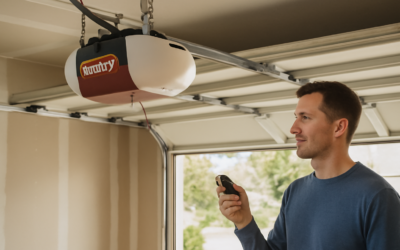
If your opener grinds, hesitates, or refuses to respond on a cold morning, the brand on the powerhead matters more than most people realize. A Genie garage door opener has been a fixture in American garages since the company built the first automatic residential unit back in 1954, and today the lineup spans belt, chain, and screw-drive models priced from roughly $150 to $360. Knowing which drive system fits your garage, how much horsepower your door actually needs, and how to keep the unit running smoothly will save you a service call or two over the life of the equipment.
Part of our Garage Doors guide — explore the full guide →
- Understanding Genie's Drive Systems
- How Much Horsepower You Actually Need
- Installing a Genie Opener Yourself
- Programming Remotes and Keypads
- Smart Features and Connectivity
- Common Problems and Quick Fixes
- Choosing Between Genie Model Tiers
- Maintenance Schedule That Extends Opener Life
- Is a Genie Opener the Right Choice?
Understanding Genie’s Drive Systems
Genie sells three mechanical drive types, and the one you choose shapes both noise level and maintenance. Belt-drive models use a reinforced steel-core rubber belt that runs almost silently, which is why they are the go-to pick when a bedroom sits directly above or beside the garage. Chain drives cost less and pull with brute reliability, but they rattle enough that you will hear them through an attached wall.
Screw-drive units are the third option and something of a Genie signature. A threaded steel rod turns to move the carriage, delivering strong, steady lifting force with fewer moving parts than a chain. They handle temperature swings well once you keep the rail lubricated, making them a solid choice for detached garages in variable climates. If you want the quietest possible operation, though, the belt-drive models like the SilentMax series remain the top performer.
How Much Horsepower You Actually Need
Genie rates its openers in horsepower equivalents, or HPc, rather than raw horsepower, and matching that rating to your door prevents premature wear. A standard single door under 350 pounds runs fine on a 3/4 HPc motor. Wider double doors, or any door clad in solid wood or insulated steel, benefit from a 1-1/4 HPc unit that lifts without straining.
- Single 8×7 steel door: 3/4 HPc is plenty
- Double 16×7 lightweight door: 3/4 to 1 HPc
- Double insulated or wood-clad door: 1-1/4 HPc for headroom
- Oversized or carriage-house door: 1-1/4 HPc minimum
Oversizing the motor slightly is cheap insurance. A larger opener working at 60 percent capacity lasts far longer than a small one straining at 95 percent on every cycle, especially through winter when door springs stiffen.
Installing a Genie Opener Yourself
A confident DIYer can install most Genie models in three to five hours with basic tools. Before you touch the opener, test the door itself: disconnect any existing automation and lift the door by hand. It should glide up and stay put around waist height. If it slams down or feels heavy, the torsion springs are out of balance, and no opener will fix that. Spring work is genuinely dangerous, so call a pro for that step.
Once the door is balanced, assembly follows a predictable order. You join the rail sections, attach the powerhead, mount the header bracket above the door, and hang the motor from the ceiling with the supplied angle iron. Genie’s newer models ship with a pre-assembled rail on some SKUs, which shaves nearly an hour off the job. Set the travel limits and force settings carefully; a door that reverses randomly almost always traces back to limits set too tight or force set too low.
Safety Sensors Are Not Optional
Federal law has required photo-eye safety sensors on residential openers since 1993. Mount them no higher than six inches off the floor on each side of the door track, aligned so the indicator lights glow steady. If the door will not close and the opener light blinks, misaligned or dirty sensors are the culprit nine times out of ten.
Programming Remotes and Keypads
Genie’s Intellicode rolling-code technology changes the access code every time you press the remote, which blocks code-grabbing thieves. Programming a new remote takes under a minute. Press and release the “Learn” or “Program” button on the powerhead, watch for the round blue LED to glow, then press your remote button twice within 30 seconds. The opener flashes to confirm the pairing.
Wireless keypads follow a similar routine and let you enter a PIN instead of carrying a remote. Many homeowners set a temporary PIN for dog walkers or contractors, then delete it afterward. If you own an older Genie made before 2011, note that some remotes use a different frequency and older accessories will not cross-program to newer units, so match the manual or buy the model-specific remote.
Smart Features and Connectivity
Mid- and upper-tier Genie openers include Aladdin Connect, the brand’s built-in Wi-Fi system. Once you link the unit to the free app, you can open, close, and monitor the door from your phone anywhere with a signal, and you can grant time-limited access to family members. The app also logs every open and close event, which is reassuring when you cannot remember whether you shut the door before leaving for work.
If your current Genie lacks Wi-Fi, you do not have to replace it. A standalone Aladdin Connect retrofit module wires into most Genie and even some competitor openers for around $60, adding smartphone control without a full upgrade.
Common Problems and Quick Fixes
Most Genie complaints have simple causes. A door that reverses before touching the floor usually needs its close-force or down-limit adjusted a hair. Grinding without movement often means a stripped drive gear inside the powerhead, a $20 part on chain and belt models that takes about 30 minutes to swap. A dead remote is most often a dead battery, not a dead opener, so try a fresh CR2032 before assuming the worst.
- Door won’t close, light blinks: realign or clean the photo-eye sensors
- Motor runs but door doesn’t move: inspect the drive gear or carriage
- Remote works up close only: replace the antenna wire or battery
- Loud rattling on a chain drive: lubricate the rail with white lithium grease
Lubrication is the single most neglected maintenance task. Twice a year, wipe the rail and apply a thin coat of white lithium grease or a garage-door-specific spray. Never use WD-40 as a lubricant; it strips existing grease and attracts grit. Also hit the door’s rollers, hinges, and springs while you are at it, since a smooth-moving door lightens the load on the opener.
Choosing Between Genie Model Tiers
Genie organizes its openers into tiers that stack features as you move up in price. Entry models give you a reliable powerhead, a wall console, and one or two remotes, which is all many homeowners need. Mid-tier units add battery backup so the door still opens during a power outage, a genuinely useful feature in storm-prone regions, along with built-in Wi-Fi. Top-tier models pair the quietest belt drives with the strongest motors, LED lighting, and the most speed and force adjustments.
Battery backup deserves special mention because some jurisdictions, notably in the western United States, now require it on new installations so residents can escape a garage during a blackout. If you live where that rule applies, or simply hate being trapped when the power fails, budget for a model that includes a backup battery rather than retrofitting one later. Weigh how long you plan to stay in the home too; the quieter, feature-rich models cost more but pay back in daily convenience over a decade of use.
Maintenance Schedule That Extends Opener Life
A little routine attention keeps a Genie running for 15 years or more. Every month, test the auto-reverse safety feature by placing a two-by-four flat on the floor under the door; the door should reverse the moment it touches the wood. Also wave your leg through the photo-eye beam as the door closes to confirm the sensors reverse it. These 30-second tests catch safety failures before they become dangerous.
Twice a year, tighten the mounting hardware, lubricate the rail and the door’s moving parts, and inspect the belt or chain for proper tension. A chain that sags too much or a belt that has stretched will run rough and eventually skip. Listening to the opener matters too, since new grinding, clicking, or straining sounds are early warnings that a gear, roller, or spring needs attention long before the unit quits entirely.
Is a Genie Opener the Right Choice?
For most homeowners, a Genie opener delivers strong value, straightforward installation, and reliable rolling-code security at a price below some premium competitors. The belt-drive models compete directly with the quietest units on the market, the screw-drive option is a durable niche pick, and the built-in Aladdin Connect app closes the smart-home gap without add-ons. Match the horsepower to your door, keep the rail lubricated, and a quality Genie garage door opener will cycle tens of thousands of times before it ever needs real attention. When shopping, compare warranty terms closely, since motor and belt coverage ranges from a handful of years to lifetime depending on the tier you select.