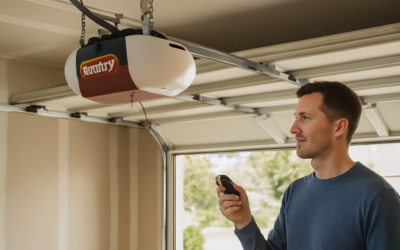
Genie garage door openers are one of the most widely sold opener brands in the United States, alongside Chamberlain and LiftMaster. Genie makes belt-drive, chain-drive, and screw-drive models across a range of horsepower ratings, with options for smartphone control, battery backup, and quiet operation. If you are replacing a worn-out opener or outfitting a new garage, understanding how Genie’s lineup is organized will help you match a unit to your door without overpaying for features you will never use.
Part of our Garage Doors guide — explore the full guide →
This guide walks through the drive types, how to read the horsepower and lifting ratings, the smart features worth having, and realistic cost and installation expectations. Genie changes model names periodically, so we focus on the categories and specs that matter rather than a single model number.
Genie Drive Types Explained
The drive is the mechanism that pulls the trolley along the rail to raise and lower the door. Genie offers three, and the drive type is the single biggest factor in noise and maintenance:
- Belt drive: A reinforced rubber belt is the quietest option. Belt-drive Genie models are ideal when a bedroom sits above or beside the garage. They cost more but need less maintenance because there is no metal-on-metal contact.
- Chain drive: A metal chain is the most affordable and most durable choice, but it is noticeably louder and vibrates more. Chain drive is fine for detached garages or where noise is not a concern.
- Screw drive: A threaded steel rod turns to move the trolley. Genie has historically been well known for screw-drive units. They have fewer moving parts and can handle heavy doors, but they can be sensitive to temperature swings and need occasional lubrication.
For most attached garages, a belt-drive Genie is the sweet spot for quiet, low-maintenance operation.
Understanding Horsepower and Lifting Force
Genie rates openers by “horsepower” or “horsepower comparable” (HPc) for DC motors. The rating tells you how much door the unit can lift comfortably:
- 1/2 HP (or 3/4 HPc): Handles standard single and lightweight double doors. This is the most common residential choice.
- 3/4 HP (or 1-1/4 HPc): A better match for heavier double doors, insulated steel, or carriage-style doors.
- 1-1/4 HP and up: For oversized, solid-wood, or unusually heavy doors.
Newer Genie openers use DC motors, which run quieter, offer soft start and soft stop to reduce wear, and allow battery backup. If you have a heavy insulated or wood door, size up rather than down; an underpowered opener wears out faster.
Smart Features Worth Paying For
Genie’s connected features are marketed under the Aladdin Connect system. It lets you open, close, and monitor the door from a smartphone app, get alerts if the door is left open, and grant access to family members. Many current Genie openers include built-in Wi-Fi; older ones can add it with a retrofit module.
Other features worth considering:
- Battery backup: Lets the door open during a power outage. In some states this is required by code for new installs. Very useful if your garage is your main entrance.
- Integrated LED lighting: Brighter, longer-lasting garage lighting built into the powerhead.
- HomeLink and Car2U compatibility: Lets you program the opener into your vehicle’s built-in buttons.
- Rolling-code security (Intellicode): Genie’s system changes the access code with each use to prevent code theft. This is standard on modern units.
Cost and What to Budget
Genie openers span a wide price range depending on drive type and features:
- Basic chain-drive 1/2 HP: roughly $150 to $220.
- Belt-drive with Wi-Fi and battery backup: roughly $250 to $400.
- Heavy-duty or wall-mount jackshaft models: $400 and up.
Professional installation typically adds $150 to $350 depending on whether the old unit is removed, wiring is updated, and new safety sensors and springs are needed. A capable DIYer can install a Genie opener in about 3 to 5 hours with basic tools.
Installation Basics
If you are replacing an existing opener, the rough sequence is:
- Disconnect power and remove the old opener, rail, and mounting brackets.
- Assemble the new rail and trolley on the floor per Genie’s manual.
- Mount the powerhead to the ceiling with the provided hanging brackets, keeping it level and centered on the door.
- Attach the door arm to the top section of the door and the trolley.
- Install the safety-reversing photo-eye sensors near the floor on both sides of the door, no higher than 6 inches. These are required by federal law and must line up.
- Wire the wall control button and plug in the opener.
- Set the travel limits and force so the door fully opens and closes and reverses on contact.
Always test the auto-reverse: place a 2×4 flat under the door; when the door hits it, it must reverse. If it does not, adjust the force and limit settings before using the door.
Common Genie Troubleshooting
Most opener problems trace back to a handful of causes:
- Door won’t close and lights blink: The photo-eye sensors are misaligned, dirty, or obstructed. Clean the lenses and realign until both LEDs are steady.
- Remote works intermittently: Replace the remote battery and re-program the Intellicode. Interference from LED bulbs can also shorten range; use rated bulbs.
- Door reverses before closing: The close-force or down-limit is set too sensitively, or the door has a binding roller. Check the tracks and adjust settings.
- Motor runs but door doesn’t move: The trolley may be disengaged from the emergency release, or a belt/chain has come off the sprocket.
- Loud grinding on a screw drive: The rail needs lubrication with the manufacturer-approved grease.
Never adjust the torsion springs yourself. Springs store enormous energy and can cause serious injury; leave spring work to a garage-door professional.
Is Genie the Right Brand for You?
Genie is a solid mainstream choice with a good balance of price, features, and parts availability. Chamberlain and LiftMaster (both from the same parent company) are the main competitors and offer comparable smart features through the myQ app. If you already own Genie remotes or your car is programmed to a Genie unit, staying with the brand simplifies setup. If quiet operation and app control matter most, a belt-drive Genie with Aladdin Connect and battery backup covers nearly every homeowner’s needs.
Maintenance to Extend Opener Life
A Genie opener, like any garage door system, lasts longer with a little regular attention. Most of the wear actually happens in the door and its springs, not the powerhead, so maintenance is about keeping the whole system moving freely so the motor is not straining. A simple twice-a-year routine:
- Lubricate the moving parts. Apply a garage-door-specific lithium or silicone spray to the rollers, hinges, and springs (not the tracks). For screw-drive Genie units, apply the manufacturer’s approved grease to the rail.
- Test the balance. Pull the emergency release with the door closed and lift the door by hand halfway. A properly balanced door stays roughly in place. If it slams down or flies up, the springs need professional adjustment, and an unbalanced door overworks the opener.
- Tighten hardware. Vibration loosens bolts on the brackets, rail, and door hinges over time. Snug them up.
- Test the safety features. Confirm the auto-reverse works on a 2×4 and that the photo-eye reversal stops the door when you wave an object through the beam.
- Clean the photo-eye lenses and check their alignment, since dust and bumps are the leading cause of a door that will not close.
Also keep the opener’s LED bulbs to a rated, interference-free type. Cheap LED bulbs emit radio noise that shortens remote range and causes intermittent operation, a surprisingly common and easily fixed complaint. If your remotes suddenly work only up close, swap the bulb before assuming the opener is failing.
Frequently Asked Questions
Are Genie garage door openers compatible with any door? Yes, Genie openers work with standard sectional residential doors. Match the horsepower to the door weight and size. Very heavy wood doors may need a 3/4 HP or higher unit.
Can I use my old remotes with a new Genie opener? Only if they are Genie Intellicode remotes compatible with the new model. Otherwise, program new remotes or use the Aladdin Connect app.
Do Genie openers have Wi-Fi? Many current models include built-in Wi-Fi through Aladdin Connect. Older units can add it with a retrofit door-position sensor and module.
How long do Genie openers last? With basic maintenance, expect 10 to 15 years. Belt and DC-motor units generally outlast older chain and AC models because of soft start/stop.
Does a Genie opener need battery backup? Some states require it on new installs, and it is highly recommended if the garage is your primary entry, so you can still open the door during outages.