A standard queen bed with nightstands eats roughly 40 square feet of floor, which is close to half of a 10 by 10 foot bedroom. Space saving beds win that floor back in one of three ways: they fold away, they stack vertically, or they hide storage underneath so you can drop a dresser. Picking the right one depends less on style and more on your ceiling height, who sleeps in the bed and how often it gets used.
Here is the short version. If the room does double duty as an office or guest room, a wall bed or daybed frees the most usable floor. If the room is a full-time bedroom with no closet to spare, a captain’s bed or lift-up storage frame replaces a dresser. If the ceiling is 8 feet or taller and the sleeper is old enough, a loft bed turns the space under the mattress into a desk or play zone.
- How Space Saving Beds Free Up Floor Area
- 12 Space Saving Bed Types and the Rooms They Suit
- Matching Bed Type to Room Size
- Space Saving Bed Frames: What to Check Before You Buy
- Safety Basics for Tall and Folding Beds
- Troubleshooting Common Small-Room Bed Problems
- General Cost Ranges
- When to Call a Pro
- Frequently Asked Questions
Each type has a sweet spot, a few tradeoffs and some safety basics, so it pays to match the bed to the room before you shop.
How Space Saving Beds Free Up Floor Area
Every compact bed design attacks the same problem from a different angle. Folding designs, such as wall beds and sofa sleepers, give the floor back during the day. Stacked designs, such as bunks and lofts, use the air between the mattress and the ceiling. Storage designs, such as captain’s beds and lift-up frames, do not shrink the bed at all, but they absorb furniture you would otherwise need.
Before you choose, measure three things: the clear floor in front of each wall, the ceiling height, and the path from the door to the bed. A room that is 9 feet wide can take a vertical full wall bed but may struggle with a queen. A 7.5 foot ceiling rules out most loft beds for adults. Write the numbers down and compare them to the spec sheet of any frame you consider.
12 Space Saving Bed Types and the Rooms They Suit
1. Vertical Wall Bed
The classic fold-down design that most people mean when they search for murphy beds for small rooms. The bed stands upright in a cabinet about 16 to 20 inches deep and swings down for sleeping. It suits guest rooms, home offices and studios with at least 7.5 feet of ceiling and roughly 7 feet of clear floor in front of the wall.
2. Horizontal Wall Bed
The mattress folds sideways, so the cabinet is wider but much shorter. Use it under a sloped ceiling, below a window, or in a kids’ room where a lower cabinet top doubles as a shelf. A horizontal twin or full is a strong murphy bed for apartment layouts with low ceilings.
3. Wall Bed With Desk or Sofa
Some cabinets carry a fold-out desk or a small sofa on the front face, so the room works as an office by day. These hidden beds for small spaces are heavier and pricier but replace two pieces of furniture.
4. Loft Bed
The mattress sits 5 to 6 feet off the floor with open space below for a desk, dresser or reading nook. You need at least 30 to 36 inches between the mattress top and the ceiling so the sleeper can sit up. Loft beds work well for teens and college-age students in rooms with 8 foot or taller ceilings.
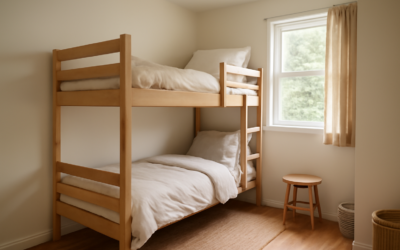
5. Bunk Bed
Two sleepers, one footprint. Ideal for shared kids’ rooms and cabins. The top bunk is for children age 6 and older, with guardrails on both sides and a mattress thin enough to keep the rail at least 5 inches above the sleeping surface.
6. Low Loft or Mid-Height Bed
A shorter loft, around 3 to 4 feet tall, gives younger kids a play cave or storage underneath without the fall height of a full loft.
7. Captain’s Bed
A platform bed with built-in drawers along one or both sides. Six deep drawers can hold as much as a small dresser, which frees a wall for a desk or a wider walkway.
8. Lift-Up Storage Bed
Gas struts raise the whole mattress platform to reveal a storage well the size of the bed. For most compact bedrooms, a lift-up storage bed frame is the most practical upgrade because it stores bulky items like off-season bedding and luggage without changing how you sleep.
9. Trundle Bed
A second mattress rolls out from under a twin or daybed. It suits kids’ rooms and occasional sleepovers, as long as you have about 40 inches of clear floor beside the main bed when the trundle is out.
10. Daybed
A twin mattress framed on three sides so it reads as a sofa during the day. Add a trundle and one daybed sleeps two. It is one of the simplest hide away beds because there is no mechanism at all.
11. Sofa Bed or Sleeper Sofa
A familiar choice for living rooms that host guests a few nights a year. Comfort varies widely; thicker memory foam mattresses on a modern mechanism are far better than older thin spring pads.
12. Ottoman, Chair or Cabinet Bed
Fold-out chairs, ottomans and freestanding cabinet beds hide a thin mattress inside a compact box. This kind of hidden bed furniture needs no wall anchoring, so renters like it, but the mattress is usually thinner than a true bed.
Matching Bed Type to Room Size
| Room size | Best fits | Notes |
|---|---|---|
| Under 80 sq ft | Horizontal twin wall bed, loft, daybed | Keep a 30 in walkway |
| 80 to 110 sq ft | Vertical full wall bed, captain’s bed, bunk | Check open projection |
| 110 to 140 sq ft | Queen lift storage bed, queen wall bed | Room for a desk too |
| Studio apartment | Wall bed with sofa, sleeper sofa | Daily folding needs a smooth mechanism |
Daily use matters as much as square footage when you compare space saving beds. If you will fold the bed every morning, pick a mechanism that is balanced and easy to move. If guests stay twice a year, a daybed or sleeper sofa may be enough and costs far less.
Space Saving Bed Frames: What to Check Before You Buy
- Weight rating: Look for the maker’s rated load for the sleepers plus mattress, and stay within it.
- Mattress limits: Wall beds, bunks and lofts all specify a maximum mattress thickness and weight. Going thicker can stop a wall bed from staying closed or reduce guardrail height on a bunk.
- Ceiling clearance: Measure from the floor to the lowest point, including light fixtures and ceiling fans near the bed.
- Assembly path: Large cabinet pieces have to turn through hallways and stairwells. Measure doorways before ordering.
- Finish and hardware: Solid wood or thick plywood carcasses hold screws better over years of folding than thin particleboard.
Safety Basics for Tall and Folding Beds
Space saving beds concentrate weight and height, so a few rules apply across all the types.
- Anchor tall pieces. Wall bed cabinets, tall headboard units, loft beds and bookcase towers should be fastened to wall studs or the structure the maker specifies, using the supplied hardware. An unanchored cabinet can tip when the bed is lowered.
- Keep cords away from beds. Do not hang window blind cords, lamp cords, fairy lights or ropes from bunks, lofts or headboards where a child could become entangled. Route lamp cords along the floor and wall instead.
- Top bunks and lofts are for age 6 and up. Younger kids should sleep on the lower level or a floor-height bed.
- Guardrails on both long sides of any raised bed, even if one side is against a wall, because children can slip into the gap.
- Follow the mattress limit on every raised or folding bed. Thicker is not safer here.
- Check fasteners every few months. Folding and climbing loosen bolts over time.
Troubleshooting Common Small-Room Bed Problems
The wall bed drifts down or will not stay closed. The mattress may be heavier than the mechanism was set for, or the tension needs adjusting per the maker’s instructions. Never try to adjust springs or pistons while the bed is under load.
The loft wobbles. Tighten all bolts, then secure the frame to wall studs with the supplied brackets. A loft that rocks side to side is not safe to sleep on.
The lift-up bed is hard to raise. Gas struts are rated by force. A heavier mattress may need higher-rated struts from the frame maker.
The trundle hits furniture. Measure the full pull-out length and keep that zone clear, or switch to a pop-up trundle that rises to bed height in a narrower space.
General Cost Ranges
Prices vary by material, size and region, but rough ranges help with planning. Daybeds and basic trundle frames are the least expensive, often in the low hundreds of dollars. Captain’s beds and lift-up storage frames typically run from a few hundred to over a thousand dollars. Loft and bunk beds span a similar range depending on wood quality. Wall beds are the biggest investment: DIY mechanism kits cost the least, ready-to-assemble cabinets land in the low to mid thousands, and custom built-in wall bed systems with sofas or desks can run several thousand dollars more, plus installation.
When to Call a Pro
Hire an experienced installer or carpenter for a wall bed if your walls are plaster, masonry or steel-stud, if you cannot locate solid framing, or if the unit is a queen or larger. A pro also makes sense for custom built-in storage around a bed. If you suspect the wall itself is weak or damaged, have a contractor look before anchoring anything heavy to it.
Frequently Asked Questions
What is the best space saving bed for a very small bedroom?
For rooms under about 80 square feet, a horizontal wall bed, a loft bed or a daybed usually frees the most floor. If the room is used only for sleeping, a lift-up storage bed that replaces a dresser can be just as effective.
Do murphy beds need to be attached to the wall?
Most do. Wall beds are typically fastened to wall studs or a floor-and-wall system specified by the maker so the cabinet cannot tip when the bed is lowered. Freestanding cabinet beds are the exception.
How much ceiling height does a loft bed need?
Plan for at least 30 to 36 inches between the top of the mattress and the ceiling so the sleeper can sit up. That usually means a ceiling of 8 feet or more for a standard loft.
What age is safe for a top bunk?
The top bunk is generally recommended only for children age 6 and older, with guardrails on both sides and a mattress thin enough to keep the rail at least 5 inches above the sleeping surface.
Are storage beds worth it in a small room?
Usually yes. A captain’s bed or lift-up storage frame can hold as much as a small dresser, which frees floor space for a desk, a wider walkway or a reading chair.