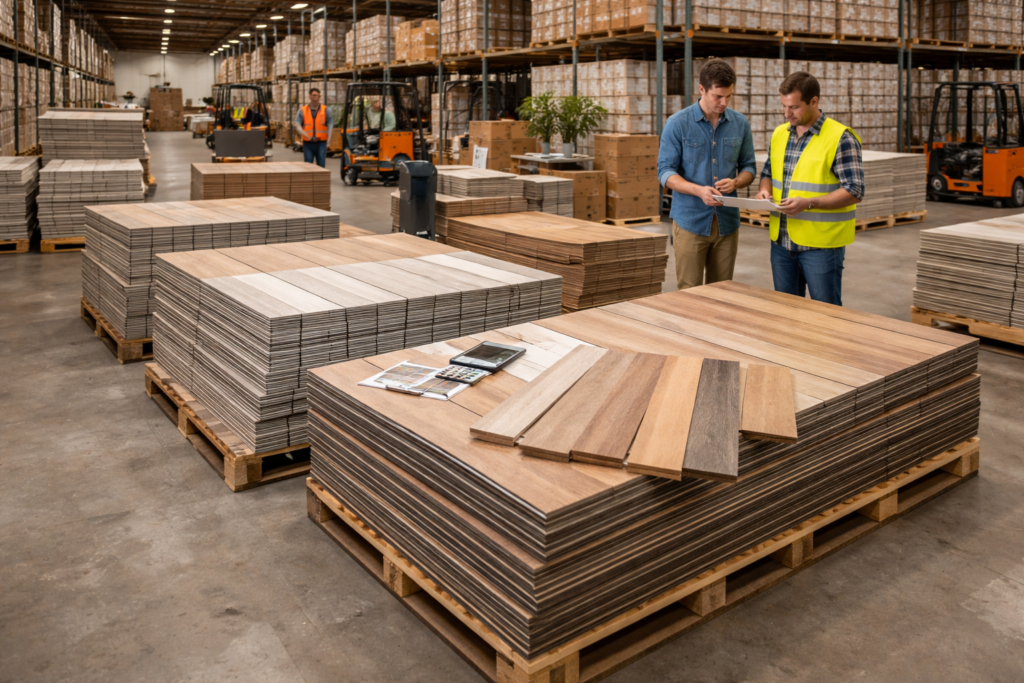
If you are a contractor flooring a 40-unit apartment building, a builder finishing a subdivision, or a flipper running multiple projects, buying retail by the box will quietly eat your margins alive. SPC flooring wholesale is how volume buyers get rigid-core vinyl at a fraction of the per-square-foot price, but the savings come with strings: minimum order quantities, dye-lot risk, import logistics, and warranty terms that differ sharply from what a homeowner gets at a big-box store. This guide walks through how wholesale SPC actually works and exactly what to vet before you commit a large purchase order.
What SPC Flooring Is and Why It Sells in Bulk
SPC stands for stone-plastic composite, a rigid-core waterproof flooring built on a dense core of limestone powder and PVC. That core makes SPC dimensionally stable, dent-resistant, and 100 percent waterproof, which is why it dominates rental, commercial, and new-construction projects where durability and moisture resistance matter and budgets are tight. Because these jobs use thousands of square feet of identical product, SPC is a natural fit for wholesale and bulk purchasing.
At volume, the price difference is real. Wholesale SPC can run well below retail per square foot, and on a large job that gap funds the labor or the profit.
How Wholesale SPC Buying Works
Wholesale generally means buying direct from a manufacturer, importer, or distributor rather than a retail store, often by the pallet or container. You will encounter terms that retail buyers never see:
- MOQ (minimum order quantity): The smallest order a supplier will accept, sometimes a few pallets, sometimes a full shipping container.
- Per-pallet and per-container pricing: Tiered pricing that drops as volume rises.
- Lead times: Imported stock can take weeks to months; domestic distributors are faster but pricier.
- Freight and handling: You may be responsible for shipping, a forklift to unload, and storage.
The Single Biggest Risk: Dye Lots
Color and pattern consistency is the trap that catches volume buyers. SPC is manufactured in batches, and planks from different production runs (dye lots or batch numbers) can vary subtly in color and print. On a small room you would never notice; across a 30,000-square-foot job, mismatched lots create visible color shifts between rooms or even within a room. Always order the entire job from a single dye lot, confirm the batch numbers match on delivery, and buy attic stock from that same lot for future repairs.
What to Vet on the Spec Sheet
Cheap wholesale SPC is not a bargain if it fails inspection or wears out in a rental. Demand a full spec sheet and scrutinize:
- Wear layer thickness: 12 mil for light residential, 20 mil or more for rentals and commercial traffic. This is the number that predicts how long the floor lasts.
- Overall thickness: Typically 4mm to 6mm; thicker cores feel more solid and bridge subfloor flaws.
- Core density and quality: A genuine stone-plastic core, not a thin or recycled-filler imitation.
- Attached underlayment: IXPE or cork pad adds quiet and comfort, common on better grades.
- Certifications: Look for FloorScore (low VOC), and any required fire and slip ratings for commercial use.
- Locking system: A reliable click profile speeds installation and reduces callbacks.
Vet the Supplier, Not Just the Floor
At wholesale volume, the supplier relationship is as important as the product. Before placing a large order:
- Order samples and, ideally, a small trial pallet before committing to a container.
- Confirm the company’s track record, references, and how long they have been importing or distributing.
- Clarify the warranty, who honors it, what it covers, and whether commercial use is included.
- Understand the return, defect, and damage-claim policy for bulk shipments.
- Verify lead times in writing and build a buffer into your project schedule.
Pros of Buying SPC Wholesale
For the right buyer, the advantages are significant:
- Lower cost per square foot: The core reason to buy in bulk; volume pricing protects margins.
- Consistent stock for big jobs: One order, one dye lot, enough for the whole project plus spares.
- Direct manufacturer access: Better customization, branding, and pricing on large runs.
- Reliable, durable product: Waterproof rigid-core SPC is ideal for rentals and commercial spaces.
Cons and Things to Watch
Wholesale is not for casual buyers:
- High minimums: MOQs can exceed what a single small project needs.
- Upfront capital and storage: You pay and warehouse the material before it is installed.
- Quality variability: Some low-cost imports cut corners on wear layer and core; samples are essential.
- Logistics burden: Freight, unloading equipment, and lead times fall on you.
- Weaker warranty recourse: Direct imports may offer thinner support than a name-brand retail purchase.
Calculating Your True Cost Per Square Foot
The sticker price per square foot is not your real cost, and volume buyers who forget that erode the very margin they were chasing. To compare wholesale offers honestly, build out the landed cost: the per-square-foot product price, plus freight, plus any import duties, plus unloading and storage, divided across the actual usable square footage after waste. A container that looks cheap can lose its advantage once ocean freight and a forklift rental are added in, while a slightly pricier domestic distributor with free delivery and faster lead times may win on total cost.
Factor in waste and attic stock too. Plan for roughly 7 to 10 percent waste on a straightforward layout, more for diagonal patterns or cut-up floor plans, and add extra for the attic stock you should keep from the same dye lot. Building these numbers into a per-square-foot landed cost lets you compare apples to apples across suppliers and protects you from the surprise expenses that turn a “cheap” bulk order into an expensive one once the pallets actually arrive on site.
The Bottom Line
For contractors, builders, and high-volume renovators, SPC flooring wholesale is one of the most effective ways to cut material costs without sacrificing the durability and waterproofing that rigid-core vinyl is known for. The savings are real, but they are earned by doing the homework: lock in a single dye lot, demand a complete spec sheet with a wear layer that matches the use, sample before you order a container, and vet the supplier’s track record and warranty. Skip those steps and a cheap bulk order can turn into a job-stopping headache; do them right and wholesale SPC delivers a tough, affordable floor at scale.
Prefer to explore on your own?
See how new flooring looks in your actual room in seconds — free, no signup.
Try the free Floor Studio →