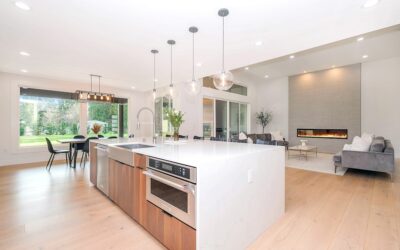
A speckled countertop is one of the smartest surfaces you can install if you want a kitchen that looks clean even when it isn’t spotless. Those tiny flecks of contrasting color, whether they come from natural mineral grains in granite or engineered particles in quartz, break up the surface visually and camouflage crumbs, water spots, and light staining that would scream on a solid black or white slab. This guide covers what creates the speckled look, which materials deliver it, real pricing, and how to pick a pattern that ages gracefully.
Part of our Countertops guide — explore the full guide →
- What Makes a Speckled Countertop Look the Way It Does
- Granite: The Original Speckled Surface
- Quartz: Engineered Speckle With Zero Sealing
- Laminate and Solid Surface Speckle Options
- Choosing the Right Speckle Scale and Color
- Cleaning and Maintaining a Speckled Countertop
- Pros and Cons of a Speckled Surface
- Where a Speckled Countertop Works Best
- Final Thoughts on Picking a Speckled Countertop
What Makes a Speckled Countertop Look the Way It Does
The dotted, granular appearance comes from a scattering of small particles in a base color. In natural stone, those specks are individual minerals: feldspar, mica, quartz grains, and amphibole, crystallized together over millions of years. In engineered slabs, manufacturers scatter crushed quartz, mirror flecks, or pigmented granules through the resin to mimic that random look on purpose.
The visual payoff is practical. A busy, multi-tone surface has what designers call high “pattern activity,” and high pattern activity hides debris. Set a few toast crumbs on a jet-black counter and they glow; scatter them on a salt-and-pepper granite and they vanish into the field. That forgiving quality is the main reason a speckled countertop stays popular in family kitchens.
Granite: The Original Speckled Surface
Granite is where the speckled look began, and it still does it best because every fleck is a real mineral crystal with depth and light play. Classic speckled granites include Ubatuba (black with gold and green flecks), Santa Cecilia (warm gold and burgundy grains), Luna Pearl (gray with black and white specks), and New Caledonia (gray-brown with a fine, even scatter).
Expect $40 to $100 per square foot installed for these workhorse colors. Granite is porous, so it needs a penetrating sealer at install and a refresh roughly once a year. The upside is real durability: it takes hot pans directly and resists scratches from knives and cookware. For a deeper look at natural stone options and how they compare, browse our countertops guide.
Quick Granite Speckle Test
When you visit the slab yard, view the full slab, not a 4-inch sample. Speckled granite varies wildly across a single block, and the corner sample rarely represents the whole. Photograph the actual slab under the yard lights and again by a window so you see how the flecks read in both warm and cool light.
Quartz: Engineered Speckle With Zero Sealing
If you love the speckled look but hate maintenance, engineered quartz is the answer. Brands like Caesarstone, Silestone, and Cambria produce fine-fleck patterns, think “Nougat,” “White Zeus,” or “Blizzard,” that scatter tiny quartz and mirror particles through a consistent base. Because quartz is nonporous, it never needs sealing and it shrugs off wine, coffee, and citrus.
Pricing runs $50 to $120 per square foot installed. The one rule: keep hot pans off it. The resin binder scorches near 300 degrees Fahrenheit, so always use a trivet. Quartz also gives you predictability, every slab matches the sample, which matters if you are ordering multiple pieces for a large kitchen and want the speckle pattern to stay consistent across seams.
Laminate and Solid Surface Speckle Options
Budget kitchens are not shut out of the speckled look. Two affordable routes deliver it convincingly:
- Laminate: Wilsonart and Formica both print realistic speckled and granite-look patterns. At $15 to $40 per square foot installed, it is the cheapest speckled surface. It cannot take heat and edges can chip, but the printed fleck pattern hides everyday mess well.
- Solid surface (Corian): Manufacturers embed contrasting particles into the acrylic for a subtle speckle. At $40 to $80 per square foot, it is seamless, repairable by sanding, and the fleck runs all the way through so scratches don’t expose a different color underneath.
If you are torn between an engineered look-alike and true stone, our comparisons hub weighs the durability and cost trade-offs directly.
Choosing the Right Speckle Scale and Color
Speckle comes in scales from fine (grains under an eighth inch) to coarse (visible chunks a quarter inch and larger). Fine speckle reads almost like a solid color from across the room and suits modern, calm kitchens. Coarse speckle is busier and works in traditional or rustic spaces where you want the counter to be a feature.
For color, follow a simple rule: the specks should pull from your cabinet and floor tones. A gray speckled countertop with warm gold flecks pairs beautifully with maple or oak cabinets, while a cool black-and-white speckle sharpens crisp white or navy cabinetry. Bring cabinet door samples to the slab yard rather than trusting your memory of the paint color.
Cleaning and Maintaining a Speckled Countertop
The everyday routine is easy regardless of material. Wipe with warm water and a few drops of dish soap, or a pH-neutral stone cleaner for granite and quartzite. Skip vinegar, bleach, and abrasive powders, which dull the finish and, on natural stone, can strip the sealer.
- Wipe spills promptly, especially oil, wine, and citrus on porous granite.
- Reseal granite annually; do the water-bead test to check when it is due.
- Use trivets under hot cookware on quartz, laminate, and solid surface.
- Cut on a board; even hard granite dulls your knives and coarse speckle can trap grime along a scratch.
One genuine advantage worth repeating: because the fleck pattern camouflages so well, a speckled countertop demands less frequent deep cleaning to look presentable than a solid dark or light surface. That is a real quality-of-life benefit in a high-traffic kitchen.
Pros and Cons of a Speckled Surface
Before you commit, weigh the trade-offs honestly. Speckle is forgiving and versatile, but it is not the right answer for every design goal.
- Pro: Camouflages crumbs, water spots, and light staining, so the counter looks clean between deep cleanings.
- Pro: The busy pattern hides minor scratches and small chips far better than a solid slab.
- Pro: Works with a wide range of cabinet colors because the flecks pull in multiple tones.
- Con: A very coarse speckle can read as dated or busy in a minimalist, modern kitchen.
- Con: Natural granite speckle varies slab to slab, so matching multiple pieces for a large layout takes care.
If your heart is set on a serene, gallery-white or matte-black kitchen, a solid or subtly veined slab may serve the design better. But for a room that gets used hard every day, the forgiving nature of speckle is a genuine practical win.
Where a Speckled Countertop Works Best
Speckled surfaces earn their keep in the hardest-working zones of the home. In a family kitchen, they hide the daily churn of crumbs and water. In a mudroom or laundry room, a coarse speckled granite or laminate absorbs the visual chaos of a drop zone. Even in a bathroom vanity, a fine speckle disguises toothpaste splatter and water spots between cleanings.
If you are coordinating your counters with hard surfaces elsewhere in the home, our tile flooring guide can help you match backsplash and floor tones so the speckle reads as intentional rather than random.
Final Thoughts on Picking a Speckled Countertop
A speckled countertop is the practical choice for anyone who wants a beautiful kitchen that forgives real life. Choose granite for genuine mineral depth and heat resistance, quartz for a maintenance-free engineered fleck, or laminate and solid surface when budget leads. Match the speckle scale to your room’s energy and pull the fleck colors from your cabinets, and you will land on a surface that looks polished on your busiest days.
View full slabs, test them in your own lighting, and confirm the sealing and heat rules for whatever material you choose. Do that groundwork and your speckled countertop will stay handsome and low-stress for the fifteen to thirty years a quality surface should last.