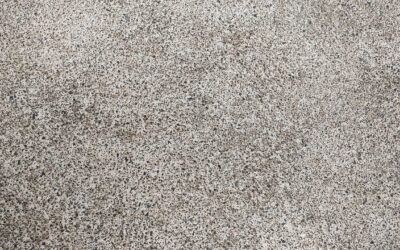
Look down at the floor of any school built between 1955 and 1985 and you’ll see the original inspiration for the current speckled flooring trend. Speckled flooring hides dirt better than any other surface pattern, lasts 40 to 60 years in commercial settings, and ranges from $2 per sq ft basic VCT to $100 per sq ft poured terrazzo. The design recently jumped from institutional buildings to high-end residential interiors, where designers use it for laundry rooms, mudrooms, and entire kitchens.
- The Categories of Speckled Floors
- Traditional Cement Terrazzo
- Epoxy Terrazzo and Resinous Options
- Vinyl Composition Tile (VCT)
- Porcelain Terrazzo-Look Tiles
- Sheet Vinyl and Rubber Speckles
- Where Speckled Floors Make Sense
- Color and Pattern Selection
- Installation Timeline Reality
- Cost Summary by Type
The Categories of Speckled Floors
Speckled flooring covers four distinct material families. Terrazzo, the original speckled floor, uses marble, glass, or quartz chips suspended in cement or epoxy. Vinyl composition tile (VCT) uses pigmented vinyl chips compressed into 12 by 12 inch tiles. Porcelain tile mimics terrazzo with printed surface graphics. Sheet vinyl and rubber both come in speckled patterns that read like institutional flooring at consumer prices.
Each category has different installation methods, lifespans, and costs. Understanding which one you actually want matters because they’re not interchangeable.
Traditional Cement Terrazzo
Poured-in-place cement terrazzo is the original. A 1-1/2 to 2 inch portland cement base receives marble, granite, glass, or mother-of-pearl chips, then gets ground flat and polished to reveal the aggregate. Pricing runs $25 to $50 per sq ft for residential installations, with custom color blends and divider strip patterns adding 20 to 50 percent.
Cement terrazzo lasts 75 to 100 years in service. The downside is weight (around 18 pounds per sq ft completed) and the requirement for a structural slab capable of supporting the load. Most residential applications retrofit terrazzo only on slab-on-grade construction or reinforce floor framing first.
Epoxy Terrazzo and Resinous Options
Epoxy terrazzo is the modern alternative. A 3/8 to 1/2 inch epoxy resin matrix holds the aggregate, eliminating the weight problem of cement terrazzo while accepting brighter colors and decorative chips. Pricing runs $30 to $80 per sq ft installed, with high-end designs reaching $100-plus.
Manufacturers like Terroxy, Master Terrazzo, and Tnemec supply the epoxy systems. Aggregate options include traditional marble (Carrara, Calacatta, black absolute) plus glass, mother-of-pearl, recycled plastic chips, and metal accents. Epoxy terrazzo installs over wood-framed subfloors with adequate stiffness, making it suitable for second-story residential applications.
Vinyl Composition Tile (VCT)
VCT delivers the speckled look at institutional pricing. Standard 12 by 12 inch tiles run $1 to $2 per sq ft material with installation labor of $2 to $3.50 per sq ft. Brands like Armstrong Imperial Texture, Mannington Inspirations, and Azrock VCT come in 100-plus color and speckle patterns ranging from subtle to vivid.
VCT requires waxing and stripping on a routine maintenance cycle, typically every 6 to 12 months in residential use. The wax buildup and stripping process is why VCT has fallen out of favor in residential settings despite its low material cost. Lifetime cost ends up similar to mid-range LVP once maintenance hours and supplies are factored in.
Porcelain Terrazzo-Look Tiles
- Daltile Volume: 12 by 24 inch porcelain with terrazzo print. $4 to $7 per sq ft.
- MSI Marmi Imperiali Terrazzo: 24 by 24 inch large format. $5 to $9 per sq ft.
- Florida Tile Time 2.0: Multiple colorways with realistic aggregate prints. $4 to $8 per sq ft.
- Marazzi Classentino Marble Terrazzo: Premium 24 by 48 inch slabs. $8 to $14 per sq ft.
Porcelain delivers terrazzo aesthetics at one-third the cost with none of the polishing or wax maintenance. The tradeoff is grout lines every 12 to 48 inches. Look for rectified-edge porcelain (precision-ground edges) to minimize grout joint width to 1/16 to 1/8 inch.
Sheet Vinyl and Rubber Speckles
Heavy-commercial sheet vinyl from brands like Tarkett iD Inspiration, Forbo Marmoleum, and Armstrong Medintech delivers seamless speckled floors for hospital, lab, and retail use. Pricing runs $4 to $8 per sq ft material with installation costs another $3 to $6 per sq ft for heat-welded seams.
Rubber flooring with speckled patterns from Nora, Mondo, and Mannington Biospec serves gyms, schools, and healthcare. Pricing lands at $5 to $10 per sq ft installed. Both sheet vinyl and rubber offer the most aggressive slip resistance (DCOF above 0.60) which matters for institutional applications.
Where Speckled Floors Make Sense
The speckle pattern excels at hiding dirt, crumbs, pet hair, and minor stains. That makes it ideal for mudrooms, entries, laundry rooms, and kitchens. Pet owners and families with young kids see immediate practical benefit. The pattern also masks minor surface damage like scuffs and small scratches, which extends the visual lifespan of the floor.
Bathrooms benefit from the slip resistance built into terrazzo, sheet vinyl, and rubber speckled products. Commercial spaces like coffee shops, salons, and small retail stores leverage the institutional durability without committing to a 50-year terrazzo install. Look for DCOF wet ratings above 0.42 for any wet-area application.
Color and Pattern Selection
Larger chips read more vintage and more bold. The 1960s school-floor look uses 1/2 to 1 inch chips in high contrast colors. Smaller chips (1/8 to 1/4 inch) in subtle tone-on-tone patterns read modern and minimalist. Choose chip size based on the visual weight you want.
White or cream base colors with neutral chips work in transitional and farmhouse designs. Black or charcoal base with bright glass chips suits industrial and modern interiors. Custom epoxy terrazzo allows logo or symbol inserts, which works for retail brand identity but rarely matches residential resale demands.
Installation Timeline Reality
Poured terrazzo takes 7 to 14 days from start to walk-in ready for a typical residential room, including substrate prep, pour, cure, grinding, and sealing. VCT installs in one to two days. Porcelain tile takes 3 to 5 days including substrate prep, set, grout, and seal. Sheet vinyl and rubber install in one day for a single room with heat-welded seams adding another half day.
Cost Summary by Type
Budget speckled floors (VCT, sheet vinyl): $3 to $8 per sq ft installed. Mid-range (porcelain terrazzo-look tile): $7 to $15 per sq ft installed. Premium (epoxy terrazzo): $30 to $80 per sq ft installed. Luxury (poured cement terrazzo with custom design): $50 to $150 per sq ft installed.
Speckled flooring works because the pattern does the visual heavy lifting that solid colors can’t match. Pick the material category that matches your traffic, budget, and aesthetic goals, and the floor will hide dirt and scratches gracefully for decades.
Prefer to explore on your own?
See how new flooring looks in your actual room in seconds — free, no signup.
Try the free Floor Studio →