You flip on the basement light and a tan, hump-backed insect with absurdly long legs launches itself directly at your face. Welcome to the world of spider crickets in basement infestations, where the official name is the camel cricket and the leaping behavior is a defense response. They do not bite, do not spread disease, and do not damage structural wood, but they breed fast, chew on cardboard and fabric, and can colonize a damp basement by the hundreds. Getting rid of them is straightforward once you understand what attracts them and the three or four fixes that actually work.
How to Identify a Camel Cricket
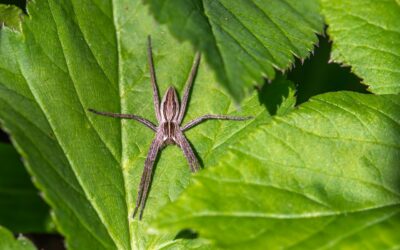
True camel crickets, genus Ceuthophilus, look nothing like the chirping field crickets in your yard. They have a humped, spider-like body, no wings, six legs with two enormous spring-loaded back legs, and antennae longer than the body itself. Color ranges from tan to dark brown with mottled bands. Adults measure 1/2 to 1 1/2 inches long.
They are silent. They cannot chirp because they have no wings to stridulate. If you hear cricket sounds at night, those are field crickets that wandered in through a gap. Camel crickets communicate by smell and touch, and the only sound they make is the soft thump when they land on something.
Why They Love Basements
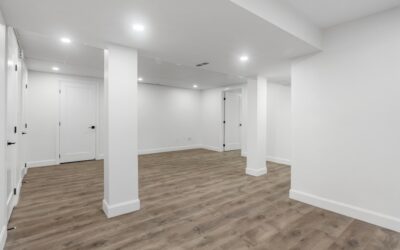
Three conditions draw them in. High humidity above 65 percent, total darkness for long stretches, and decaying organic material like cardboard boxes, old newspapers, or damp wood. A basement that sits at 70 to 75°F with poor ventilation is essentially a five-star resort for camel crickets. They migrate indoors in late summer and stay all winter, with peak indoor populations from October through March.
The single biggest attractant is moisture. A basement with a relative humidity reading above 60 percent on a hygrometer almost always has some level of camel cricket activity. Drop that number below 50 percent and the population collapses within four to six weeks.
Sticky Traps Do the Heavy Lifting
Glue boards are the most effective first-line removal tool. Catchmaster 72MAX traps cost about $15 for a 12-pack at Home Depot and trap dozens of crickets per board in an active basement. Place them along baseboards, behind the water heater, under the laundry tub, and near floor drains. Check weekly and replace when full or after one month.
- Catchmaster 72MAX: Peanut butter scented, 5 by 8 inches, $1.25 per trap
- Tomcat Glue Traps: Pre-baited, foldable, $0.95 per trap
- Black Flag Roach Motel: Enclosed box style, useful where pets or kids are present
- Trapper Max: Pro-grade, 9 by 5 inches, sold through Do My Own at $0.65 each in bulk
Two boards per 100 square feet of basement floor is enough for a moderate infestation. Heavy infestations need one board every 10 linear feet of wall.
Dehumidify the Space
A 50-pint dehumidifier from Frigidaire, GE, or hOmeLabs runs $200 to $280 and pulls moisture down from 70 percent to 45 percent in a 1,500 square foot basement within 48 hours. Set the target to 45 percent and the unit will cycle on and off automatically. Empty the tank daily or run a 5/8-inch garden hose to a floor drain for continuous drainage.
This single fix solves more than half of all camel cricket problems. Without standing humidity, eggs fail to hatch and adults migrate back outside looking for damper ground. The dehumidifier also helps with mold, musty smell, and silverfish, all of which share the same moisture-driven biology.
Seal the Entry Points
Camel crickets enter through gaps you would not notice. Foundation cracks wider than 1/16 inch, gaps around utility penetrations, weep holes in brick veneer, and unsealed sill plates all serve as entry routes. Walk the basement perimeter on the outside with a flashlight and a tube of Loctite PL 300 polyurethane sealant ($6 per tube).
Check window wells for leaf litter and standing water. A bucket of pea gravel and a clear acrylic well cover from MacCourt ($35 each at Lowe’s) blocks the most common entry path. Inside the basement, foam any holes around pipes with Great Stuff Pestblock orange spray foam, which contains a bittering agent that deters insects from chewing through.
What Kills Them on Contact
For the live crickets you find at night, a residual spray gives lasting control. Spectracide Triazicide concentrate mixed at 1.5 ounces per gallon of water and applied with a pump sprayer along baseboards and the foundation perimeter lasts 4 to 6 weeks. Bifen IT, a bifenthrin concentrate sold through Do My Own at $40 per 16-ounce bottle, is the same active ingredient pros use and treats up to 16,000 square feet.
For a non-chemical option, a household vacuum with a hose attachment handles individual crickets and their egg clusters. Empty the canister outside immediately. Eggs cluster in dark corners, behind storage bins, and inside cardboard box flaps.
Stop Storing Cardboard in the Basement
Cardboard is a perfect camel cricket habitat. The corrugated layers hold moisture, the cellulose feeds them, and the dark spaces inside flaps make ideal egg-laying spots. Move all stored items into clear or opaque plastic bins from Sterilite or Rubbermaid, sized 18 to 27 gallons, at $8 to $15 per bin.
This single switch from cardboard to plastic, combined with the dehumidifier, often eliminates an infestation without any sprays at all. It also protects books, photos, and fabrics from silverfish, mice, and humidity damage.
When to Call a Pro
If you trap more than 50 crickets in a week after running a dehumidifier for a month, the infestation has reached a level where exclusion alone will not fix it. A pest control company like Orkin, Terminix, or a local family-owned operation charges $150 to $350 for an initial treatment and $40 to $80 quarterly for ongoing service.
The pro brings two advantages. A truck-mounted sprayer that treats the outer foundation 3 feet up and 3 feet out, and access to commercial-grade granular bait like Niban that homeowners cannot buy retail. Combined with the steps above, a single professional visit typically clears spider crickets in basement spaces within two weeks and keeps them out through the winter.