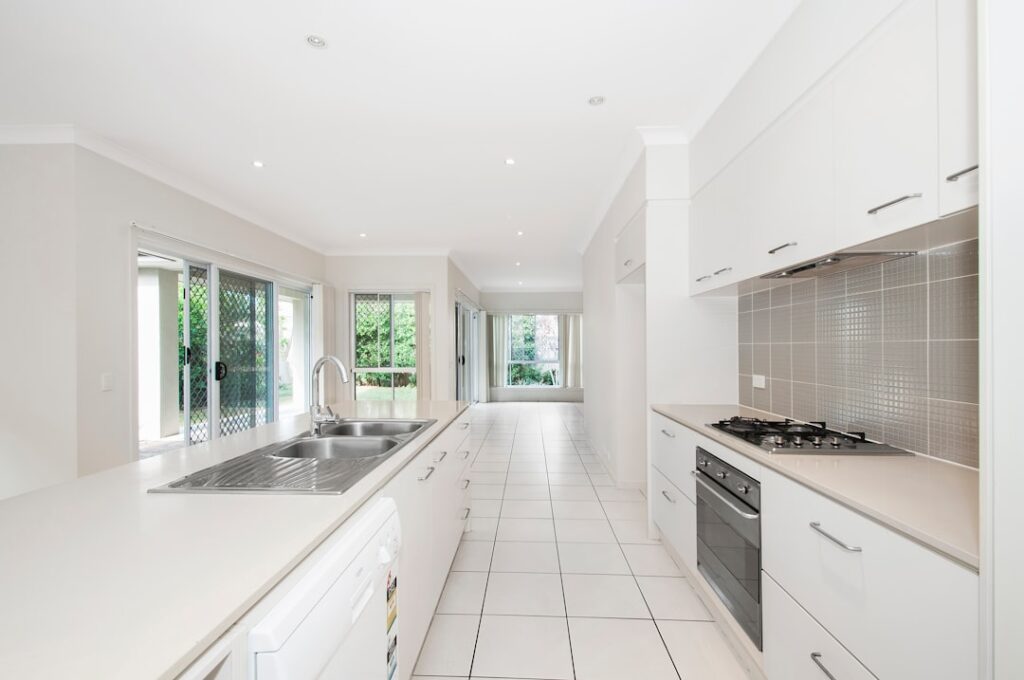
Stainless steel tile brings an industrial, contemporary edge to kitchens and bathrooms, offering the same brushed or polished look you see on high-end appliances in a format you can run across an entire wall. Most stainless steel tiles are not solid metal; they feature a thin layer of stainless steel bonded to a lightweight backing such as resin, ceramic, or composite, which keeps them practical and affordable for residential use.
Part of our Tile & Grout guide — explore the full guide →
These tiles show up most often as backsplashes, accent strips, and feature walls, where their reflective surface bounces light around a room and pairs naturally with modern cabinetry. Understanding the types, finishes, and care requirements will help you decide whether metal tile belongs in your project.
- What Stainless Steel Tile Is Made Of
- Finishes and Styles Available
- Where Stainless Steel Tile Works Best
- Installing Stainless Steel Tile
- Cleaning and Maintaining Metal Tile
- Pros and Cons at a Glance
- Pairing Metal Tile With Other Materials
- Cost and Value Considerations
- Is Stainless Steel Tile Right for You?
What Stainless Steel Tile Is Made Of
The vast majority of these products are composite tiles. A thin stainless face, often a fraction of a millimeter thick, is laminated onto a stable core. This construction matters because solid metal tile would be heavy, expensive, and prone to denting, while the composite version is lighter, cuts more easily, and costs far less.
You will also find stainless mosaic sheets, where small metal chips are mounted on a mesh backing so you can install a whole section at once. These are popular for backsplashes because the grid of grout lines and the play of light create visual texture without overwhelming the space.
Finishes and Styles Available
Finish has the biggest impact on the final look, so consider it carefully against your lighting and cabinetry.
- Brushed or satin: A soft, matte sheen that hides fingerprints and minor scratches well. The most forgiving choice for everyday kitchens.
- Polished or mirror: Highly reflective and dramatic, but it shows every smudge and water spot.
- Textured or embossed: Patterns like linen, diamond plate, or quilted add depth and disguise wear.
- Mosaic shapes: Penny rounds, subway, hexagon, and herringbone formats let you mix metal with other materials.
Mixing brushed stainless with glass or stone mosaics is a common way to soften the metallic look and tie it to a broader color scheme.
Where Stainless Steel Tile Works Best
Kitchen backsplashes are the natural home for metal tile. The surface wipes clean of grease and splatter, resists heat near a cooktop, and complements stainless appliances. A full backsplash or a band behind the range makes a strong statement.
Beyond the kitchen, these tiles work as bathroom accent walls, fireplace surrounds, bar fronts, and elevator-style feature panels. They are best kept to vertical surfaces and accents rather than floors, since the thin metal face can scratch and show wear underfoot, and a polished floor tile can be slippery when wet.
Installing Stainless Steel Tile
Installation is similar to ceramic tile but with a few metal-specific considerations. Composite tiles cut with a standard wet saw fitted with the right blade, or with a hacksaw and metal-cutting tools for small adjustments. The cut edges can be sharp, so handle freshly cut pieces with care and gloves.
- Start with a clean, flat, dry substrate such as cement board or properly prepared drywall in a dry zone.
- Use a high-quality, non-staining adhesive or thin-set rated for metal tile; check the manufacturer’s recommendation.
- Apply adhesive to the wall, not the tile face, to avoid smearing the metal.
- Set the tiles with even spacing and protect the faces with painter’s tape during grouting.
- Use a non-sanded grout to avoid scratching the surface, and wipe excess immediately.
Because mistakes show on a reflective surface, many homeowners hire a professional installer for polished finishes or large feature walls.
Cleaning and Maintaining Metal Tile
Routine cleaning is simple. Wipe the surface with a soft cloth and warm water, then dry it to prevent water spots, which are the main cosmetic nuisance on stainless. For grease near a cooktop, a little mild dish soap handles it.
Avoid abrasive pads, steel wool, and harsh acidic or chlorine-based cleaners, all of which can dull or damage the finish. To brighten brushed stainless, always wipe in the direction of the grain. A dedicated stainless steel cleaner or a small amount of glass cleaner restores shine on polished tiles. Test any new product in an inconspicuous corner first, and follow the manufacturer’s care instructions.
Pros and Cons at a Glance
Metal tile earns its place through looks and easy upkeep, but it is not the right answer for every room. Weigh the trade-offs before you commit.
- Pros: Sleek modern appearance, wipes clean of grease and splatter, heat-tolerant near cooktops, reflects light to brighten a space, and coordinates with stainless appliances.
- Cons: Shows fingerprints and water spots on polished finishes, can scratch or dent, often costs more than ceramic, and cut edges are sharp during installation.
For most homeowners the verdict is simple: choose a brushed or textured finish to minimize the downsides while keeping the contemporary look you are after.
Pairing Metal Tile With Other Materials
Stainless rarely stands alone in a successful design. Pairing it with warmer or softer materials keeps a space from feeling cold or clinical. Glass mosaics in a complementary tone add color, while natural stone or wood-look elements introduce texture and warmth that balance the metal’s sheen.
A popular approach is a band of stainless mosaic set within a field of larger ceramic subway tile, drawing the eye without committing the whole wall to metal. Coordinate the tile finish with your cabinet hardware and faucet finishes so the metals in the room read as a deliberate palette rather than a clash.
Cost and Value Considerations
Pricing varies widely with finish and construction. As a general estimate, composite stainless mosaic sheets often run from the mid-teens to the low-thirties of dollars per square foot, while specialty patterns and solid-metal tiles cost considerably more. Installation labor adds to that, particularly for intricate mosaics.
These are estimates only, and actual prices depend on your region, the brand, and the complexity of the layout. Because metal tile is usually used as an accent rather than across a whole room, the total project cost often stays reasonable even when the per-square-foot price is higher than ceramic.
Is Stainless Steel Tile Right for You?
If you want a sleek, modern, easy-to-wipe surface that coordinates with contemporary appliances, stainless steel tile is a strong candidate, especially as a kitchen backsplash. Choose a brushed or textured finish for daily practicality, reserve mirror polish for low-touch accent areas, and follow gentle cleaning habits to keep it looking sharp.
For homeowners who prefer warmth and traditional texture, stone or ceramic may suit better, but few materials match the crisp, light-reflecting punch of metal tile in the right modern space.
Prefer to explore on your own?
See how new flooring looks in your actual room in seconds — free, no signup.
Try the free Floor Studio →