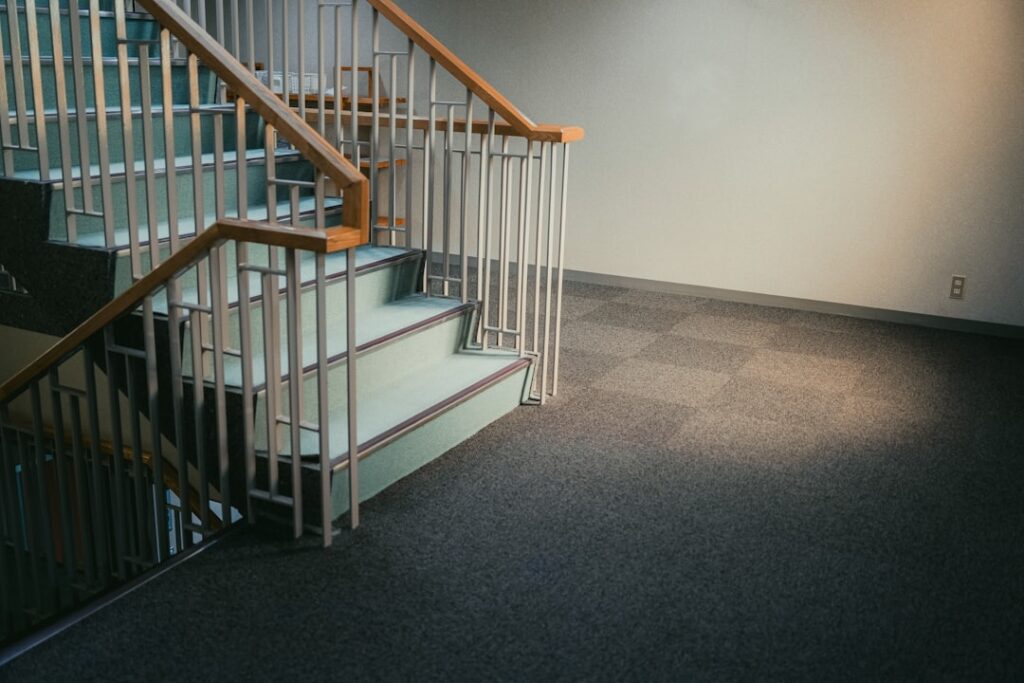
Stair carpet is one of the most practical upgrades you can make to your home. It transforms slippery, noisy hardwood or tile stairs into safe, quiet, comfortable pathways between floors. Beyond the functional benefits, stair carpet adds visual warmth and design continuity that connects different levels of your home.
Part of our Stairs & Stair Flooring guide — explore the full guide →
Choosing the right stair carpet requires different considerations than selecting carpet flooring for flat rooms. Stairs endure concentrated foot traffic on a small area, demand superior traction, and present unique installation challenges. This guide covers the styles, materials, installation methods, and costs you need to understand.
Why Carpet Your Stairs
Safety First
Falls on stairs are among the most common household injuries, and bare hardwood or tile flooring stairs increase the risk significantly. Carpet provides traction that prevents slipping, and its cushioned surface reduces injury severity if a fall does occur. For households with children, elderly members, or pets, stair carpet is a safety essential.
Noise Reduction
Each footstep on bare stairs sends sound reverberating through the entire house. Carpet and padding absorb this impact noise, creating a dramatically quieter home. The difference is especially noticeable in open-plan homes and multi-story residences where staircase noise carries into living areas and bedrooms.
Comfort and Warmth
Bare stairs are cold and hard underfoot, which is uncomfortable during early morning and late-night trips. Carpet provides insulation and cushioning that makes navigating stairs more pleasant in every season.
Floor Protection
Stair treads suffer concentrated wear from foot traffic focused on a narrow path. Carpet protects hardwood flooring underneath from scratches, dents, and finish deterioration. When the carpet eventually wears out, the hardwood beneath remains in excellent condition.
Stair Carpet Styles
Wall-to-Wall Stair Carpet
Wall-to-wall installation covers the entire stair tread and riser from wall to wall (or wall to baluster). This provides maximum coverage, noise reduction, and safety. It is the most common stair carpet installation in homes where the underlying stair material is not a design feature.
Choose between the waterfall and Hollywood installation methods (covered below in the installation section). Wall-to-wall stair carpet costs less than runners because there is no visible border edge to finish, and installation is more straightforward.
Stair Runner
A stair runner covers the center of each tread and riser while leaving a border of exposed floor on each side. Runners showcase both the carpet design and the stair material underneath, creating a layered, polished look that is popular in homes with attractive hardwood stairs.
Runners require finished edges — either bound, serged, or bordered — which adds cost but creates a tailored appearance. The exposed border must be consistent in width on both sides of every step for a professional result.
Stair Treads
Individual stair treads are pre-cut carpet pieces that attach to each step independently, leaving the risers bare. This modern, minimalist approach provides traction on the walking surface while maintaining the open, airy look of exposed risers. Stair treads install with adhesive strips or double-sided tape and are easy to remove and replace.
Stair treads work best on open-riser and floating staircases where the architectural design of the stairs is a focal point. They are also a practical, renter-friendly solution that does not require permanent installation.
Best Carpet Materials for Stairs
Nylon
Nylon is the top choice for stair carpet. Its exceptional resilience means fibers bounce back after repeated compression from foot traffic. Nylon resists crushing, matting, staining, and fading — all critical qualities for the high-wear stair environment. Solution-dyed nylon provides the best colorfastness and stain resistance.
Wool
Wool offers natural resilience, beauty, and flame resistance. It is the premium choice for stair carpet in upscale homes. Wool’s natural crimp provides excellent crush recovery, and its inherent soil resistance keeps stairs looking clean between vacuumings. Wool costs more than nylon but delivers superior long-term appearance.
Wool-Nylon Blend
An 80/20 wool-nylon blend combines wool’s beauty with nylon’s durability at a moderate price point. This blend is the most popular material for stair runners and performs exceptionally well on stairs where both appearance and performance matter.
Polypropylene
Polypropylene (olefin) provides a budget-friendly option for stair carpet. It resists moisture and staining but crushes more readily than nylon or wool. For stairs with moderate traffic and tight budgets, polypropylene delivers adequate performance at a lower cost.
Materials to Avoid on Stairs
Avoid polyester carpet on stairs. Polyester fibers flatten permanently under the concentrated pressure of stair traffic, creating unsightly crush marks within months. Also avoid very plush, thick-pile carpets — they feel unstable underfoot on stairs and can create a tripping hazard where the pile folds at the stair nose.
Pile Type Recommendations
Low-Pile Cut Carpet
Low-pile cut carpet with a dense construction is the ideal choice for stairs. It provides firm footing, maintains its appearance under heavy traffic, and installs cleanly around stair noses. Pile heights between 1/4 inch and 1/2 inch offer the best combination of comfort and stability.
Loop Pile
Berber and level-loop carpets work well on stairs if the loops are tight and low. Loose or tall loops can catch on shoe heels and pet claws, creating a snagging hazard. Ensure any loop pile carpet selected for stairs has a tight, dense construction.
Patterned Cut-and-Loop
Cut-and-loop patterns add visual interest while maintaining the practical benefits of both pile types. The pattern hides wear patterns and footprints, keeping stairs looking fresh longer. Ensure the pattern scale is appropriate for the stair tread size — large patterns may not read correctly on narrow treads.
Installation Methods
Waterfall Installation
The waterfall method brings the carpet over the stair nose and drops it straight down the riser to the next tread. The carpet does not wrap around the underside of the nose, creating a clean, angular profile. This method uses less carpet, is easier to install, and works best with low-pile and flat-weave carpets.
The slight gap at the stair nose can collect debris and is slightly less cushioned than the Hollywood method. However, the clean lines and efficient material use make waterfall the most popular method for wall-to-wall stair installations.
Hollywood Installation
The Hollywood method wraps the carpet tightly around each stair nose, following the contour of the tread edge and tucking into the junction between nose and riser. This creates a smooth, fitted appearance with cushioned coverage on every surface.
Hollywood installation provides better protection for stair noses, more complete sound dampening, and a more luxurious feel. It requires more material (approximately 10 percent more than waterfall) and more skilled labor but delivers a premium result.
Cap-and-Band Installation
Cap-and-band (also called French cap) wraps individual carpet pieces around each tread and secures them separately. The risers are covered with a different piece, creating a seam at the junction. This method allows mixing materials — for example, carpeted treads with painted or wallpapered risers — and is common in high-end custom stair installations.
Stair Carpet Padding
Padding under stair carpet is essential for comfort, noise reduction, and carpet longevity. Use thin, firm padding specifically designed for stairs — typically 3/8 inch thick with a density of 6 to 8 pounds per cubic foot.
Do not use thick, soft padding on stairs. Soft padding makes the carpet feel unstable underfoot and creates a tripping hazard. The padding should provide slight cushioning without any sponginess or movement when stepped on.
Cut padding to fit each tread individually. The padding should cover the tread and wrap slightly over the nose but should not extend down the riser. Staple padding securely to each tread.
Stair Carpet Costs
Material costs for stair carpet range from $2 to $15 per square foot depending on the fiber and quality. A typical straight staircase with 13 steps requires approximately 40 to 50 square feet of carpet for wall-to-wall installation.
Professional installation costs $200 to $800 for a standard straight staircase and $500 to $1,500 for stairs with turns, landings, or curved sections. Total project costs including materials, padding, and installation range from $300 to $1,500 for budget installations and $800 to $3,000 for premium installations.
Stair runners typically cost more per linear foot than wall-to-wall carpet due to the edge finishing required. Expect to pay $400 to $2,000 for a custom stair runner installation including material, binding, padding, and labor.
Maintenance Tips
Vacuum stair carpet at least twice weekly using a handheld vacuum or a vacuum with a hose and upholstery attachment. Stair treads accumulate dirt quickly because concentrated foot traffic compresses debris deep into the fibers.
Address stains immediately. Stair carpet shows stains prominently because the steep angle makes the treads visible from both above and below. Blot spills immediately and apply a fiber-appropriate spot cleaner.
Schedule professional deep cleaning annually. Stairs benefit from more frequent professional attention than flat carpet because the concentrated wear and compressed fibers trap more soil in a smaller area.
Inspect the installation periodically for loose areas, especially at stair noses where carpet is most likely to pull away. Loose stair carpet is a serious safety hazard that needs immediate repair.
Choosing Between Carpet and Other Stair Coverings
Bare hardwood stairs offer a clean, modern look but lack traction and generate significant noise. Laminate flooring stair nosings provide a budget-friendly hard-surface option but can be slippery. Luxury vinyl plank stair nosings offer water resistance for basement stairs but do not provide the cushioning and traction of carpet.
For most residential staircases, carpet remains the best choice for its combination of safety, comfort, noise reduction, and design flexibility. Hard-surface stairs make sense in modern and industrial interiors where the architectural statement outweighs practical concerns, or in homes without children and elderly residents.
Final Thoughts
Stair carpet is a functional and aesthetic investment that improves safety, comfort, and acoustics throughout your home. Choose durable materials like nylon or wool in low-pile constructions that handle concentrated traffic without crushing. Invest in professional installation to ensure a secure, safe result, and maintain your stair carpet diligently to preserve its appearance and performance for years to come.