A straight stair lift typically runs a few thousand dollars installed, and a curved rail can cost two or three times that, which is why so many families start searching for stair lift grants the week a parent comes home from the hospital. The honest answer is that there is no single national stair lift program. Instead, help comes from a patchwork of veterans benefits, Medicaid waivers, state aging services, local nonprofits, and financing options, each with its own rules and waiting lists. Knowing where to look, and what paperwork to gather first, is what separates families who get assistance from those who give up after two phone calls.
Part of our Stairs & Stair Flooring guide — explore the full guide →
- How Stair Lift Grants Actually Work
- Does Medicare Pay for a Stair Lift?
- Veterans Benefits: VA Home-Modification Grants
- Medicaid Waivers and State Programs
- Area Agencies on Aging, Nonprofits, and Local Help
- What to Gather Before You Apply
- Lower-Cost Alternatives if Grants Fall Short
- Safety and Installation Considerations
- Frequently Asked Questions
How Stair Lift Grants Actually Work
Most stair lift grants are not labeled that way. They are home-modification or accessibility funds that happen to cover a stair lift when it is the most practical way to keep someone safely living at home. A caseworker, occupational therapist, or program administrator usually has to agree that the lift is medically or functionally necessary and that it is a better choice than alternatives such as moving a bedroom to the ground floor.
Because the money flows through different agencies, eligibility depends on factors like veteran status, income, age, disability, Medicaid enrollment, and where you live. Two neighbors on the same street can qualify for completely different programs. Funding is also frequently limited by fiscal year, so a program that says “no funds available” in May may reopen in October. Treat the search as a project with a checklist rather than a one-time application.
It also helps to understand what these programs usually will not do. Very few reimburse a lift you have already purchased, and many require that the equipment be bought through an approved vendor after a written quote is reviewed. Installing first and asking later is the most common way families accidentally disqualify themselves.
Does Medicare Pay for a Stair Lift?
This is the first question most people ask, and the answer is disappointing. Original Medicare generally does not cover stair lifts. Medicare treats them as home modifications or convenience items rather than durable medical equipment, even when a doctor recommends one. You may see Medicare cover related items, such as certain seat-lift mechanisms in recliners or a wheelchair, but a rail-mounted stair lift is typically excluded.
Medicare Advantage (Part C) plans are a little different. Some plans offer supplemental benefits aimed at home safety, and a few have included items like grab bars or limited home-modification allowances. Coverage varies widely from plan to plan and year to year, so call the member services number on the card and ask specifically whether any supplemental benefit applies to stair lifts or home accessibility modifications. Get the answer in writing if possible.
Veterans Benefits: VA Home-Modification Grants
Veterans often have the strongest options. The Department of Veterans Affairs runs several home-adaptation programs, and depending on the veteran’s service-connected disability rating and medical needs, some of them can help pay for accessibility changes that include stair lifts or related modifications.
- Home Improvements and Structural Alterations (HISA) grant: Available through VA health care for medically necessary improvements, with lifetime limits that differ for service-connected and non-service-connected conditions. It is often used for bathroom access, ramps, and similar changes, and your VA prosthetics office can tell you what it will fund.
- Specially Adapted Housing (SAH) and Special Housing Adaptation (SHA) grants: Larger grants for veterans with certain severe service-connected disabilities, typically used for bigger renovation projects.
- Veteran Directed Care and caregiver programs: In some areas, these give veterans a flexible budget for services and supports that may include home modifications.
Start with the VA primary care team and ask for a referral to prosthetics and an occupational therapy evaluation. The written recommendation from that evaluation is the document most VA programs need before they approve anything.
Medicaid Waivers and State Programs
For people who qualify for Medicaid, Home and Community-Based Services (HCBS) waivers are one of the most common paths to funding. States use these waivers to pay for services that keep people out of nursing homes, and many include an “environmental accessibility adaptation” or home-modification benefit. Depending on the state, that benefit may cover a stair lift, a ramp, doorway widening, or a roll-in shower.
Each state names and structures its waivers differently, and some have waiting lists that stretch for months or longer. Ask your state Medicaid office or the person’s Medicaid case manager three questions: Which waiver covers home modifications? Is there a waiting list? What documentation does the application require? If the person is not yet on Medicaid, a benefits counselor can explain whether they might qualify, especially for long-term care Medicaid, which has different rules than standard income-based coverage.
Beyond Medicaid, many states run their own aging or disability programs funded through state budgets, assistive technology programs, or vocational rehabilitation (for working-age adults who need a lift to keep a job). State assistive technology programs sometimes offer device loans, reused equipment, or low-interest loans rather than grants, which can still close the gap.
Area Agencies on Aging, Nonprofits, and Local Help
Your local Area Agency on Aging (AAA) is the best single phone call for older adults. These agencies administer federal Older Americans Act funds and often know every local home-repair and accessibility resource in the county, including programs that never show up in online searches. To find yours, use the Eldercare Locator, a free national service run by the federal Administration for Community Living, by phone or online.
Other places worth contacting:
- Centers for Independent Living (CILs): Disability-led nonprofits that help people of any age find accessibility funding and sometimes run equipment programs.
- Home-repair nonprofits: Volunteer rebuilding groups and faith-based repair ministries sometimes install ramps, grab bars, and occasionally lifts for low-income homeowners.
- Disease-specific organizations: Groups focused on conditions such as ALS, MS, muscular dystrophy, or Parkinson’s may offer equipment loan closets or small assistance grants to members.
- USDA Rural Development home-repair programs: In eligible rural areas, low-income older homeowners may qualify for repair loans or grants that can include accessibility work.
- Local housing and community development offices: Cities and counties sometimes use community development funds for accessibility modifications.
Be wary of any website or salesperson promising a guaranteed “free stair lift grant.” Legitimate programs never charge an application fee, and none can promise approval before reviewing your situation.
What to Gather Before You Apply
Applications move faster when the paperwork is ready. Most funders want some version of the following:
- A physician’s letter or prescription stating the diagnosis and why stair access is unsafe.
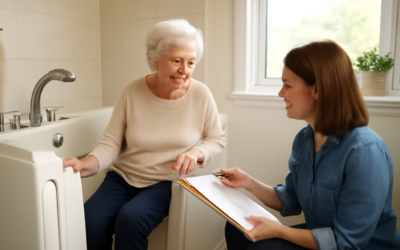
- An occupational therapist’s home evaluation recommending a stair lift over other options. An OT can also document transfer ability, which matters because a user must be able to sit, swivel, and stand safely at each landing.
- Two or three written quotes from qualified installers, including model, rail length, seat features, and warranty.
- Proof of income and assets, homeownership or landlord permission, and ID.
- Photos and measurements of the staircase, including width, number of steps, and any landings or turns.
Choose an installer who has worked with funded projects before. A Certified Aging-in-Place Specialist (CAPS) contractor or a mobility dealer familiar with Medicaid and VA paperwork will know how to format quotes so they are accepted the first time.
Lower-Cost Alternatives if Grants Fall Short
Even with assistance, many families end up covering part of the cost. Several strategies can shrink that share:
- Reconditioned or used lifts: Straight rail lifts are often refurbished and reinstalled by dealers at a noticeable discount, usually with a shorter warranty. Curved rails are custom-bent for one staircase and rarely reusable.
- Rentals: Useful for short recoveries after surgery, when a lift may only be needed for a few months.
- Dealer financing or manufacturer payment plans: Compare the interest rate against a personal loan or home equity line.
- Tax considerations: Medically necessary home modifications may count as deductible medical expenses in some situations. Ask a tax professional before assuming it applies to you.
- Health savings or flexible spending accounts: These may be usable with a letter of medical necessity.
- First-floor living: Sometimes converting a den into a bedroom and adding a ground-floor bathroom is the better long-term investment, especially when the stairs are steep, narrow, or curved.
Safety and Installation Considerations
A funded lift still has to fit the house. Most straight lifts mount to the stair treads rather than the wall, but the staircase must be structurally sound, and the installer needs a nearby electrical outlet for the charger on battery-powered models. Folding seats and footrests help keep the stairway passable for other family members, and a folding or powered rail at the bottom avoids a tripping hazard at the landing.
Check the flooring as well. Loose carpet runners, worn nosings, and slick hardwood treads are fall risks for anyone who still walks the stairs. Secure runners, add contrasting nosing strips, and make sure the landing areas at the top and bottom have firm, slip-resistant flooring where the user will stand and transfer.
If the home has damaged stair framing, soft treads, or outdated wiring, have a licensed contractor or electrician address those issues before installation. Funders generally will not pay for a lift mounted to a staircase that needs structural repair first.
Frequently Asked Questions
Are there free stair lift grants for seniors?
Some programs can cover all or part of the cost, but none are guaranteed. Veterans benefits, Medicaid HCBS waivers, Area Agency on Aging programs, and local nonprofits are the most common sources. Eligibility depends on income, disability, location, and available funding.
Will Medicare pay for a stair lift?
Original Medicare generally does not cover stair lifts because they are not classified as durable medical equipment. Some Medicare Advantage plans offer supplemental home-safety benefits, so check with your specific plan.
Can I get reimbursed for a stair lift I already bought?
Usually not. Most programs require approval and an accepted quote before installation, so apply first and install after you receive written approval.
Who can help me find stair lift funding near me?
Start with the Eldercare Locator to reach your local Area Agency on Aging, then contact your state Medicaid office, a Center for Independent Living, or the VA if the user is a veteran.
Finding stair lift grants takes persistence, but the families who succeed usually follow the same pattern: get an occupational therapy evaluation, collect written quotes from an experienced CAPS or mobility installer, and apply to every program that fits before paying out of pocket. Start with the phone calls this week, because waiting lists only get longer.