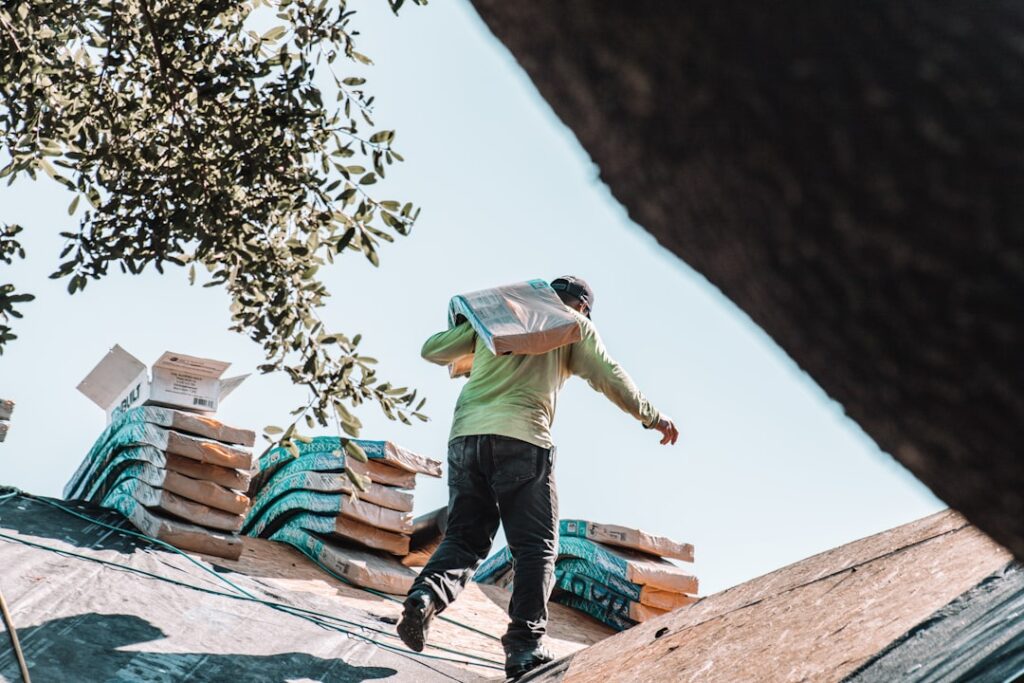
A full roof replacement averages $9,000 to $18,000, which is more cash than most households can produce on short notice — and roofs rarely fail on a convenient schedule. The good news: there are legitimate paths to how to get a new roof for free, or close to it, ranging from insurance claims to federal grants to nonprofit repair programs. The bad news is that each path has strict eligibility rules, and the phrase “free roof” is also the favorite bait of storm-chasing scammers. This guide walks through every real option, who qualifies, how to apply, and the red flags that separate genuine help from a con.
Part of our Roofing guide — explore the full guide →
- Homeowners Insurance: The Most Common Free Roof
- Federal Programs Worth Knowing
- State, Local, and Nonprofit Help
- Realistic Expectations: Timelines and Odds
- The "Free Roof" Scams to Avoid
- If Free Is Not Available: Cheapest Legitimate Paths
- Documents to Gather Before You Apply Anywhere
- Your Action Plan
Homeowners Insurance: The Most Common Free Roof
Far more free roofs come from insurance than from any grant program. If your roof was damaged by a covered peril — hail, wind, a fallen tree, fire — your policy pays for replacement minus your deductible. The key distinction is sudden damage versus wear: insurers cover the hailstorm, not the 25-year-old shingles that were failing anyway. After any major storm, document damage with dated photos, note the storm date, and file promptly; most policies require claims within one year, and some states allow less.
Understand your policy type before you celebrate. Replacement cost value (RCV) policies pay the full cost of a new roof, releasing the depreciation holdback after work is completed. Actual cash value (ACV) policies pay only the depreciated value — on an old roof, that may be a fraction of replacement cost. Some carriers have quietly shifted older roofs to ACV or roof-specific deductibles of 1 to 2 percent of dwelling coverage, so read the declarations page. If a claim is denied and you believe wrongly, a licensed public adjuster (fee: typically 10 to 20 percent of the settlement) or a re-inspection request can change outcomes.
Federal Programs Worth Knowing
Several federal programs fund roof repair or replacement for qualifying homeowners, all administered locally:
- USDA Section 504 Home Repair program: for very-low-income homeowners in eligible rural areas. Grants up to $10,000 for homeowners 62 and older who cannot repay a loan, and 1 percent loans up to $40,000 for others, repayable over 20 years. Apply through your state USDA Rural Development office.
- Weatherization Assistance Program (WAP): run by the Department of Energy through state agencies. Primarily funds insulation and air sealing, but many states allow “incidental repairs” — including roof patching — when needed to protect weatherization work. Income limits are typically 200 percent of the federal poverty level.
- HUD Community Development Block Grants (CDBG): cities and counties use these funds for owner-occupied rehab programs. Search your city or county name plus “housing rehabilitation program”; many offer forgivable loans that convert to grants if you stay in the home 5 to 10 years.
- FEMA assistance: after a federally declared disaster, FEMA’s Individuals and Households Program can fund roof repairs not covered by insurance. Deadlines are short — register at DisasterAssistance.gov immediately after a declaration.
- VA grants: veterans with service-connected disabilities may qualify for Specially Adapted Housing or HISA grants that can include roofing when tied to habitability.
State, Local, and Nonprofit Help
Below the federal layer sits a patchwork of programs that many eligible homeowners never find. State housing finance agencies often run repair loan and grant programs — some, like Michigan and Minnesota, have dedicated home improvement products with below-market rates for lower incomes. Counties and cities layer their own rehab programs on top, frequently prioritizing seniors, veterans, and residents with disabilities.
On the nonprofit side, Habitat for Humanity’s Home Preservation and Critical Home Repair programs handle roofs in many affiliates, charging little or nothing beyond what a family can afford. Rebuilding Together completes free repairs for low-income homeowners, focusing on seniors and veterans, and local churches and community foundations sometimes fund emergency roof repairs case by case. Roofing industry charities matter too: the Owens Corning Roof Deployment Project and Habitat partnerships have donated over a thousand roofs to veterans, nominated through participating contractors. Area Agencies on Aging (call 211 or the Eldercare Locator at 1-800-677-1116) can point seniors to everything available in their zip code.
Realistic Expectations: Timelines and Odds
Grant programs are not fast. USDA 504 applications commonly take two to six months; city rehab programs often maintain waiting lists a year deep, and WAP waitlists can run longer. Funding cycles matter — many programs exhaust annual budgets by spring, so apply early in the fiscal year (October for federal programs, July for many municipalities). Paperwork requirements are real: expect to document income (typically via tax returns and pay stubs), ownership (deed), residence (it must be your primary home), and sometimes insurance denial letters. Approval rates improve dramatically for complete applications, so ask the administering agency for a checklist before submitting.
Stack programs where allowed. A common winning combination is a partial insurance settlement plus a county rehab loan for the gap, or WAP weatherization with roof repairs funded through CDBG. Program administrators know their local stack better than anyone — ask them what pairs.
The “Free Roof” Scams to Avoid
Every hailstorm produces a bloom of door-knockers promising free roofs, and some are outright criminals. Know the schemes. Deductible waiving — “we’ll eat your deductible” — is insurance fraud in most states and now explicitly illegal in many, including Texas and Florida; homeowners who participate can be denied coverage. Assignment-of-benefits abuse hands your claim rights to a contractor who inflates the scope and sues your insurer, leaving you in the middle. Storm chasers collect insurance checks and disappear, or slap on the cheapest materials with no workmanship warranty behind them.
- Never sign anything on the first visit — legitimate programs and contractors survive a 48-hour think.
- Verify licensing and local physical addresses; ask for references from jobs at least three years old.
- Let your insurer inspect before any contractor “adjusts” damage. Creating damage is a felony, and it happens.
- Pay no large deposits; reputable roofers in insurance work typically collect after material delivery or completion stages.
- Remember that government grants never require an upfront “processing fee.” Anyone charging one is not a government program.
If Free Is Not Available: Cheapest Legitimate Paths
Not everyone qualifies for grants, and not every roof has a claimable storm. The next-best options still beat a credit card. FHA Title I home improvement loans go up to $25,000 without home equity requirements. Many roofing companies offer 12-to-18-month same-as-cash financing that works if you can genuinely pay it off in time. Targeted repairs can also buy years: replacing flashing, boots, and a damaged slope might cost $800 to $2,500 versus five figures for full replacement, giving you time to apply for programs or save. Community colleges with roofing or construction programs occasionally take on real projects for materials cost, though timing is luck-dependent.
Documents to Gather Before You Apply Anywhere
Every program on this list asks for roughly the same folder of paperwork, so assembling it once saves weeks across multiple applications. Pull together your most recent federal tax return and two months of pay stubs or benefit statements for every household member, the recorded deed or mortgage statement proving ownership, a current homeowners insurance declarations page, photo ID, and a utility bill establishing the home as your primary residence. Add roof-specific evidence: dated photos of the damage inside and out, any contractor repair estimates (two or three strengthen an application), and insurance correspondence including denial letters — several grant programs require proof that insurance was pursued first. Seniors and veterans should include age documentation or a DD-214, since those statuses unlock priority queues. Keep everything as PDFs in one folder; the applicant with a complete file on day one routinely clears waitlists faster than the one chasing documents for months.
Your Action Plan
Work the options in order of speed and probability. First, rule insurance in or out — inspect for storm damage, check your policy type, and file if you have a case. Second, call 211 and your local housing department the same week to get on rehab program lists, since waitlists reward early entries. Third, apply to USDA 504 if you are rural and income-eligible, and to WAP regardless. Fourth, contact Habitat and Rebuilding Together affiliates directly. How to get a new roof for free is really a question of matching your situation — storm damage, income, age, veteran status, location — to the program built for it, then out-waiting the paperwork. Persistence, not luck, is what gets these roofs installed.