Most bookshelves are deeper than the books sitting on them, and that wasted space adds up across a whole wall. The standard bookshelf depth for freestanding units falls around 11 to 12 inches, which suits hardcovers and binders. Yet a shelf meant only for paperbacks can be half that deep, and a shelf holding speakers or baskets often needs more. Choosing depth by what you actually store saves floor space and makes the unit easier to use.
The short answer: plan 6 to 8 inches of depth for paperbacks and mass-market books, 10 to 12 inches for hardcovers, textbooks and binders, and 14 to 16 inches for media equipment, storage bins and decor. The typical bookshelf depth sold in stores sits at 11 to 12 inches because it covers the widest range of books. Whatever depth you pick, tall units, especially shallow ones, must be anchored to the wall.
- Standard Bookshelf Depth by What You Store
- Why 11 to 12 Inches Became the Normal Bookshelf Depth
- When a Shallow Bookcase Makes Sense
- Depth and Tip-Over Risk
- Tools and Materials for Choosing or Building Shelves
- A Simple Decision Guide
- Troubleshooting Depth Problems
- Typical Costs
- When to Call a Pro
- Frequently Asked Questions
Depth also changes how a room feels. A shallow wall of shelves in a hallway reads like part of the architecture, while a deep unit in the same spot narrows the walkway and invites clutter.
Standard Bookshelf Depth by What You Store
Books follow fairly consistent sizes, which makes depth planning easier than it looks. Measure a sample of your largest volumes before you commit, but these ranges cover most collections:
| Use | Item depth | Recommended shelf depth |
|---|---|---|
| Mass-market paperbacks | About 4.25 in | 6 to 8 in |
| Trade paperbacks, novels | 5.5 to 6 in | 7 to 9 in |
| Hardcover fiction | 6 to 6.5 in | 9 to 10 in |
| Textbooks, binders, cookbooks | 8.5 to 10 in | 10 to 12 in |
| Art books, atlases, records | 11 to 13 in | 12 to 14 in |
| Media, bins, decor | Varies | 14 to 16 in |
Notice that the depth listed is the book’s width when it stands on the shelf with the spine facing out. That dimension is what fills a shelf front to back. Allow about an inch of extra depth beyond the item so spines line up neatly at the front edge without the backs pressing against the wall.
Why 11 to 12 Inches Became the Normal Bookshelf Depth
Furniture makers settled on a normal bookshelf depth near 11 to 12 inches for practical reasons. Lumber and panel stock come in widths that rip efficiently to that size, and it fits almost every book printed on standard letter-size paper. A 12 inch shelf also handles three-ring binders, magazine files and most framed photos without overhang.
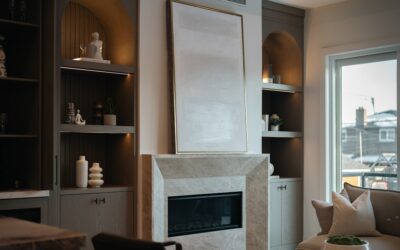
Flat-pack bookcases from big furniture retailers often come in slightly shallower at around 11 inches, sometimes 10 to 11.5 inches, to save shipping volume. Built-in shelving tends to go 12 inches deep, which matches a standard 1×12 board (actual width about 11.25 inches) plus a face frame. Custom media walls typically step down: deeper lower cabinets of 16 to 24 inches with 12 inch open shelves above.
So when someone asks about the standard depth for bookshelves, 11 to 12 inches is a fair answer, but it is a compromise, not a requirement.
When a Shallow Bookcase Makes Sense
A bookshelf 6 inches deep sounds almost too thin to be useful, yet it is one of the best fits for paperback collections and tight spaces. Shallow units work well in:
- Hallways and landings, where every inch of clear walkway counts. A 36 inch hall stays comfortable with 6 to 8 inch shelves.
- Behind doors, where a deeper unit would stop the door from opening fully.
- Kids’ rooms, for picture books displayed face out on narrow ledges.
- Between wall studs, using the roughly 3.5 inch cavity of a 2×4 wall for spice-style book niches.
- Home offices, as a second layer above a desk where a deep shelf would loom over your head.
A shallow bookcase also eliminates the habit of double-stacking books two rows deep, which hides half your collection. If you store mostly novels, consider going shallow first.
Depth and Tip-Over Risk
Shallow shelves have a downside. The narrower the base, the easier a tall bookcase tips forward when someone pulls on an upper shelf or a drawer. A 72 inch tall unit only 8 inches deep has a height to depth ratio of 9 to 1, compared with 6 to 1 for a 12 inch deep unit of the same height. Loading heavy items on top shelves makes it worse.
Anchoring is the fix, and it applies to every tall bookcase regardless of depth:
- Locate a wall stud behind the upper back edge of the unit.
- Attach an L-bracket or anti-tip strap to the top rail or a solid top panel, not to thin hardboard backing.
- Drive a wood screw at least 2.5 inches long into the center of the stud.
- Pull the unit snug against the wall, shimming the front if the floor slopes so it leans slightly back rather than forward.
- Load heavy books on bottom shelves and lighter decor up high.
If no stud lines up, use a heavy-duty hollow wall anchor rated for the load, or mount a horizontal cleat that spans two studs and fasten the bookcase to the cleat. Deeper units are more stable on their own but should still be anchored, especially in homes with children.
Tip-over prevention matters most in homes with children, who often climb shelves to reach toys or books on higher levels. Keep enticing items low, avoid placing a television on top of a narrow bookcase, and recheck strap tension once a year.
Tools and Materials for Choosing or Building Shelves
- Tape measure and a few of your largest books to test-fit
- Stud finder and level
- Drill and driver with wood screws
- Anti-tip brackets or straps
- Shims for uneven floors
- For builds: 1×8, 1×10 or 1×12 boards, or plywood ripped to your target depth
- Edge banding or solid wood edging to stiffen and finish plywood shelves
A Simple Decision Guide
Work through these questions to set your shelf depth:
- What is the deepest item you will store regularly? Add 1 inch. That is your minimum.
- How much floor space can you give up? In walkways, cap depth so at least 36 inches of clear path remains.
- Will you mix uses? Consider a stepped design: deeper base cabinets for bins or media and shallower open shelves above.
- How long are the shelves? Deeper shelves resist sag slightly better because they have more material, but span matters more. Keep 3/4 inch particleboard to about 30 inches, plywood to about 36 inches, and solid hardwood to about 36 to 42 inches between supports.
- Is the unit tall? Anything over about 30 inches should be anchored, and shallow tall units always need it.
Troubleshooting Depth Problems
Books hang off the front. Oversize volumes can lie flat on a bottom shelf, which is usually built deeper or taller. Alternatively, add a front lip or a strip of solid wood to extend a shelf by an inch.
Shelves feel cavernous. Deep shelves holding paperbacks leave a dark gap behind the books. Push books forward to the front edge and use the back space for flat storage, or fit a false back panel to reduce depth.
The unit blocks a vent or outlet. Notch the back panel or leave a gap, and never box an outlet so tightly that plugs bend sharply.
Baseboards push the bookcase away from the wall. Cut a notch in the lower back or side panels to fit over the baseboard, or scribe the unit so it sits tight, which also makes anchoring easier.
Typical Costs
Flat-pack shallow bookcases generally start around $50 to $150, while standard 12 inch deep units in solid wood or quality plywood commonly cost $200 to $600 or more. Building your own shelves from pine boards is often cheapest, roughly $60 to $200 in lumber and hardware for a 6 foot unit. Custom built-ins from a finish carpenter usually run several hundred dollars per linear foot depending on materials, finish, and trim detail. Anti-tip hardware adds only a few dollars.
When to Call a Pro
Bring in a finish carpenter for built-ins that span a full wall, wrap windows, or recess into framing. Cutting into a wall cavity can hit wiring, plumbing, or ductwork, so have the wall checked before opening it. Plaster, masonry, and metal-stud walls also call for specialized anchoring that a pro handles routinely. For floor-to-ceiling units in homes with young children, a professional install adds confidence that the anchoring holds.
Frequently Asked Questions
What is the standard bookshelf depth?
Most freestanding bookshelves are 11 to 12 inches deep. That depth fits hardcovers, textbooks and binders, while paperbacks only need 6 to 8 inches.
Is a bookshelf 6 inches deep too shallow?
Not for paperbacks or face-out picture books. A 6 inch shelf is ideal for hallways and tight spots, but it must be anchored to the wall if it stands tall.
How deep should shelves be for media equipment?
Plan 14 to 16 inches for most components, and up to 20 inches or more for larger receivers. Leave a few inches behind equipment for cables and airflow.
Do deeper bookshelves sag less?
Depth helps a little, but span, material, and load matter more. Shorter spans and thicker shelves do the most to prevent sagging.
Should a shallow bookcase be anchored?
Yes. Shallow tall units tip more easily than deep ones. Fasten the top to a wall stud with a bracket or strap.