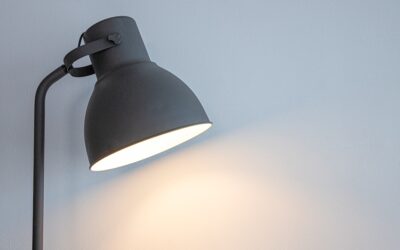
A standing floor lamp is one of the most flexible lighting tools in any home. It needs no wiring, no ceiling box, and no electrician; you plug it in and instantly add light exactly where a room needs it. Beyond function, a well-chosen lamp anchors a reading corner, fills a dark void beside the sofa, and adds vertical interest that ceiling fixtures alone cannot provide.
Choosing the right one comes down to understanding the styles, how much light you need, and where the lamp will earn its keep. Get those three right and the rest falls into place.
Why Every Room Benefits From One
Layered lighting is the secret to a comfortable room. A single overhead fixture casts flat, shadowy light, while a standing lamp adds a second layer at a lower height, softening the space and creating warmth. Designers rely on this principle in nearly every room they style.
Floor lamps also solve practical problems. A reading chair without an outlet nearby becomes usable. A dim corner stops feeling cavernous. A home office gets task light without harsh glare. Because they are portable, you can move them as your furniture and needs change, which makes them ideal for renters and frequent rearrangers alike.
Common Types of Standing Floor Lamps
The category is broad, and each style serves a distinct role. Match the type to the job.
- Torchiere lamps — Direct light upward to bounce off the ceiling for soft, ambient room lighting.
- Arc lamps — A curved arm extends light over a sofa or chair without a table beneath.
- Reading and task lamps — An adjustable or directional head aims focused light where you work.
- Tripod lamps — Three legs give a stable, mid-century look that doubles as decor.
- Tree and multi-head lamps — Several adjustable spotlights on one pole light multiple zones.
- Club or column lamps — A classic shade on a straight pole, the traditional all-purpose option.
Choosing the Right Brightness
Lumens, not watts, tell you how bright a lamp will be. The amount you need depends on the room’s purpose. For general ambient light in a living room, aim for 1,500 to 3,000 lumens, often spread across multiple light sources. A dedicated reading lamp should deliver at least 450 lumens directed onto the page.
Color temperature shapes the mood just as much. Warm white around 2,700K to 3,000K feels cozy and relaxing, perfect for living rooms and bedrooms. Neutral white near 3,500K to 4,000K suits offices and task work. A dimmable lamp gives you the best of both, letting you brighten for tasks and soften for relaxing. Many modern lamps use integrated LEDs rated for tens of thousands of hours, so bulb changes become rare.
Matching the Lamp to the Room
Placement and proportion drive the choice. In a living room, an arc lamp over the couch or a torchiere in a corner adds ambient light, while a tripod lamp beside a chair offers both style and reading light. Make sure the lamp’s scale fits the space; a tiny lamp looks lost in a large room, and an oversized one overwhelms a small one.
For a home office, position a task lamp to the side opposite your writing hand to reduce glare and shadow. In a bedroom, a soft, dimmable lamp in the corner beats harsh overhead light for winding down. Tight on space? A slim column or tripod lamp delivers light without consuming much floor. Consider the lamp’s height too; for reading, the bottom of the shade should sit roughly at eye level when you are seated.
Useful Features to Look For
Small details separate a lamp you tolerate from one you love. Several features are worth seeking out.
- Dimmer control — A foot switch or rotary dimmer to adjust mood on the fly.
- Adjustable head or gooseneck — Direct light precisely where you need it.
- USB charging ports — Convenient for phones and tablets on the base.
- Weighted base — Adds stability and resists tipping, important with kids or pets.
- Smart compatibility — App and voice control for dimming and scheduling.
What a Standing Floor Lamp Costs
Price spans a wide range. Treat these as estimates that shift by retailer and sale timing:
- Basic metal or plastic lamps: $25 to $70
- Mid-range arc, tripod, and LED designs: $80 to $250
- Designer and solid-material lamps: $300 to $1,000+
You can find an attractive, functional lamp for well under $150, and many mid-range options look far pricier than they are. Spend more only when a lamp anchors a room you use heavily and want to feel special.
Safety and Setup Tips
A few precautions keep things safe. Choose a lamp with a heavy, wide base if children or pets are around, and route the cord along the wall or under furniture to prevent tripping. Match the bulb wattage to the lamp’s rated maximum, and favor LEDs, which run cool and lower fire risk compared with old incandescent bulbs.
Look for a UL or ETL safety listing on the label, confirming the lamp met recognized electrical standards. If a lamp flickers, buzzes, or feels warm at the socket, stop using it and check the wiring. With the right lamp in the right spot, you get reliable, flattering light and a piece of decor that quietly improves the whole room.
Coordinating With Your Decor
A floor lamp should feel like part of the room, not an afterthought. Match the lamp’s finish to metals already present, brushed nickel, matte black, brass, or chrome, so it reads intentional. The shade material matters too: a fabric drum softens light for living spaces, while a metal cone suits task and industrial looks.
Scale and proportion tie everything together. In a tall room with high ceilings, a torchiere or arc lamp adds welcome vertical presence, while a low-slung reading chair pairs naturally with a shorter task lamp. Repeat a tone or material from the lamp elsewhere in the room, in a frame, a side table, or hardware, and the piece settles in as though it always belonged there.
Prefer to explore on your own?
See how new flooring looks in your actual room in seconds — free, no signup.
Try the free Floor Studio →