Renters face a common problem: a bathroom window that faces the neighbors, a front door with a clear glass panel, or a ground-floor bedroom that looks straight onto the sidewalk, and a lease that forbids anything permanent. Window clings for privacy solve that problem without glue, tools or damage. A static cling film grips smooth glass with nothing more than surface tension and a thin film of water, then peels off cleanly when you move out.
Part of our Windows & Doors guide — explore the full guide →
The quick answer: static cling privacy window film works best on smooth, clean, flat glass and gives you daytime privacy in frosted, etched or patterned styles. It goes on with a spray bottle of soapy water and a squeegee, comes off by lifting a corner, and can often be rolled up and reused. It struggles on textured or heavily pitted glass, very hot windows and anything that needs nighttime privacy, since most films become more transparent when the inside of the room is brighter than outside.
- How Window Clings for Privacy Work
- Choosing a Privacy Pattern
- Best Spots to Use Static Cling Film
- Tools and Materials
- How to Install Static Cling Film
- Removal and Reuse Without Residue
- Where Static Cling Film Fails
- Troubleshooting Common Problems
- Cost of Static Cling Privacy Film
- Frequently Asked Questions
Here is how cling film works, how to choose a pattern, how to install and remove it, and where it is not the right fit.
How Window Clings for Privacy Work
Static cling films are made from soft, flexible vinyl. Unlike adhesive window film, they have no glue layer. Instead, the vinyl is smooth and pliable enough that, when you apply it with a thin layer of water, it squeezes out the air and forms a tight seal with the glass. Atmospheric pressure and surface tension hold it in place. That is why window clings for privacy need smooth glass: any texture or debris lets air in and breaks the seal.
Because there is no adhesive, non adhesive window film can be repositioned during installation, removed without scraping, and in many cases reused. That makes it ideal for renters, dorm rooms, temporary office spaces and anyone who changes decor frequently. Adhesive films, by contrast, bond more permanently and usually require heat, scraping and solvent to remove.
Choosing a Privacy Pattern
Not all window cling film blocks the view equally. Pattern and density matter more than anything else.
- Solid frosted or etched glass look: the most private option. It blurs shapes completely while still letting soft light through. Best for bathrooms and street-facing bedrooms.
- Stained glass and decorative patterns: dense, colorful designs that block views well and add style. Good for front door sidelights and transoms.
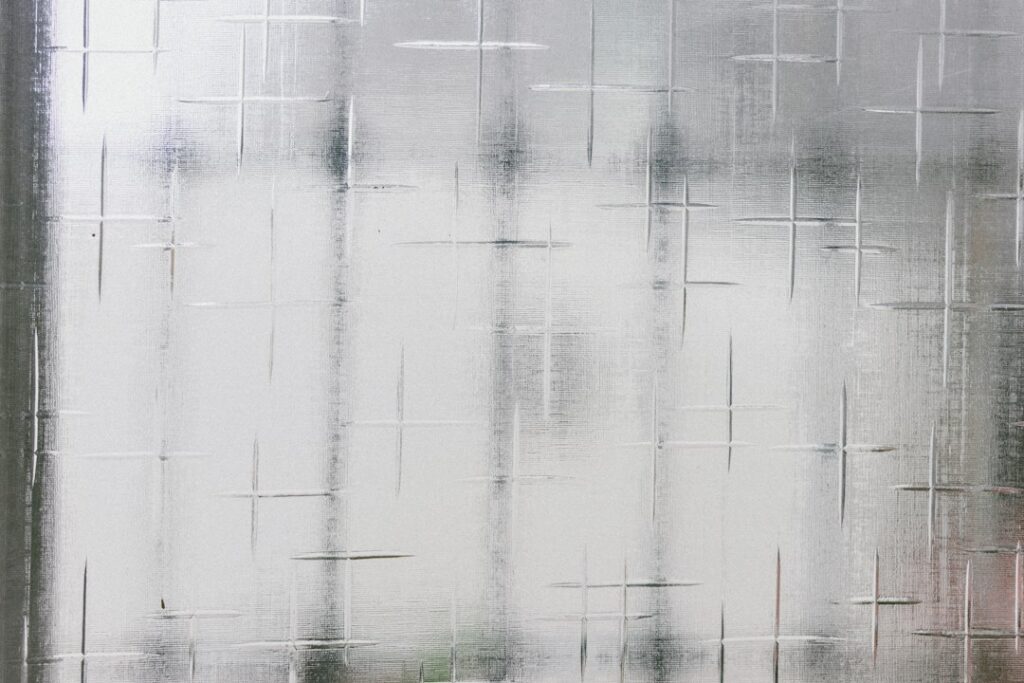
- Geometric, reeded or fluted patterns: distort views while keeping a modern look. Privacy varies with how dense the pattern is.
- Gradient or striped films: frosted at the bottom and clear at the top, or striped. These offer partial privacy and work for offices or kitchens where you still want a view of the sky.
- Mirrored or one-way films: reflective during the day from the brighter side. These reverse at night, so they are not reliable for nighttime privacy.
Some products marketed as static cling window tint add mild darkening for glare and heat reduction. These are fine for reducing glare in a home office, but light tints alone do little for privacy. If privacy is the main goal, choose a frosted or densely patterned film.
Daytime vs Nighttime Privacy
All privacy films work best when the outside is brighter than the inside. At night, when your lights are on, translucent films still blur shapes, but silhouettes may be visible against bright lamps. For full nighttime privacy, combine film with blinds, curtains or shades. Dense frosted films do a better job at night than mirrored ones.
Best Spots to Use Static Cling Film
Some windows are perfect candidates. Bathroom windows that face a neighbor or street are the most common use, and a dense frosted film keeps the room bright while hiding everything inside. Front door glass panels and sidelights are another favorite, since they let visitors see straight into an entryway. Ground-floor bedroom windows, basement windows near a walkway, and glass interior doors on a home office or laundry room all benefit, too.
Renters should also look at sliding patio doors. Instead of covering the entire door, apply a band of frosted or patterned film at eye level. It blocks direct sightlines from a neighboring balcony, keeps the view of the sky, and doubles as a safety marker so nobody walks into the clear glass. Measure carefully and keep the band at the same height on every panel for a clean, built-in look.
Tools and Materials
- Static cling privacy window film sized to cover the glass with a little extra
- Spray bottle filled with water and a few drops of mild dish soap
- Plastic squeegee or a card wrapped in a soft cloth
- Sharp utility knife with fresh blades, and a metal straightedge
- Glass cleaner, lint-free cloths and a plastic razor scraper
- Measuring tape
How to Install Static Cling Film
- Measure the glass. Measure the visible glass area and cut the film about 1/2 inch larger on each side for trimming later.
- Clean the window thoroughly. Remove dust, paint specks, stickers and residue with glass cleaner and a plastic scraper. Even small specks cause bubbles.
- Spray the glass generously. Wet the entire surface with soapy water. A wet surface lets you slide the film into position.
- Peel the backing. Remove the backing paper and spray the cling side of the film as well. Wet hands help prevent fingerprints.
- Position the film. Place it on the glass and slide it until it is straight and covers all edges.
- Squeegee from the center out. Work water and air bubbles out toward the edges with firm, overlapping strokes.
- Trim the edges. Use a straightedge and sharp blade to trim the excess, leaving a gap of about 1/16 inch at the frame so the film does not lift.
- Squeegee again. Push out the remaining water, then wipe the edges dry. Small hazy spots usually clear within a few days as moisture evaporates.
Work carefully with blades on glass. Score only the film, never the glass itself, and keep fingers behind the cutting edge.
Removal and Reuse Without Residue
One of the biggest benefits of a static cling window product is how easily it comes off. Lift one corner with a fingernail or plastic card and peel slowly. There is no adhesive, so there should be no residue, although you may need to wipe off water spots.
To reuse the film, spray the cling side lightly and lay it back on its original backing paper, or on clean wax paper. Roll it loosely with the film side out, never folded or creased. Store it flat or rolled in a cool, dry place. Clean any lint or dust from the cling side with soapy water before reinstalling. With care, many films can be reused several times.
Where Static Cling Film Fails
Static cling is not perfect. Know its limits before you buy:
- Textured or patterned glass: the film cannot form a seal on bumpy surfaces. It may hold briefly and then fall off.
- Very hot windows: intense direct sun can cause the film to bubble, warp or peel, especially on dark-tinted films.
- Double-pane and low-E glass in strong sun: dark or reflective films can increase heat stress on insulated glass. Check your window maker’s guidance and stick to light frosted films if unsure.
- Cold, damp windows: heavy condensation can loosen edges over time.
- Large panes: big sheets are harder to handle and more prone to bubbles and creases. Get a helper for anything over about 3 feet wide.
- Exterior application: static cling films are for interior glass surfaces only.
Sticky window coverings with adhesive may last longer in tough conditions, but they bring the residue and removal problems renters usually want to avoid.
Troubleshooting Common Problems
- Bubbles: lift the film near the bubble, spray more water, and squeegee again. Tiny bubbles usually clear within a week.
- Edges peeling: clean under the edge, re-wet and squeegee. Trimming slightly smaller can help.
- Film keeps falling off: the glass is likely textured, dirty or too hot. Try another window or switch products.
- Haze that does not clear: trapped water or soap. Remove, clean the glass and reinstall with less soap.
- Visible lint under the film: clean more thoroughly before installation, and work in a dust-free room.
Cost of Static Cling Privacy Film
Static cling films are among the least expensive privacy solutions. Small rolls for bathroom windows or door panels usually cost a modest amount, while larger rolls for full windows cost more. Decorative stained glass patterns and premium thicker films tend to be priced higher than plain frosted styles. Compared with blinds, shades or frosted glass replacement, cling films are a budget-friendly, renter-safe option. Professional installation is rarely needed, though some window film installers will handle large or hard-to-reach panes.
Frequently Asked Questions
Do window clings for privacy work at night?
Frosted and densely patterned films still blur shapes at night, but silhouettes may show when interior lights are bright. Add curtains or blinds for full nighttime privacy.
Will static cling film damage my windows?
No. It has no adhesive and peels off cleanly. Avoid dark or reflective films on insulated glass in strong sun, since they can add heat stress.
Can static cling film be reused?
Yes. Store it on its backing paper or wax paper, rolled loosely without creases, and clean the cling side before reinstalling.
Why won’t my window cling stick?
The glass is likely dirty, textured or too hot. Clean thoroughly and make sure the glass is smooth and flat before applying.
Is non adhesive window film good for renters?
Yes. It installs without tools or glue and removes cleanly, which makes it ideal for apartments and rentals.