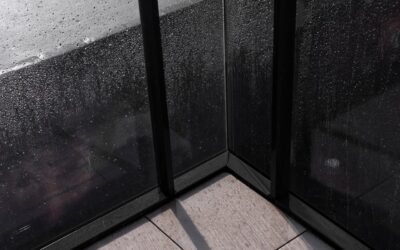
A regular shower door stops a few inches short of the ceiling, and that gap is exactly what ruins a steam shower. A steam shower door has to hold warm, saturated vapor inside a sealed box for 15 to 30 minutes at a time, so it needs to run full height or include a transom panel that closes off the space over the door. Without that seal, steam spills into the bathroom, the generator runs constantly, and moisture ends up in the drywall, trim and ceiling of the room outside the enclosure.
Part of our Bathroom Remodeling & Flooring guide — explore the full guide →
The short answer for most homeowners: choose a full-height tempered glass door with a fixed or operable transom, continuous vapor seals on every edge, an outward swing, and glass at least 3/8 inch thick. Everything else, from hardware finish to frameless versus framed styling, is a preference once those four basics are covered.
- What Makes a Steam Shower Door Different
- Full-Height Doors vs Transom Panels
- Glass Thickness and Tempered Glass Requirements
- Seals, Sweeps and Hardware That Hold Steam
- Swing Direction, Size and Layout
- How the Enclosure Gets Built and Installed
- Glass Handling Safety
- Troubleshooting a Leaky or Foggy Steam Enclosure
- Steam Shower Door Cost Ranges
- When to Call a Licensed Professional
- Frequently Asked Questions
The sections that follow explain why each requirement matters, how transoms work, which seals hold up to steam, and what a realistic budget looks like when you hire an installer.
What Makes a Steam Shower Door Different
Standard shower enclosures only need to deflect spray. A steam shower door has a harder job: it must contain vapor that rises, pools at the ceiling and pushes outward through any crack it can find. Steam is lighter than the surrounding air when it is hot, so the top of the enclosure is where most leaks happen. That is why the glass, the header and the seals get more attention here than in an ordinary walk-in shower.
Four design traits separate a true steam enclosure from a standard one:
- Full height or transom: the glass reaches the ceiling, or a transom panel closes the gap over the door.
- Continuous seals: sweeps, vinyl or silicone strips and magnetic strikes seal the bottom, the latch side and the hinge side.
- Heavier tempered glass: typically 3/8 or 1/2 inch, which resists the heat cycling and weight of a tall panel.
- Outward swing: the door opens into the bathroom, never into the steam room.
A steam room door in a spa follows the same logic. Home versions are simply smaller and usually built into a tiled shower rather than a freestanding room.
Full-Height Doors vs Transom Panels
You have two ways to close the space between the top of the door and the ceiling. The first is a single full-height door that runs from the curb or floor to within a fraction of an inch of the ceiling. The second is a standard-height door with a separate glass transom fixed over it.
Full-height door
This option looks the cleanest and has the fewest joints to seal. The trade-off is weight. A 3/8 inch panel that is 8 feet tall and 30 inches wide can easily weigh over 100 pounds, which demands heavy-duty hinges, solid blocking in the wall and a ceiling that is flat and level. Ceilings over 8 feet usually push installers toward a transom instead.
Fixed transom
A fixed transom is a glass panel held by clips or a header rail over a normal-height door. The door closes against the underside of the transom rail, and a seal fills the joint. It keeps the door lighter and easier on hinges, and it works well with tall or slightly sloped ceilings.
Operable transom
An operable transom tilts or slides open. Many designers prefer it because it lets you vent the enclosure after a session. Opening the transom for 20 to 30 minutes after every use dries the tile and grout much faster, which cuts mold risk. A steam shower door with transom that opens is often the best choice in a bathroom with a modest exhaust fan.
Glass Thickness and Tempered Glass Requirements
All shower glass in the US must be safety glazing, which in practice means tempered glass carrying a permanent etched mark in one corner. Tempered glass is heat treated so that if it breaks, it crumbles into small, blunt pieces instead of long shards. For a steam enclosure that sees daily heat cycling, tempered glass is non-negotiable.
Thickness is where choices open up:
- 1/4 inch: used on some framed steam enclosures. Light and affordable, but it flexes and requires a full metal frame.
- 3/8 inch: the most common thickness for semi-frameless and frameless steam doors. Rigid enough for tall panels with quality hinges.
- 1/2 inch: the premium option. Very stiff and solid, but heavy enough that the wall framing and hinges must be rated for it.
Low-iron glass removes the green tint seen on the edges of standard glass. Factory-applied protective coatings make water and mineral spots easier to wipe away, which matters more in a steam shower because condensation dries on the glass every day.
Seals, Sweeps and Hardware That Hold Steam
The seals do most of the work in keeping vapor where it belongs. A frameless steam door looks open and minimal, but it still relies on a full perimeter of clear seals. Expect to see these parts:
- Bottom sweep: a vinyl or silicone strip with a drip rail or flexible fin that seals against the curb or threshold.
- Magnetic latch strip: paired magnets on the door edge and the fixed panel or wall jamb pull the door closed and hold a tight line.
- Hinge-side seal: a soft bulb or fin seal that fills the gap between the door and the fixed panel or wall.
- Header or transom seal: closes the joint along the top of the door.
Hinges should be solid brass or stainless steel rated for the glass weight. Plated zinc hardware can corrode quickly in a steam environment. Pivot hinges mounted at the top and bottom of the door can carry heavy panels well, while wall-mount hinges need solid wood blocking or a structural stud directly behind the tile.
Seals are wear parts. Plan on replacing them every 2 to 5 years depending on use and water hardness. Keep the glass thickness and edge profile on file so you can order matching replacements.
Swing Direction, Size and Layout
Every steam enclosure door should swing outward into the bathroom. There are two reasons. First, if someone feels faint from the heat, an outward-swinging door opens even if they slump against it. Second, an inward door drips condensation onto the enclosure floor as it opens and has to clear the bench and controls.
Plan a clear opening of at least 22 inches, and 24 to 30 inches feels far more comfortable. Make sure the door clears the vanity, toilet and towel bars as it swings. If the swing path is tight, a door and fixed panel combination lets you use a narrower door without shrinking the enclosure.
Sliding doors are rarely used on steam showers because the overlapping panels and track leave gaps that are hard to seal. A few manufacturers make sealed sliders, but a hinged door is the more reliable choice.
How the Enclosure Gets Built and Installed
The door is only one part of the system. The walls and ceiling behind the tile must be fully vapor-proofed with a steam-rated membrane, and the ceiling should slope about 1/2 to 1 inch per foot so condensation runs down the walls instead of dripping on your head. The glass is measured only after the tile is set, because the installer templates the exact opening.
- Confirm the enclosure is framed with blocking where hinges and clips will mount.
- Waterproof and vapor-proof the walls, ceiling and floor with a steam-rated system.
- Finish all tile, including the curb and ceiling.
- Have the glass company field measure and template the opening.
- Wait for the custom tempered panels, which often takes 2 to 4 weeks.
- Install fixed panels and transom, then hang the door and set the seals.
- Adjust the door so the magnetic strike closes fully and the sweep meets the curb evenly.
Tempered glass cannot be cut or drilled after tempering, so every hinge hole and notch must be right before the panel is ordered.
Glass Handling Safety
Large glass panels are heavy and awkward, and tempered glass has one weak point: its edges. A sharp knock on an edge or corner can shatter the entire sheet instantly. If you are moving or setting panels yourself, follow these rules:
- Wear cut-resistant gloves and safety glasses.
- Always use two people for any panel over about 3 feet, and carry panels vertically, never flat.
- Never flex a panel, lean it on a hard edge or strike its edges or corners against tile, a curb or a tool.
- Set panels on padded blocks or cardboard, not directly on tile.
- Use suction cup lifters rated for the panel weight.
Troubleshooting a Leaky or Foggy Steam Enclosure
If steam escapes around the door, check the obvious gaps first. Close the door with the lights off in the bathroom and shine a flashlight inside: any light around the edges shows where seals are missing or worn.
- Steam escaping at the top: the enclosure has no transom or the transom seal has shrunk. Add or replace the header seal.
- Door will not stay closed: the hinges have sagged or the magnetic strip is misaligned. Adjust the hinge set screws or pivot.
- Water on the floor outside: the bottom sweep is torn or too short. Replace it with the correct fin length.
- Heavy fog in the bathroom: steam escapes during entry and exit. Run the exhaust fan for 20 minutes after each session and consider an operable transom.
Steam Shower Door Cost Ranges
Pricing varies widely by region, glass thickness and layout, so treat these as general ranges rather than quotes. A framed or semi-frameless steam door in 1/4 inch glass usually lands at the low end, often in the lower four figures installed. A custom frameless steam shower door with a transom in 3/8 inch glass typically costs more, and 1/2 inch low-iron glass with coatings and an operable transom sits at the top of the range. Seal kits are an inexpensive yearly or multi-year maintenance item.
If you want a clean, open look, a frameless steam shower door is the natural choice, as long as the seal package is designed for steam rather than borrowed from a standard spray enclosure.
When to Call a Licensed Professional
Hire a licensed glazier or experienced shower glass company to measure, fabricate and install the door and transom. Custom tempered glass must be templated precisely, and heavy panels require correct blocking and hinges. The steam generator itself needs a dedicated electrical circuit installed by a licensed electrician, and the water supply and drain lines should be handled by a licensed plumber. Many jurisdictions require permits for new steam showers, so check with your local building department before work begins.
Frequently Asked Questions
Does a steam shower door have to go all the way to the ceiling?
Yes, or it needs a transom that closes the gap. Any open space at the top lets steam escape, which wastes energy and pushes moisture into the rest of the bathroom.
Which way should a steam shower door swing?
It should always swing outward into the bathroom. An outward swing is safer if someone becomes lightheaded and keeps condensation drips inside the enclosure.
How thick should glass be for a steam shower?
Most installers use 3/8 inch tempered glass for frameless doors. Heavier 1/2 inch glass is stiffer, while 1/4 inch glass needs a full metal frame for support.
Can I use a regular shower door for a steam shower?
Not without changes. A regular door stops short of the ceiling and lacks full seals, so you would need a transom, a complete seal package and hardware rated for constant steam.
How often do steam shower door seals need replacing?
Plan on every 2 to 5 years. Hard water, cleaning chemicals and daily heat cycles break down vinyl and silicone seals over time.