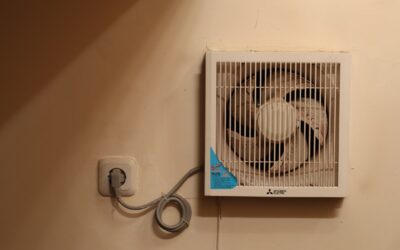
The most common mistake with a steam shower exhaust fan is putting it in the wrong place: directly inside the sealed steam enclosure. A steam shower is designed to hold hot, saturated air, so a fan running inside the enclosure fights the generator, pulls heat away and exposes the fan motor to conditions it was never rated for. The right approach is to vent the bathroom, not the steam room, and to run the fan after the session ends rather than during it.
Part of our Bathroom Remodeling & Flooring guide — explore the full guide →
In practice that means three decisions. You place the fan in the bathroom ceiling outside the steam enclosure door, you size it for the full bathroom volume with a little extra capacity for the moisture load, and you control it with a delay timer or humidity sensor so it keeps running for 20 to 30 minutes after the door opens. Get those three right and the room dries out between uses instead of staying damp around the grout lines, ceiling paint and door trim.
- Why a Steam Shower Exhaust Fan Belongs Outside the Enclosure
- Sizing CFM for a Bathroom With a Steam Shower
- Choosing the Right Fan and Fixture Ratings
- Timing: How Long to Run the Fan After a Steam Session
- Installation Steps and Duct Routing
- Electrical and Moisture Safety
- Troubleshooting Common Problems
- Cost Ranges and When to Call a Pro
- Frequently Asked Questions
The rest of this page covers the steam-specific rules that separate this job from an ordinary bathroom fan install: enclosure sealing, fan ratings for damp and wet locations, duct routing, timer strategies, troubleshooting and when a licensed electrician should take over.
Why a Steam Shower Exhaust Fan Belongs Outside the Enclosure
A standard shower produces steam as a side effect. A steam shower produces it on purpose, usually at temperatures between 110°F and 120°F with humidity near 100 percent. The enclosure is built like a small vapor-tight room: a full-height glass door with a tight seal, a sloped ceiling so condensation runs down the walls rather than dripping, and a waterproofing membrane that acts as a vapor barrier behind the tile.
If you cut a fan grille into that ceiling, you create a hole in the vapor barrier and a path for heat to escape. The generator then cycles more often to keep the temperature up, which wastes energy and shortens its service life. Many steam generator makers state in their installation manuals that no exhaust fan, recessed light or other penetration should be installed inside the steam room unless the fixture is specifically listed for that use. Always read the manual for your generator before you plan the ceiling.
The better location is the bathroom ceiling just outside the enclosure door, ideally within 3 to 6 feet of it. When the session ends and the door opens, a large cloud of warm, wet air rolls out and rises. A fan placed near the door catches that plume before it spreads across the rest of the ceiling and condenses on cooler surfaces like exterior walls, mirrors and window frames.
What About Enclosures With Open Tops?
Some glass enclosures stop a foot or so below the ceiling. Those are not true steam rooms, because the steam escapes over the top. If your shower has an open top and a steam head, treat the whole bathroom as the steam space and plan the fan for continuous operation during use, with a unit rated for wet locations if it sits above the shower footprint. Most homeowners who want real steam end up closing the top with a glass transom, which brings you back to the outside-placement rule.
Sizing CFM for a Bathroom With a Steam Shower
Fan capacity is measured in cubic feet per minute (CFM). The common rule of thumb for bathrooms under 100 square feet is 1 CFM per square foot of floor area, with a floor of about 50 CFM. For larger rooms, a more accurate method is to calculate volume and aim for roughly 8 air changes per hour.
Here is the volume method in plain numbers:
- Multiply length by width by ceiling height to get cubic feet. A 10 by 12 foot bathroom with an 8 foot ceiling is 960 cubic feet.
- Multiply by 8 air changes per hour: 960 times 8 equals 7,680 cubic feet per hour.
- Divide by 60 to get CFM: 7,680 divided by 60 equals 128 CFM.
For a bathroom that includes a steam shower, round up. The steam session dumps far more moisture into the room at once than a regular shower, so choose a fan in the 110 to 150 CFM range for a mid-size bath rather than the minimum. Add another 10 to 20 percent if the duct run is long, has more than two elbows or exits through a roof cap, because every bend and foot of duct reduces real airflow.
Static Pressure and Rated vs Actual Airflow
The CFM on the box is usually measured at 0.1 inches of static pressure, which assumes a very short, straight duct. Many fans also publish a rating at 0.25 inches, which is closer to a real installation. Compare the 0.25 figure when shopping. A fan rated at 110 CFM at 0.1 might deliver only 80 CFM once it pushes through 20 feet of duct and two elbows.
Noise
Look at the sone rating as well. A fan at 1.0 sone or less is quiet enough that people will actually leave it running, which matters more than any spec sheet. A loud fan tends to get switched off early, and that is when moisture problems start.
Choosing the Right Fan and Fixture Ratings
Because the fan sits in the bathroom rather than inside the steam room, a damp-location rating is often acceptable. If the fan will be mounted above a tub or shower footprint, or anywhere it could be directly exposed to spray or the plume from the steam door, choose one listed for wet locations and, if the manufacturer requires it, protected by a GFCI circuit. A fan with a humidity sensor is a smart fit here, since it reacts to the real moisture level instead of a guess.
Features worth paying for:
- Built-in humidity sensor that ramps the fan up when relative humidity rises and runs until it drops back to a set point.
- Adjustable delay-off timer so the fan keeps running after the switch is turned off.
- DC or brushless motor for quiet, efficient long run times.
- Backdraft damper at the fan housing to stop cold outdoor air from flowing back in.
- 4 inch or 6 inch duct collar matched to the CFM. Fans above about 110 CFM usually perform better on 6 inch duct.
Any lights near the enclosure deserve the same scrutiny. Recessed cans over the steam room itself must be specifically listed for steam or wet locations and sealed to the vapor barrier. Lights in the rest of the bath should be at least damp rated.
Timing: How Long to Run the Fan After a Steam Session
Running the exhaust during the session defeats the purpose of the steam room, and running it for only five minutes afterward leaves the room wet. The sweet spot for most homes is to start the fan when the steam door opens and let it run 20 to 30 minutes, or until the humidity sensor reports that the room has dropped below about 50 to 60 percent relative humidity.
There are three common ways to control that timing:
- Countdown timer switch. A wall timer with 10, 20, 30 and 60 minute buttons. Simple and inexpensive. Press 30 on the way out and forget it.
- Humidity-sensing fan or switch. The fan turns on automatically when humidity spikes and stops when the room is dry. This is the most hands-off option and the one worth recommending where it fits the budget.
- Interlock with the steam generator. Some generator control systems offer a relay output that can trigger the fan when the steam cycle ends. This must be wired according to the generator manual, typically by an electrician, and gives the most automatic result.
Leave the steam door propped open a few inches after each session so the enclosure itself can dry. Squeegee the glass and walls if you have time. Those two habits plus a properly timed steam shower exhaust fan keep grout and caulk in good shape far longer.
Installation Steps and Duct Routing
The mechanical side of the install is the same as any ceiling fan, with more attention to the duct because of the heavy moisture load. The electrical side involves line-voltage wiring, so read the safety section before you touch a wire.
Tools and Materials
- Exhaust fan with housing, damper and grille
- Insulated flexible or rigid metal duct, 4 or 6 inch to match the fan
- Roof cap or wall cap with its own damper
- Foil HVAC tape (not cloth duct tape) and metal clamps
- Drywall saw, drill, stud finder, non-contact voltage tester
- Timer or humidity switch, wire connectors, cable clamps
- Safety glasses, dust mask and a stable ladder
Step by Step
- Pick the spot. Mark a location on the bathroom ceiling 3 to 6 feet from the steam door, between joists, with a clear path in the attic to an exterior termination.
- Kill the power. Turn off the breaker for the bathroom circuit and confirm the power is off with a non-contact voltage tester before cutting near any wiring.
- Cut the opening. Trace the housing template and cut the drywall. Check the attic side for wires and pipes first.
- Mount the housing. Fasten it to the joists with the provided brackets so it sits flush with the finished ceiling.
- Run the duct. Keep it as short and straight as possible. Slope it slightly down toward the exterior cap so any condensation drains outside rather than back into the fan.
- Insulate the duct. In an unconditioned attic, use insulated duct. Warm steam in a cold duct condenses quickly and can drip back through the grille.
- Terminate outside. Always vent through the roof or a wall. Never end the duct in the attic, soffit cavity or a gable vent where moist air can recirculate into the framing.
- Seal every joint. Use foil tape and clamps at the collar and cap.
- Wire the fan and control. Connect per the manufacturer diagram, or have a licensed electrician do it if a new circuit or switch box is needed.
- Test. Restore power, run the fan and hold a single square of tissue near the grille. It should pull firmly against it.
Electrical and Moisture Safety
Bathroom fans run on line-voltage household current (120 volts), not low-voltage control wiring. Before you open a switch box or ceiling junction, turn off the breaker and confirm the power is off with a non-contact voltage tester. Do not attempt any live testing or measure voltage on a powered circuit. If you need to check continuity or a switch, do it with the power off using a resistance setting.
Many fan manufacturers require GFCI protection when the fan is installed over a tub or shower. Adding a new circuit, adding a new switch location or changing a breaker is licensed electrician work in most jurisdictions. A steam generator also needs its own dedicated circuit sized to its heating element, and that should be installed by a licensed electrician according to the generator instructions.
On the moisture side, fix the source first. If you already see mildew spots on the ceiling or peeling paint, find out why: an undersized fan, a disconnected duct, or a leaking enclosure seal. Waterproof the steam room correctly with a continuous vapor barrier behind the tile. Small surface spots can be cleaned with a bathroom cleaner and good ventilation, but if visible mold covers more than about 10 square feet, or you suspect it is inside the wall, bring in a professional mold remediation company.
Troubleshooting Common Problems
Water Dripping From the Fan Grille
This is almost always condensation in the duct. The duct is uninsulated, sags into a low loop, or slopes back toward the fan. Insulate it, pull it taut and slope it toward the exterior. Check the roof cap damper is not stuck closed.
Mirror and Walls Stay Wet for an Hour
The fan is undersized, the timer is too short, or real airflow is far below the rating. Test by holding tissue to the grille. If the pull is weak, look for a crushed duct, a damper stuck shut, or a lint-clogged grille. Also make sure the door has a gap at the bottom of about 3/4 inch, or a louvered panel, so makeup air can enter the room.
Steam Room Takes Too Long to Heat
Check whether someone runs the fan during the session. If a fan or recessed light was installed inside the enclosure, it may be leaking heat. Seal or relocate it according to the generator manual.
Fan Is Loud
A loud fan often means it is working against too much static pressure. Upsizing from 4 inch to 6 inch duct or shortening the run usually helps.
Cost Ranges and When to Call a Pro
A quality bathroom exhaust fan with a humidity sensor typically costs in the low hundreds of dollars, while basic models are less. Duct, cap and a timer switch add a modest amount more. If you are replacing an existing fan in the same opening and the wiring is already there, a handy homeowner can often do it in an afternoon. A new installation with a new duct run through the roof and a new switch location usually runs several hundred dollars to over a thousand with a contractor, depending on attic access and roofing.
Call a licensed electrician when you need a new circuit, a new switch box, GFCI protection added, or a relay tied into a steam generator. Call a roofer or experienced contractor for new roof penetrations. Call a mold remediation pro for growth larger than about 10 square feet or hidden inside walls. And if you are building a new steam shower, involve the tile installer and electrician together so the vapor barrier, fan location and controls are planned as one system.
Frequently Asked Questions
Can I put an exhaust fan inside a steam shower?
Generally no. Most steam generator makers advise against any penetration in the sealed enclosure unless the product is specifically listed for steam rooms. Place the fan in the bathroom ceiling just outside the steam door instead.
How many CFM do I need for a bathroom with a steam shower?
Calculate room volume, multiply by 8 air changes per hour and divide by 60. For a typical mid-size bath with a steam shower, a fan in the 110 to 150 CFM range is a sensible target, with extra capacity for long duct runs.
Should the fan run while the steam is on?
No. Running the exhaust during the session pulls heat away and makes the generator work harder. Start the fan when you open the steam door and let it run 20 to 30 minutes afterward.
Is a humidity sensor worth it?
Yes, for most steam showers. A humidity-sensing fan starts on its own when moisture spikes and stops when the room is dry, so it works even if someone forgets to press the timer.
Does a steam shower exhaust fan need GFCI protection?
Many manufacturers require GFCI protection when the fan is over a tub or shower area. Check the fan instructions and local code, and use a licensed electrician if the circuit needs to be modified.