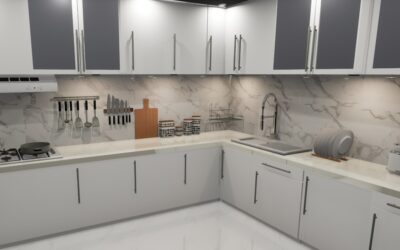
Few upgrades change a kitchen’s feel as fast as swapping a builder-grade island for real stone. A stone kitchen island becomes the room’s anchor, a workhorse for prep and a gathering spot that shrugs off knives, heat, and spilled wine. Before you fall for a slab in the showroom, though, you need to know which stone fits your habits, what the base has to support, and where the money really goes.
Part of our Kitchen Remodeling guide — explore the full guide →
Choosing the Right Stone
Each material has a personality, and picking one means being honest about how you cook and how much upkeep you tolerate. Quartz, granite, and marble dominate the market, with quartzite and soapstone as strong niche choices.
- Quartz: Engineered, nonporous, and stain-resistant. No sealing, huge color range. The low-maintenance default for busy families.
- Granite: Natural, heat-tolerant, and durable. Needs sealing every 1-2 years but handles hot pans directly.
- Marble: Stunning veining, prized by bakers for its cool surface, but soft and prone to etching from acids.
- Quartzite: Natural stone as hard as granite with a marble-like look. Premium price.
- Soapstone: Nonporous, heat-proof, and forgiving, with a matte charcoal patina that deepens over time.
What a Stone Island Costs
Pricing runs by the square foot of finished surface, installed. Quartz and granite typically land between $50 and $120 per square foot, while marble and quartzite climb to $75 to $200-plus for premium slabs. A standard 4-by-7-foot island top runs roughly 28 square feet, so budget $1,400 to $5,600 for the stone alone.
Add-ons move the needle fast. A waterfall edge, where the stone cascades to the floor on one or both ends, can add $1,000 to $3,000 because it uses extra material and precise miter cuts. Undermount sinks, cooktop cutouts, and thick mitered edges each add fabrication labor.
Weight and Structural Support
Stone is heavy, and this is the detail DIYers underestimate. A 3-centimeter granite or quartz slab weighs about 18 to 20 pounds per square foot, so that same 28-square-foot top pushes 500 to 560 pounds before you add the base cabinets. A waterfall island can exceed 800 pounds.
Standard cabinet boxes handle a flat top fine, but any overhang for seating needs support. Overhangs beyond 10 to 12 inches require steel brackets, corbels, or a hidden support plate anchored into the cabinet frame. Skipping this is how counters crack at the seam months after install.
Overhangs and Seating
If your island doubles as a breakfast bar, plan the overhang around comfortable legroom. A 12-inch overhang suits a standard 36-inch counter height with regular stools, while a raised eating bar can go shorter. Allow 24 inches of width per seat so people are not bumping elbows.
For overhangs past 12 inches, embed flat steel bar stock or L-brackets into the top of the cabinets before the stone goes down. Done right, the support disappears from view and the seating feels solid rather than springy.
Edge Profiles and Finishes
The edge profile shapes both the look and the feel. A simple eased or square edge reads modern and is easiest to keep clean, while a bullnose or ogee edge suits traditional kitchens. Thicker mitered edges, where two pieces are joined to fake a 2-inch or thicker slab, deliver a substantial look on a standard 3-centimeter stone.
Surface finish matters just as much. Polished stone resists stains best and shines, honed stone offers a soft matte look but shows fingerprints and etches more readily, and leathered finishes hide smudges beautifully on darker granites and quartzites.
Care That Keeps It Looking New
Daily care is simple regardless of stone: wipe with warm water and a pH-neutral cleaner, and skip the vinegar, lemon, and abrasive pads that dull and etch natural surfaces. Quartz needs nothing more.
Natural stones need sealing, and the frequency depends on porosity. Test granite yearly by dripping water on it; if it soaks in within a few minutes rather than beading, it is time to reseal. Wipe acidic spills like wine, coffee, and citrus promptly on marble and limestone to prevent etching.
Seams and Slab Layout
Large islands often exceed the size of a single slab, which means a seam somewhere on the surface. A skilled fabricator places the seam where it is least visible and least stressed, typically not across a sink cutout or an unsupported overhang. Ask to see the slab layout, called a dry lay, before fabrication so you can approve where any seam lands and how the veining flows across it.
Standard slabs run roughly 55 by 120 inches, so an island longer than about 10 feet almost always needs a seam or a book-matched pair. On dramatic natural stone like marble and quartzite, a good fabricator can book-match two slabs so the veining mirrors across the seam, turning a necessity into a design feature.
Integrating Sinks, Cooktops, and Outlets
Many islands do double duty as a prep station or cooking zone, and each addition affects the stone. An undermount sink requires precise polishing of the exposed cutout edge, while a drop-in cooktop needs proper clearance and heat management around the opening. Factor these cutouts into both your budget and your slab layout.
Do not overlook electrical. Code generally requires receptacles on an island of a certain size, and you will want power for small appliances and phone charging. Pop-up outlets that hide flush in the surface keep the clean stone look intact, while side-mounted outlets in the cabinet base are a lower-cost alternative that avoids drilling the stone.
Making the Investment Worthwhile
A stone kitchen island pays off when the material matches your life, quartz for low fuss, granite for heat resistance, marble only if you accept its patina. Nail the structural support under any seating overhang and choose a finish you will enjoy cleaning. Get those calls right and the island becomes the most-used, longest-lasting surface in your home.