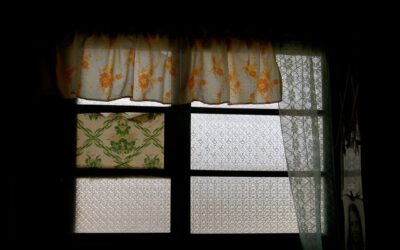
A swag is the easiest way to soften a hard window frame without blocking light, yet most people hang one too high, too tight or with far too little fabric. Good swag curtains ideas start with a simple rule: a swag should dip in a relaxed curve, usually 12 to 18 inches at its lowest point, and frame the glass rather than cover it. Get that curve right and even an inexpensive panel looks custom.
Swags come in three broad families. Classic swag valances are pre-sewn, pleated half-moons that sit across the top of the window, often paired with jabots (the cone-shaped tails that hang at the sides). Scarf swags are one long length of lightweight fabric that you wrap around a rod or drape over sconces to create loose curves. Modern swags strip the idea down to a single asymmetrical sweep, a flat Roman-style valance with a soft dip, or a sheer draped over a sleek metal rod.
Below you will find room-by-room ideas, the tools you need, step-by-step draping instructions for a scarf, fixes for common problems and a realistic sense of what each look costs. Whether you want formal dining-room drama or a breezy kitchen accent, there is a swag style that fits.
Swag Curtains Ideas by Style
Before you pick fabric, decide which silhouette suits the room. Each of these swag curtains ideas creates a different mood, and the hardware requirements differ too.
Classic Swag Valance With Jabots
This is the traditional formal look: one to three pleated swags overlapping across the top of the window, with jabots cascading down each side to about one-third of the window height. It suits dining rooms, living rooms with crown molding and older homes with tall double-hung windows. Heavier fabrics such as damask, jacquard or faux silk hold the pleats crisply. For a wide window, overlap swags by 4 to 6 inches so there are no gaps at the joins.
Scarf Swag
A window scarf valance is a single long piece of fabric, typically 4 to 6 yards, that you loop around a rod or drape over decorative holders. It is the most forgiving swag for beginners because you can tweak the curves in minutes. Voile, chiffon and lightweight linen blends drape best. Among curtain scarf ideas, the most popular is a double loop: wrap the fabric over the rod twice to create two soft dips, then let the ends puddle or hang to the sill.
Asymmetrical Swag
One side sweeps higher and the fabric falls to the floor on the other side. It works well on a window next to a wall, over a corner reading nook or on a single window you want to feel taller. The asymmetry adds movement without the formality of matching jabots.
Balloon and Austrian Swags
These gather fabric vertically into poufs or scallops. Balloon swags feel cottage-like; Austrian swags, with their tight vertical shirring, feel grand and theatrical. Both are best on windows where you rarely need full privacy, because they are usually stationary.
Modern Minimal Swag
For contemporary rooms, skip the pleats and jabots. Choose a flat, tailored valance with a single shallow curve, or drape a solid sheer loosely over a matte black or brushed nickel rod. Keep colors quiet: white, oatmeal, charcoal or a single accent tone pulled from the room.
Swag Curtain Valance Ideas Room by Room
The right swag depends as much on how you use the room as on how it looks. Here are swag curtain valance ideas matched to common spaces.
- Living room: Pair a scarf swag with full-length side panels for layered softness. If the room has tall ceilings, mount the rod 4 to 6 inches below the ceiling to exaggerate height.
- Dining room: This is where classic swags and jabots shine. Choose a fabric with some sheen so it catches evening light, and let the jabots fall to the chair-rail line.
- Kitchen: Go short and washable. A cotton or polyester swag valance over the sink window adds color without blocking light or collecting grease on long fabric. Keep it at least 12 inches from any cooktop.
- Bedroom: Layer a swag over blackout panels or a room-darkening shade. The swag supplies the romance, and the shade handles sleep.
- Bathroom: Choose moisture-tolerant polyester and pair it with a frosted film or a privacy shade. A small scarf swag over a single window keeps the room from feeling clinical.
- Bay and bow windows: Use one swag per window section on a bendable or angled rod, with jabots only at the two outermost ends.
- Arched windows: Drape a scarf over two holders set at the spring line of the arch, letting the fabric follow the curve instead of hiding it.
Tools and Materials You Will Need
Most swag projects need only basic hardware. Gather these before you start so you are not up and down the step stool repeatedly.
- Curtain rod, scarf holders or decorative sconces sized to the window
- Tape measure and pencil
- Level (a 24-inch level is easiest on window trim)
- Drill with bits and the correct anchors for drywall, plaster or wood trim
- Stable step stool or short ladder
- The swag fabric, pre-sewn valance or window scarf valance
- Safety pins or small clear rubber bands to hold drape points
- Handheld steamer to remove folds
For fabric length on a scarf, measure the rod width, add twice the drop length for each side, then add 1 to 2 yards for each loop. A 48-inch window with two loops and ends reaching the sill usually needs about 5 to 6 yards.
How to Drape a Scarf Swag Step by Step
This method works for most scarf swags on a standard rod. Allow 20 to 30 minutes for your first attempt.
- Mount the hardware. Mark bracket positions 3 to 6 inches outside the window frame and 4 to 6 inches above it. Use a level, drill pilot holes and install anchors rated for the weight. Swags are light, but a secure mount prevents sagging over time.
- Steam the fabric. Remove packaging creases before you hang it. Wrinkles become very obvious once the fabric is draped in curves.
- Find the center. Fold the scarf in half lengthwise and mark the midpoint with a pin. Align it with the center of the rod.
- Set the first end. Decide how long you want one tail to hang, whether to the sill, mid-window or floor, and drape that end over the rod on one side.
- Create the loops. Bring the fabric over the front of the rod, then wrap it back over the top to form a dip. Adjust until the lowest point hangs 12 to 18 inches below the rod. Repeat for a second loop if you want two curves.
- Finish the second end. Let the remaining fabric fall on the opposite side. Match the first tail for a symmetrical look, or let it run longer for an asymmetrical swag.
- Fluff and secure. Gently pull the fabric outward to widen each fold. Pin the fabric to itself behind the rod at contact points so it holds its shape when windows are opened.
For pre-sewn swag valances, the process is simpler: thread the rod pocket onto the rod, space swags evenly with the center one first, then hang the jabots at the ends so they overlap the outer swags by 2 to 3 inches.
Fabric and Color Choices That Work
Fabric weight controls how the swag behaves. Sheers and voile create airy, informal curves and let daylight glow through. Medium-weight cotton and linen hold a soft shape and suit casual rooms. Heavier jacquards, velvets and faux silks create deep, sculpted pleats that look best in formal spaces with plenty of wall height.
Color works the same way as with any window treatment. A swag that matches the wall color disappears and adds texture without contrast. One that matches the trim looks crisp and architectural. A bold swag, such as deep green, navy or burgundy, becomes a focal point, so keep the rest of the window simple. Patterned swags work best when the pattern is small enough to read clearly within the folds; large-scale prints get lost in the pleats.
Troubleshooting Common Swag Problems
- The swag looks skimpy. You likely have too little fabric. Add a second scarf in a coordinating color and drape both together, or switch to a longer length.
- The dip hangs too low and hides the view. Shorten the loop by wrapping more fabric around the rod, or raise the rod 2 to 3 inches.
- The folds keep collapsing. Pin fabric behind the rod, or use scarf holders with a hook or ring that grips the fabric.
- Jabots look uneven. Measure from the floor to the jabot tip on both sides instead of trusting your eye; window trim is often slightly out of level.
- The swag looks dated. Remove the jabots, switch to a solid neutral fabric and use a slimmer rod. Many modern swag curtains ideas are simply classic shapes in quieter materials.
- Fabric fades. Sun-facing windows bleach silk and cotton quickly. Choose solution-dyed polyester or add a lining.
What Swag Curtains Cost
Costs vary widely with fabric and construction. As a general guide, ready-made scarf swags and basic polyester swag valances are budget-friendly and widely available at home stores. Lined, pre-pleated swag and jabot sets in heavier fabrics cost noticeably more per window. Custom-made swags from a drapery workroom are the most expensive option, because each piece is cut and pleated to your exact window, and designer fabrics can multiply the price.
Hardware adds a modest amount. A basic tension or bracket rod is inexpensive, while decorative finials, scarf holders and ornate sconces raise the total. If you have several windows in one room, buying matching ready-made sets is usually the most cost-effective route.
When to Call a Pro
Most swags are a comfortable DIY project, but consider hiring a drapery workroom or window treatment installer when you want custom-pleated swags for unusually wide, arched or bay windows, when the fabric is expensive and cutting mistakes would be costly, or when the window sits above a stairwell or two-story foyer that requires tall ladders. Pros can also build a padded cornice board behind the swag, which gives formal treatments a crisp, finished top edge.
Frequently Asked Questions
How much fabric do I need for a scarf swag?
Measure the rod width, add the desired drop on each side twice, and add 1 to 2 yards per loop. Most standard windows need 4 to 6 yards, and wide windows may need two scarves.
How high should a swag valance hang?
Mount the rod 4 to 6 inches above the window frame, or higher to make a window look taller. The lowest point of the swag should typically dip 12 to 18 inches, just enough to frame the top of the glass.
Are swag curtains out of style?
Heavy, fringed swags with elaborate jabots feel dated in many homes, but simple scarf swags, asymmetrical drapes and tailored single-curve valances remain popular. Choosing solid fabrics and slim hardware keeps the look current.
What are good curtain scarf ideas for a small window?
Try a single loop over a short rod with both tails ending at the sill, or drape the scarf over two small holders set just beyond the frame. Lightweight sheers keep a small window from feeling crowded.
Can I combine a swag with blinds or shades?
Yes. A swag handles decoration while a shade or blind handles light and privacy. Mount the shade inside the frame and the swag rod outside it so the two do not interfere.