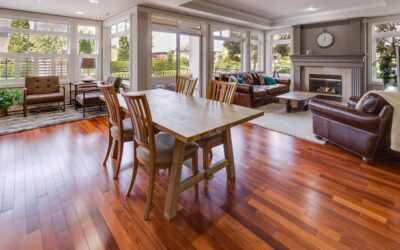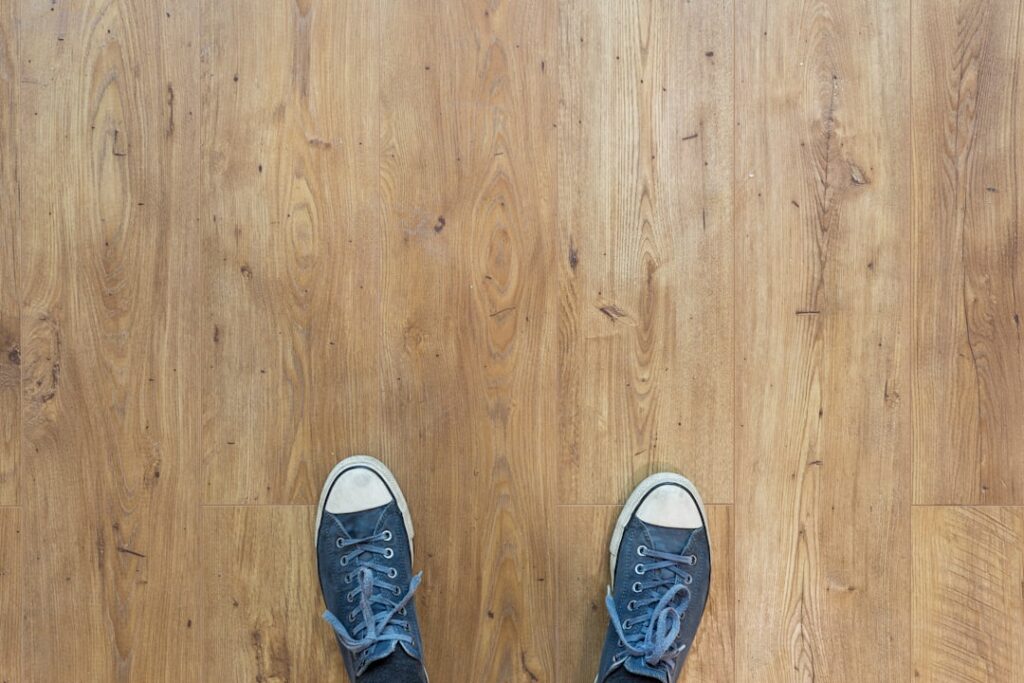
Hardwood grade names confuse buyers more than any other spec on the order form. Tavern oak flooring sits at the rustic end of the oak grading scale — full of knots, mineral streaks, sapwood, and color variation — and that visual is the entire point. Tavern grade (also called Cabin or Country grade depending on the supplier) hides scratches and dents better than any other oak grade, costs significantly less than Select or Clear, and gives a room the warm, lived-in character that Select grade cannot fake. The trade-off is knowing what you are buying because not every dealer uses the same grading terms consistently.
What Tavern Grade Actually Means
The National Wood Flooring Association recognizes four primary grades for oak flooring: Clear, Select, No. 1 Common, and No. 2 Common. Tavern grade typically corresponds to No. 2 Common or below, which allows:
- Knots up to 1.5 inches across
- Open knots filled with putty
- Mineral streaks (gray, brown, or black grain marks)
- Heavy color variation between boards
- Some checks and small splits
- Wider color range from sapwood to heartwood
Each manufacturer applies the term slightly differently. Bruce Tavern Series, Anderson Tuftex Tavern, and various regional mills all sell under the name but the visual ranges meaningfully. Always pull a 5 to 10 board sample before ordering — the boards in the showroom may not reflect the actual mix you receive.
The Pros That Win Buyers
Price is the headline. Tavern grade red or white oak runs $3.49 to $5.99 per square foot for solid 3/4-inch plank, compared to $6 to $11 for Select grade. For a 1,200 sq ft project, the grade choice swings $3,000 to $7,000 in material cost.
Damage-hiding is the practical advantage. Knots, mineral streaks, and color variation absorb everyday scuffs, scratches, and dent marks into the natural pattern. A scratch on Select grade oak shows as an obvious flaw; the same scratch on Tavern grade disappears into the knot structure within months. Households with dogs, kids, or both consistently report Tavern grade staying photogenic five to ten years longer than Select.
Where Tavern Falls Short
The aesthetic skews rustic — farmhouse, craftsman, cabin, transitional. In a strict modern home with white walls and minimalist cabinetry, Tavern grade reads busy and dated. Designers working in that aesthetic prefer Select grade or wide-plank European white oak with minimal character.
Color matching for repairs is harder. With Select grade, you can pull a replacement board from a box and have it blend within a year. With Tavern grade, the natural variation means individual boards differ enough that an exact match is rare. Most contractors keep a few cartons of original material on hand for future repairs.
Red Oak vs White Oak in Tavern Grade
Both species ship in Tavern grade, with different visual outcomes. Red oak runs warmer (pink to salmon undertones), shows more open grain, and accepts stain dramatically. White oak runs cooler (gray-tan undertones), has tighter closed grain, and reads more contemporary. The Janka hardness numbers are nearly identical — red oak at 1,290 and white oak at 1,360, both adequate for residential traffic.
Pricing differs. White oak Tavern grade runs about $1 per square foot above red oak due to higher demand and tighter mill supply. For the rustic look most Tavern buyers want, red oak delivers more character per dollar.
Install Method and Subfloor Prep
Solid Tavern oak nails or staples to a plywood or OSB subfloor. Engineered Tavern oak can nail, glue, or float over plywood or concrete. The basic install rules:
- Acclimate the wood in the install room for 7 to 14 days at target indoor humidity (35 to 55 percent RH).
- Verify subfloor moisture below 12 percent on plywood (pin meter) or below 4 lbs per 1,000 sq ft per 24 hours on slab (ASTM F1869).
- Install a 15-lb felt or aquabar paper vapor retarder.
- Stagger end joints at least 6 inches between adjacent rows.
- Use 1.5 to 2-inch cleats spaced 8 to 10 inches on center.
- Leave a 3/4-inch expansion gap at perimeter, covered by quarter-round or shoe molding.
Plan to sand and finish on site if you bought unfinished plank — three coats of Bona Traffic HD or Loba Supra AT add $3 to $5 per square foot and 4 to 6 days of cure time.
Best Stain Colors for Tavern Oak
The character of Tavern grade interacts strongly with stain choice. Light natural finishes (Bona NordicSeal, Rubio Monocoat Pure) preserve knot variation and let the natural color range read as featured rather than buried. Mid-tone walnut and cinnamon stains balance character with sophistication — Minwax Provincial 211 and Bona DriFast Special Walnut 224 are common picks.
Dark stains (Jacobean 2750, ebony) flatten knot variation and make Tavern grade read like Select — which defeats the point of buying the cheaper grade. If you want a dark floor, buy Select grade instead.
Refinishing and Long-Term Care
Solid Tavern oak handles 4 to 6 refinishings over its service life — 60 to 100 years of practical lifespan. Engineered Tavern oak with a 4mm wear layer refinishes 1 to 2 times. Routine maintenance is simple — Bona Hardwood Floor Cleaner monthly, microfiber dust mopping between, and quick spill cleanup. Avoid steam mops and excessive water at all costs; both destroy the surface finish.
Where Tavern Grade Wins
Three home styles consistently pair well with Tavern oak. Craftsman bungalows and farmhouses get the period-correct rustic plank. Cabins, mountain homes, and lakefront properties get a floor that hides ski-boot grit and pet traffic. Open-concept homes with strong architectural features — exposed beams, stone fireplaces, mixed material kitchens — get a floor that holds its own visually against those elements.
Should You Buy Tavern Grade?
Choose Tavern oak if you want maximum character, lower cost, and the longest-lasting cosmetic durability. Skip it for strict modern or minimalist aesthetics where heavy character reads as busy. For most owner-occupied homes that want hardwood that lives well over 20 years, Tavern oak flooring is the value pick that most flooring buyers eventually wish they had chosen the first time around.
Prefer to explore on your own?
See how new flooring looks in your actual room in seconds — free, no signup.
Try the free Floor Studio →