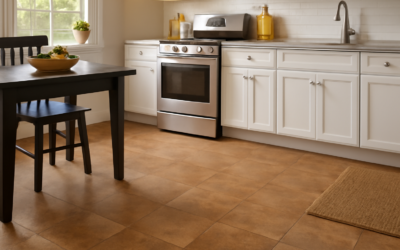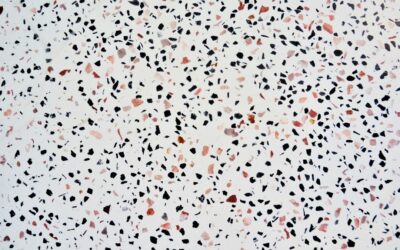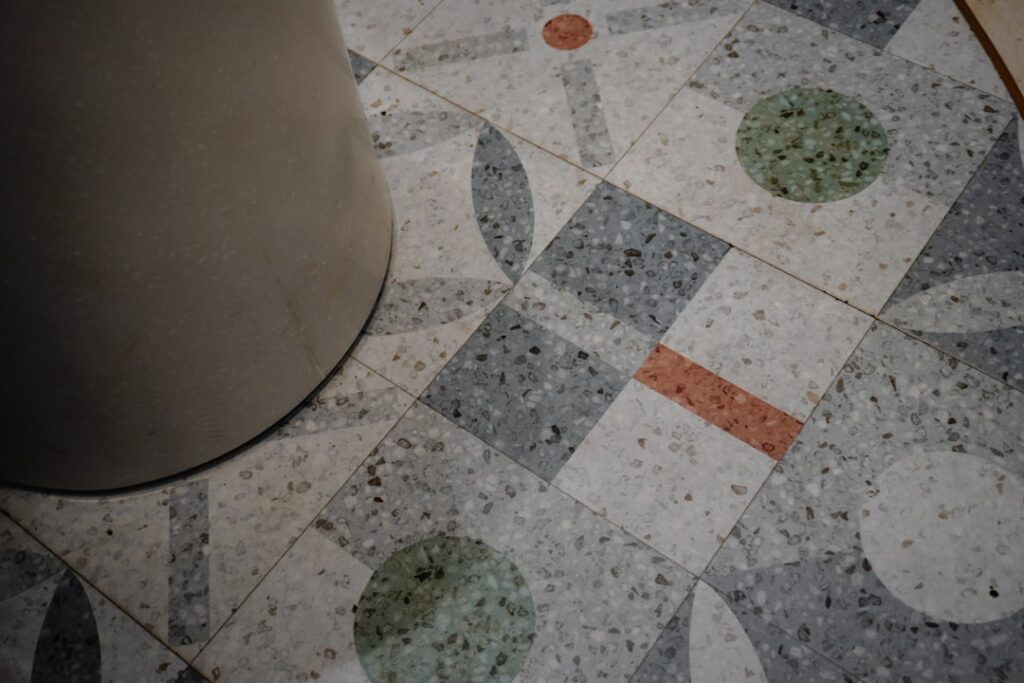
The little speckled pattern from your grandmother’s kitchen floor is back in design magazines, and it isn’t the same product. Terrazzo linoleum flooring in 2026 mostly refers to natural linoleum sheet or tile printed and embossed to mimic vintage terrazzo — the colorful chip-in-cement look popular from the 1940s through the 1970s — using genuine linseed-oil-based linoleum rather than vinyl. Forbo Marmoleum, Tarkett Veneto, and Armstrong Marmorette dominate the category. Here’s what makes it different from vinyl, what it costs, and where it actually belongs in a modern home.
What “Linoleum” Means Today
True linoleum is not vinyl. It is made from linseed oil, pine rosin, wood flour, limestone, cork dust, and natural pigments pressed onto a jute backing — a recipe Frederick Walton patented in 1860. Modern linoleum (Forbo’s trademark Marmoleum is the genre-defining product) keeps that same formulation but offers contemporary patterns including the terrazzo-style speckled designs. The result is a fully biodegradable, naturally antimicrobial floor that lasts 30–40 years in residential use.
Vinyl “linoleum” sold at warehouse stores is not the same product. Confirm the construction is real linoleum before paying premium prices.
Pros of Terrazzo Linoleum
- Naturally antimicrobial — linseed oil oxidation inhibits bacterial growth without chemical additives
- 30–40 year lifespan — Forbo and Tarkett both offer 20-year residential warranties
- Eco credentials — biodegradable, recyclable, low-VOC, FloorScore certified
- Color goes through the thickness — scratches don’t expose a different base color
- Comfortable underfoot — softer and warmer than tile or stone, easier on legs for long standing
- Resilient terrazzo look — vintage speckled patterns that don’t read as obvious imitation
It is also significantly quieter underfoot than tile, hardwood, or laminate. Sound transmission is closer to cork than to vinyl.
Cons and Real-World Limitations
Linoleum has trade-offs that frustrate buyers expecting LVT-style behavior. The surface needs a sealer cure period: most products develop an amber-yellow “drying haze” during the first 4–8 weeks after installation that gradually dissipates with exposure to light. Don’t panic and don’t strip the floor — it normalizes.
It also can’t tolerate standing water for long periods. Real linoleum isn’t waterproof in the way vinyl is; seams need to be heat-welded in wet areas, and bathrooms with daily standing water aren’t ideal. Use it in kitchens (with sealed seams), bedrooms, hallways, and offices — skip primary bathrooms and laundry rooms unless you commit to professional seam welding.
Pricing is also higher than vinyl. Material runs $4.99–$8.99/sq ft for sheet, $6.99–$10.49/sq ft for click-lock plank format, plus $3–$6/sq ft installation.
Top Terrazzo-Pattern Products
Three product lines dominate the terrazzo-look linoleum category:
- Forbo Marmoleum Terra and Marmoleum Decibel — wide range of speckled patterns, available in sheet, click-lock plank, and tile formats
- Tarkett Veneto xf2 — chip-pattern linoleum with PUR factory finish for low maintenance
- Armstrong Marmorette — older legacy line still stocked at commercial distributors, more limited residential availability
Forbo Marmoleum Click is the easiest DIY option — click-lock planks and 12 x 12 in. squares over HDF cores install over most subfloors with no adhesive.
Installation Methods
Three install paths exist, each with different requirements:
- Sheet linoleum, glue-down — professional install only. Requires a contact adhesive and pattern-aligned seam cutting; in wet areas, seams are heat-welded with a colored welding rod for a watertight finish
- Click-lock plank and tile — DIY friendly. Floats over plywood, OSB, or flat concrete with no adhesive. Acclimate 48 hours, leave 5/16 in. expansion gap
- Glue-down tile — 12 x 12 in. squares with a roller-applied linoleum adhesive (Forbo 614 or equivalent)
Subfloors must be flat to 3/16 in. over 10 ft. Test concrete moisture (ASTM F1869 calcium chloride test, max 8 lb / 1000 sq ft / 24 hr for sheet linoleum). Linoleum is more sensitive to slab moisture than vinyl is.
Care and Maintenance
Linoleum maintenance is different from vinyl. The first 4–6 weeks after installation, avoid wet mopping entirely — just sweep and use a slightly damp microfiber. After full cure, weekly damp mop with Forbo Cleaner Solution or any pH-neutral linoleum cleaner. Avoid vinegar, ammonia, and bleach — all can degrade the linseed-oil binder over time.
Every 1–3 years, apply a coat of Forbo Monel or Tarkett floor polish to refresh the wear layer. This is a 30-minute task per 200 sq ft and dramatically extends the floor’s life. Forbo PUR-finished products skip this step entirely.
Comparing to Vinyl Terrazzo Look
Vinyl LVT and sheet vinyl both reproduce terrazzo patterns with high-DPI printing and embossed texture. The visual difference at floor distance is small. The real differences:
- Linoleum: natural materials, 30+ year lifespan, biodegradable, needs sealer cure and occasional polish
- Vinyl LVT: PVC-based, 15–25 year lifespan, recyclable but not biodegradable, no cure period, lower maintenance
If sustainability or indoor air quality drives the decision, linoleum wins. If maintenance simplicity and waterproof performance matter most, LVT is the practical choice. Both look great when installed well.
Best Rooms for Terrazzo Linoleum
This material excels in kitchens, mudrooms, sunrooms, hallways, and home offices — anywhere you want resilient underfoot feel with serious longevity. It’s also the standout choice for laboratories, schools, and healthcare facilities, where the antimicrobial properties matter beyond aesthetics. Bedrooms work but tend to favor softer materials like carpet or cork. Skip wet rooms unless committing to professional seam welding.
Design Pairing and Color Selection
Terrazzo patterns range from subtle micro-chips on a muted base to dramatic large-aggregate designs reminiscent of 1950s school floors. The right pattern depends on the room. Small powder rooms and entries handle bold terrazzo well — the floor becomes a statement and the limited square footage prevents visual overload. Larger rooms benefit from quieter patterns with closely related chip colors on a neutral base. Pair terrazzo linoleum with simple cabinet and trim choices; the floor pattern is doing the visual work, and competing with it through bold cabinet colors or busy backsplashes muddles the design.
Bottom Line
Terrazzo linoleum flooring is one of the few products on the market that simultaneously hits design trends, sustainability standards, and 30-year durability. The price is higher than vinyl, the install is fussier, and the maintenance requires actual attention — but the payoff is a floor that outlasts almost any other resilient option and gets more character with age rather than less.
Prefer to explore on your own?
See how new flooring looks in your actual room in seconds — free, no signup.
Try the free Floor Studio →