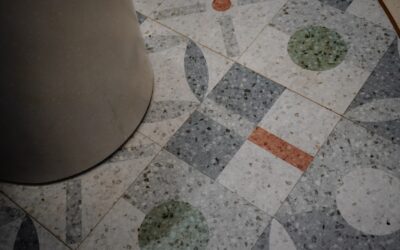
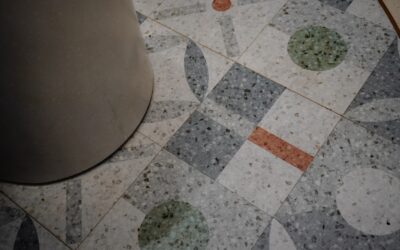
Few flooring decisions carry the weight of a poured terrazzo install. Once cured and ground, the floor becomes a permanent monolithic surface that will outlast the mortgage, the roof, and most likely the kitchen above it. Terrazzo flooring installation is also one of the most labor-intensive projects in residential construction, with timelines stretching three to four weeks and costs ranging from $25 to $90 per square foot depending on method, aggregates, and finish. Going in without understanding the process is the surest way to feel buyer’s remorse on a beautiful floor.
What Terrazzo Actually Is
Terrazzo is a composite flooring made by embedding marble, quartz, glass, granite, or shell chips into a binder, then grinding and polishing the surface to expose the aggregates. Successful terrazzo flooring installation starts with understanding which binder system you are working with. Two binder systems dominate the modern market: cementitious (Portland cement) and epoxy. Cementitious terrazzo has been used for over a century in airports, schools, and hospitals. Epoxy terrazzo is thinner, lighter, and far more popular in residential work because it can be installed in just 3/8 inch versus the 2-1/2 inch needed for traditional cement-bound systems.
The Installation Process Step by Step
Both methods follow a similar workflow but vary dramatically in cure times and tolerances:
- Subfloor preparation, including crack repair, leveling, and moisture testing
- Divider strip layout — usually zinc or brass at every color change and around the room perimeter
- Base coat installation, troweled flat and allowed to begin setting
- Aggregate-binder mixture placement, screeded between divider strips
- Cure period (24 to 72 hours for epoxy, 5 to 7 days for cement)
- Initial grind with diamond pads, starting at 30 grit
- Slurry coat to fill voids, then second cure
- Progressive grinding from 50 to 400 grit, sometimes finishing at 3,000 grit
- Sealing with penetrating sealer and topical wax or polish
The grinding and polishing alone typically takes two full days for a 1,000 square foot floor, and the dust generation requires plastic-sealed work areas and HEPA vacuums.
Pros That Justify the Investment
Lifespan tops the list. Properly installed terrazzo lasts 75 to 100 years with periodic re-polishing every 7 to 10 years. The Pantheon’s marble-aggregate floors in Rome have endured for nearly 2,000 years using the same basic principles.
- Seamless monolithic surface, no grout lines to clean
- Can incorporate logos, patterns, and color blocks limited only by the installer’s skill
- Hypoallergenic — no fibers, no off-gassing, no organic material to harbor mold
- Recycled glass and porcelain aggregates qualify for LEED credits
- Refinishable indefinitely as long as the matrix remains intact
- Fire resistant and slip rated when finished with anti-slip additives
Cons That Stop Many Projects in Their Tracks
Cost is the obvious one. A simple residential epoxy terrazzo install in a 500 square foot kitchen will run $15,000 to $30,000 once you add divider strips, aggregates, and labor. That is two to four times the cost of high-end porcelain tile.
Hardness is the second drawback. Dropped glassware shatters more violently on terrazzo than on wood. Standing for hours during meal prep is harder on knees and ankles. Anti-fatigue mats in front of sinks and ranges become non-negotiable.
Cold transmission is real. Without radiant heat below the slab, terrazzo runs 5 to 8 degrees cooler than ambient room temperature in winter. Many residential installs include radiant tubing during the base coat phase to address this.
Poured vs Tile: Which to Choose
Pre-cast terrazzo tiles offer about 70 percent of the look at 40 percent of the price. They install like granite tiles with thin-set mortar and grouted joints. Material runs $15 to $40 per square foot, and labor is roughly comparable to natural stone tile.
Poured terrazzo gives the seamless monolithic look, custom color matching, and the ability to incorporate custom designs. The trade-off is the labor-intensive process and the longer timeline. For most homeowners chasing the high-design look, pre-cast tiles are the realistic choice. For commercial spaces, custom homes, and lobbies, poured wins on appearance and longevity.
Choosing the Right Installer
Terrazzo flooring installation is a specialty trade. Most general flooring contractors do not have the diamond grinders, slurry mixers, or experience to do it properly. Ask for these qualifications:
- Member of the National Terrazzo and Mosaic Association (NTMA)
- Minimum 5 years of dedicated terrazzo work, not just tile
- Portfolio of completed residential projects of similar scope
- Proof of dust containment plan and HEPA equipment
- Subcontractor agreements detailing material specifications
Get at least three bids and walk through completed projects in person if possible. Bid spreads of 100 percent or more are common because skill levels and mobilization costs vary so widely.
Timeline Expectations
From floor demo to final cure on a 1,500 square foot residential epoxy terrazzo project, expect 14 to 21 calendar days. Cement terrazzo adds another week or two for cure time. The kitchen and any rooms involved are unusable during this entire period, including foot traffic during the cure stages. Plan to live elsewhere or block off the work zone completely with proper ventilation away from living spaces.
Maintenance to Keep It Looking Showroom Fresh
Daily care is forgiving. Sweep or vacuum, damp mop with a neutral pH cleaner, never use acidic cleaners (vinegar, lemon-based products) on cementitious terrazzo because they etch the binder. Re-seal every 18 to 36 months with a manufacturer-matched penetrating sealer. Schedule a professional re-polish every 7 to 10 years to remove micro-scratches and restore the original gloss. The cost of a re-polish runs $2 to $5 per square foot, far less than refinishing hardwood.
Frequently Asked Questions
How long does terrazzo flooring installation take?
Plan on 3 to 4 weeks for a typical residential epoxy terrazzo project, including subfloor prep, pour, cure, grinding, and sealing. Cementitious systems extend the timeline to 5 to 6 weeks because of longer cure periods.
Can I install terrazzo flooring as a DIY project?
Realistically, no. The diamond grinding equipment alone runs $15,000 to buy, and the skill curve on aggregate distribution and slurry coats takes years to develop. Pre-cast terrazzo tiles can be DIY installed by experienced tile setters.
Does terrazzo crack over time?
Properly installed terrazzo rarely cracks because divider strips absorb expansion and contraction. Failures are almost always traceable to subfloor movement, inadequate divider spacing, or moisture migration from below.
What is the difference between epoxy and cement terrazzo?
Epoxy is thinner (3/8 inch), lighter, faster to install, and offers brighter color saturation. Cement is thicker (2-1/2 inch), heavier, slower to install, and has a softer, more muted aesthetic that ages with traditional patina.
Prefer to explore on your own?
See how new flooring looks in your actual room in seconds — free, no signup.
Try the free Floor Studio →