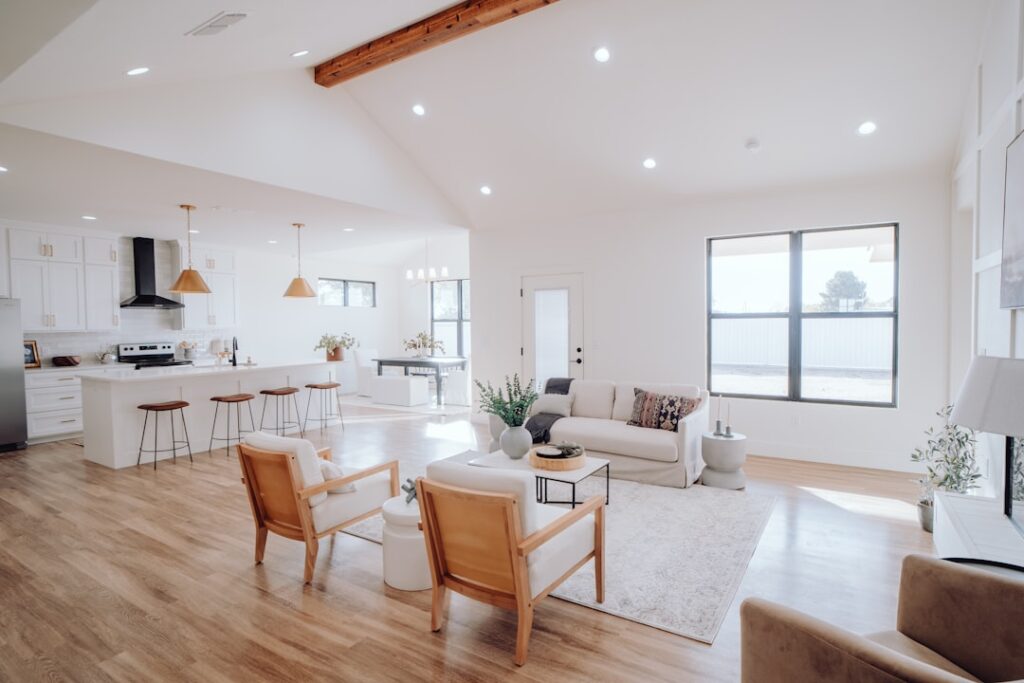
Most flooring catalogs default to 3/4-inch solid or 1/2-inch engineered hardwood, but there is an entire category of thin wood flooring sitting at 5/16 inch and below that solves problems thicker boards cannot. Low door clearances, transitions to existing floors, glue-down concrete installs, and weight-sensitive retrofits all favor thin profiles. Knowing when to choose 5/16-inch solid versus 3mm engineered can save you thousands in subfloor demolition and door cutting.
- What Counts as Thin Wood Flooring
- When Thin Profiles Are the Right Call
- Top Solid 5/16-Inch Products
- Engineered Thin Options Worth Considering
- Installation Methods for Thin Wood
- Trade-offs You Need to Accept
- Cost Comparison Against Standard Thickness
- Where Thin Wood Falls Short
- Subfloor Requirements for Thin Profiles
- Warranty Considerations
What Counts as Thin Wood Flooring
Anything below 1/2 inch falls into the thin category. The most common formats are:
- 5/16-inch solid hardwood, sometimes called “low profile”
- 3/8-inch engineered with a 1.5mm-2mm sawn or rotary-peeled veneer
- 2mm-3mm engineered click planks intended for floating install
- 1/4-inch click-together engineered hardwood designed for renovations
Solid 5/16 still gets nailed down through the tongue, but with shorter 1-inch cleats. Engineered 3mm products often float over a foam underlayment or glue down with urethane adhesives like Bostik Best or Mapei Ultrabond ECO-980.
When Thin Profiles Are the Right Call
The most common driver is height. Doors that swing into a room rarely clear more than 5/8 inch of new floor, especially in older homes with settled subfloors. Cutting doors costs $40-$80 each in labor; using 5/16-inch flooring often eliminates the cut entirely.
Slab-on-grade construction is another big one. Engineered thin planks bonded to concrete with a moisture-mitigating urethane adhesive avoid the height stack of plywood plus 3/4-inch solid. You also keep the floor lower than adjacent tile or vinyl rooms, which simplifies transitions.
Mobile homes, finished basements with low ceilings, and additions where the floor system was built to match existing 1/4-inch tile or sheet vinyl all benefit from thin wood.
Top Solid 5/16-Inch Products
Bruce makes the most widely available 5/16-inch solid line, sold at Home Depot under names like Bruce American Originals and Bruce Dundee. Plank widths run 2-1/4 to 3-1/4 inches, in red oak, white oak, maple, and hickory. Pricing sits at $3.50-$5.50 per square foot.
Bellawood at Lumber Liquidators (now LL Flooring) carries a 5/16-inch select grade in similar species for $4-$6 per square foot. Both lines come prefinished with aluminum oxide topcoats good for 25-50 year warranties.
Engineered Thin Options Worth Considering
Shaw Floorte Classic and Mohawk TecWood Select offer 3/8-inch engineered with 2mm sawn veneers, the thinnest engineered tier still considered “real wood floor” for refinishing purposes. Expect $4.50-$7.50 per square foot.
For ultra-thin retrofits, Kahrs Original 5G click and Mirage Floors Lock both produce 7/16-inch engineered with a 3mm wear layer. Boswell Hardwood Floors and Mannington Mountain View round out the field. Avoid no-name imports with 0.6mm veneers; they cannot be refinished and rarely survive 10 years of normal use.
Installation Methods for Thin Wood
Solid 5/16-inch over plywood subfloor: staple or cleat through the tongue with a Powernail 50P or Bostitch BTFP12569 set for short fasteners. Pre-drill at row starts and ends. Use 15-pound felt or aquabar between subfloor and planks.
Engineered 3/8 over concrete: full-spread urethane adhesive with a 1/16 x 1/16 x 1/16 v-notch trowel. Confirm slab moisture per ASTM F2170 at 75% RH or lower before installing. Stego Wrap or a primer-grade moisture mitigation membrane is mandatory above that threshold.
Engineered click planks: float over 2-3mm foam underlayment with attached vapor barrier. Maintain 1/2-inch expansion gap at every wall and vertical obstruction.
Trade-offs You Need to Accept
Refinishing options shrink dramatically with thin wood. A 5/16-inch solid plank can be sanded and refinished one or two times before the tongue is exposed. A 3mm engineered veneer takes one light screen-and-recoat, never a full sanding. A 2mm veneer is essentially refinish-once-and-done.
Dent resistance drops too. Less wood mass under your foot means impacts transmit more readily to the subfloor. Choose harder species like hickory (Janka 1,820) or hard maple (1,450) when going thin, and skip soft pine or American walnut (1,010).
Cost Comparison Against Standard Thickness
- 3/4-inch solid red oak: $5-$8 per square foot installed
- 5/16-inch solid red oak: $5.50-$8.50 per square foot installed
- 1/2-inch engineered, 4mm veneer: $7-$11 per square foot installed
- 3/8-inch engineered, 2mm veneer: $6-$9 per square foot installed
- 3mm click engineered: $5-$8 per square foot installed
Thin products are not meaningfully cheaper per square foot. The savings come from avoided subfloor work, door cutting, and transition reducers. On a typical 1,000-square-foot renovation, thin flooring can cut $1,500-$3,500 off ancillary costs.
Where Thin Wood Falls Short
Skip thin wood in commercial spaces, busy short-term rentals, and homes with large dogs unless you have already accepted the limited refinish life. New construction with normal door heights and standard subfloor builds should default to 3/4-inch solid for long-term value.
Used correctly, thin wood flooring turns awkward renovation problems into clean installs. Used incorrectly, it locks you into a floor that wears out before the rest of the house does. Match the product to the application and the math works in your favor.
Subfloor Requirements for Thin Profiles
Thin wood telegraphs subfloor imperfections more readily than thicker boards. A 3/4-inch plank can bridge minor dips and humps; a 5/16-inch plank reveals them. Plan to level the subfloor within 3/16 inch over a 10-foot radius before installing any thin profile.
For wood subfloors, sand high spots and shim low spots with cardstock or roofing felt. For concrete slabs, use a self-leveling compound like Ardex K-15 or Mapei Ultraplan M20 Plus to bring the slab into spec. Skipping this step is the most common cause of thin-floor failure within the first year.
Warranty Considerations
Most manufacturers offer the same residential warranty on thin-profile products as on standard-thickness flooring, typically 25-50 years on finish wear and lifetime on structural integrity. The fine print often requires installation by a certified pro for the full warranty to apply.
Read the moisture-related exclusions carefully. Many warranties on glue-down engineered thin profiles require ASTM F2170 moisture probe documentation at installation, with the test results retained for any future claim. Skip the testing and a future warranty claim gets denied automatically.
Prefer to explore on your own?
See how new flooring looks in your actual room in seconds — free, no signup.
Try the free Floor Studio →