Few details transform a room as instantly as a decorative inlay set into the floor or wall. Tile medallions are pre-assembled, often circular, mosaic or stone artworks designed to drop into a field of plain tile, and they turn an ordinary entryway, foyer, or shower into something that looks custom and expensive. Done well, a medallion becomes the moment people remember about a space.
Part of our Tile & Grout guide — explore the full guide →
Whether you are drawn to a hand-cut marble waterjet rosette or a budget-friendly water-transfer pattern, tile medallions range enormously in material, size, and price. This guide covers the main types, where they work best, how they get installed into a field of tile, and what you should expect to spend.
What Tile Medallions Actually Are
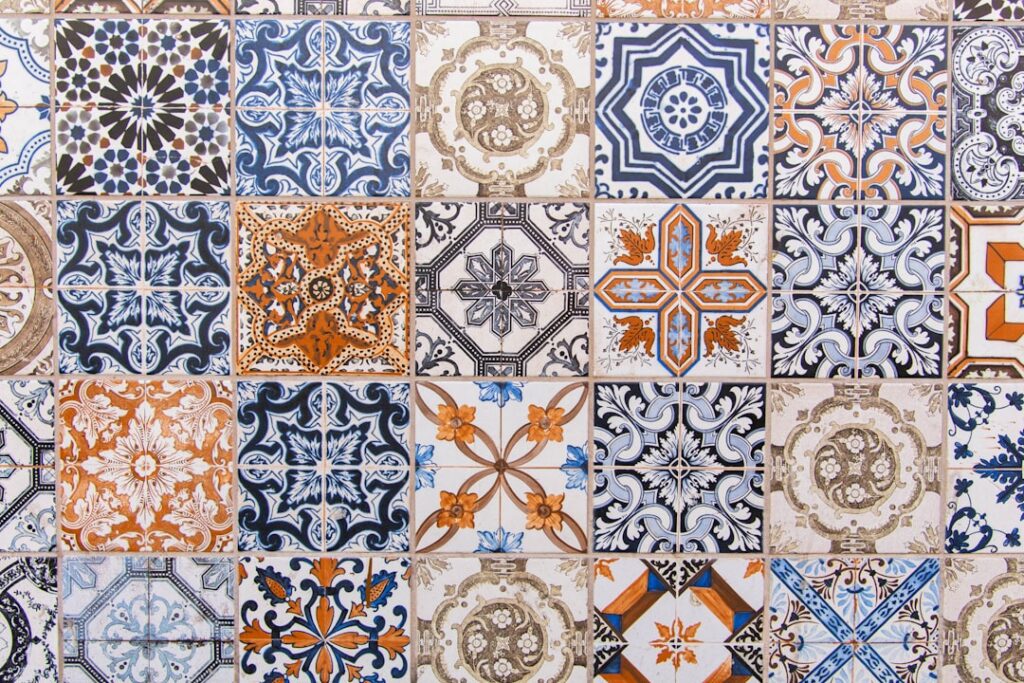
A medallion is a decorative panel, usually round, oval, square, or octagonal, made from smaller pieces of stone, glass, porcelain, or ceramic arranged into a pattern. Most arrive pre-assembled on a mesh backing or paper face so the intricate design ships as one unit rather than hundreds of loose chips. You set the medallion as a single piece, then fit the surrounding field tile around it.
Sizes commonly run from a 12-inch accent up to a 6-foot or larger floor centerpiece. Small medallions work as backsplash focal points or shower niche accents; large ones anchor grand foyers and rotunda floors under chandeliers.
Types of Tile Medallions by Material and Method
The construction method drives both the look and the cost. Knowing the categories helps you match ambition to budget.
Waterjet Stone Medallions
Precision waterjet cutting slices marble, travertine, granite, and other stones into exact interlocking shapes with hairline seams. These are the premium option: crisp curves, tight joints, and rich natural color. Expect the highest price and the heaviest, most demanding install.
Mosaic Medallions
Built from small tesserae of glass, stone, or porcelain on a mesh sheet, mosaic medallions give a handcrafted, textured look. They cost less than waterjet, tolerate slight curves and domes, and suit both floors and walls.
Porcelain and Ceramic Medallions
Printed or glazed porcelain medallions deliver the look of intricate stonework at a fraction of the price and weight. Porcelain is dense, frost- and stain-resistant, and easy to maintain, making it a smart choice for high-traffic floors.
Water-Transfer Vinyl Medallions
The most affordable route is a printed vinyl or engineered decal that mimics a stone medallion. These “water-transfer” or peel-and-stick style medallions install over existing floors with no wet saw and no grout. They will not match real stone up close or last as long underfoot, but for a rental, a quick refresh, or a tight budget, they deliver the visual for very little money.
Best Places to Use Tile Medallions
A medallion needs breathing room to read as a centerpiece, so placement matters as much as the design.
- Entryways and foyers: The classic home. A medallion centered under a light fixture greets guests and defines the space.
- Grand floors and rotundas: Large-format medallions anchor open floor plans and formal dining rooms.
- Shower floors and walls: A smaller medallion in a shower niche or centered on the floor adds a custom, spa-like touch.
- Backsplash focal points: Behind a range or above a cooktop, a framed medallion becomes kitchen art.
- Patios and covered porches: Frost-resistant porcelain or stone medallions dress up outdoor living areas.
Center the medallion on the room’s dominant sightline or under the primary light source, not necessarily the geometric center of the floor. Sketch the layout first and dry-lay the field tile to confirm the medallion lands where the eye expects it.
How Tile Medallions Are Installed
The core challenge is framing the medallion cleanly into the surrounding field, and it takes patience and precision.
- Establish the center: Snap chalk lines to find the exact center point and confirm the medallion position relative to walls and fixtures.
- Dry-fit everything: Lay the medallion and surrounding tile without adhesive to check spacing, then trace the outline onto the substrate.
- Cut the field to fit: Field tiles around a round medallion require curved cuts, usually made with an angle grinder fitted with a diamond blade or a wet saw with careful nibbling.
- Check thickness: Medallions and field tile are rarely the same thickness. Adjust your thinset bed under the thinner piece so the finished surface sits perfectly flush. A lippage-free transition is the mark of a professional job.
- Set, grout, and seal: Set the medallion in thinset, allow it to cure, then grout the joints and seal any natural stone.
Because of the curved cuts and thickness matching, medallion installation is meaningfully harder than a standard tile floor. If you are not confident with a grinder and flush transitions, this is a job worth hiring out.
Stone Versus Vinyl: Which Should You Choose
The decision usually comes down to budget, permanence, and where the medallion lives.
Real stone and porcelain medallions are permanent, add resale appeal, and look convincing at any distance, but they cost more, weigh more, and demand skilled installation and (for stone) periodic sealing. Water-transfer vinyl medallions install fast, cost little, and can be removed later, but they wear at the surface, can peel at edges over years, and never quite fool the eye up close. For a forever home foyer, invest in stone or porcelain. For a rental, a staging project, or a low-commitment refresh, vinyl is a reasonable shortcut.
Cost Expectations for Tile Medallions
Prices swing widely with material and size. Use these ranges as planning figures, not quotes.
- Water-transfer vinyl medallions: roughly $40 to $200 for a small to medium piece.
- Porcelain and ceramic medallions: about $150 to $600 depending on size and detail.
- Mosaic medallions: around $200 to $800.
- Waterjet stone medallions: $500 to several thousand dollars, with large custom pieces exceeding $3,000.
Professional installation adds meaningfully to the total because of the labor-intensive cutting and thickness matching. Plan on several hundred dollars in labor for a modest medallion and considerably more for a large floor centerpiece. Always budget extra field tile for the curved waste cuts around the medallion, and order the medallion early since custom stone pieces can take weeks to fabricate and ship.
Pro Tips Before You Buy
A little planning prevents the most common regrets.
- Match the medallion’s color palette to your field tile and grout, then confirm with physical samples in the actual room light.
- Ask the supplier for the exact thickness so you can plan your thinset bed for a flush finish.
- Keep the surrounding field tile simple. A busy field fights a busy medallion.
- Seal natural-stone medallions before grouting to keep grout haze out of porous stone, then seal again after.
- Order 10 to 15 percent extra field tile to cover the curved cuts a round medallion demands.
Final Thoughts on Tile Medallions
A well-chosen medallion is one of the highest-impact upgrades you can make to a floor or focal wall. Tile medallions let you inject genuine artistry and a custom feel into an entryway, shower, or kitchen without redoing an entire room. Decide first how permanent you want the feature to be, which points you toward stone and porcelain for forever homes or vinyl for flexible, budget-driven projects. Then plan the placement around your main sightline, respect the precision the install demands, and give the piece the plain surroundings it needs to shine. Get those choices right and your medallion will read as the intentional, elegant centerpiece it is meant to be.
Prefer to explore on your own?
See how new flooring looks in your actual room in seconds — free, no signup.
Try the free Floor Studio →