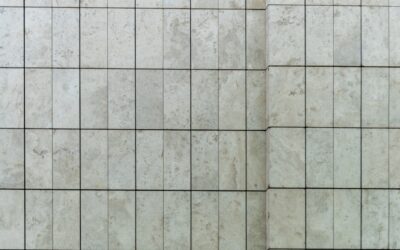
“Tiles Are Us” is the name of multiple regional tile retailers across the US and UK, but the bigger story is the shopping playbook itself. Buying tile is unlike buying any other flooring because the material is heavy, fragile in transit, sold in dye lots that vary noticeably, and requires accessory products (thinset, grout, edge trim, leveling clips) that double the box receipt for first-time buyers. Whether you shop at a local independent like Tiles Are Us, a chain like Floor and Decor, or a big-box like Home Depot, the same principles apply.
Part of our Tile & Grout guide — explore the full guide →
Ceramic vs Porcelain: The First Decision
Ceramic and porcelain look similar in the showroom but perform differently in real installations. Ceramic is softer, easier to cut, and cheaper ($1 to $5 per sq ft material). Porcelain is denser, harder, and more durable ($3 to $10 per sq ft material).
The technical difference is water absorption. Ceramic absorbs 3 to 7 percent of its weight in water; porcelain absorbs less than 0.5 percent. That makes porcelain the only option for outdoor patios, freezing climates, and high-moisture areas like steam shower floors.
For interior dry areas (kitchen backsplashes, hallway floors, bathroom walls above the splash zone), ceramic is fine and saves money. For wet areas, freeze-thaw exposure, and high-traffic floors, porcelain is the right call every time.
Calculating Quantity: Always Add 15 Percent
Square footage of the room is just the starting number. Plan for 10 percent overage on rectangular layouts and 15 to 20 percent on diagonal or pattern layouts (herringbone, basketweave, hexagon).
The overage covers cuts, breakage in transit, and a stash of replacement tiles for repairs years from now. Tile is sold in batches with subtle color variations between dye lots; if you run short and the original lot is gone, the replacement tiles will not match.
- Standard square/rectangle: room sq ft x 1.10
- Diagonal layout: room sq ft x 1.15
- Herringbone or chevron: room sq ft x 1.18-1.20
- Hexagon or other complex patterns: room sq ft x 1.20-1.25
Order the entire job in one batch from one retailer, ideally pulled from the same warehouse pallet. Verify the lot numbers on the box labels before opening any boxes.
Inspect Tiles Before Installation Day
Open every box within 48 hours of delivery and check for cracks, chips, edge damage, and color consistency. Inspecting on installation day, with the contractor on the clock, is the worst time to discover defects.
Stack tiles from multiple boxes and look at them under natural daylight. If you see noticeable color or pattern variation between tiles, you have either a dye lot mix-up or a “shade variation” tile (V3 or V4 rated) that intentionally varies. Both situations need a layout strategy: blend tiles from at least 4 boxes during install to avoid obvious patches.
Thinset and Grout: Don’t Skimp
The cheapest thinset costs $20 a bag and the best costs $45. The performance difference is enormous. Premium thinsets like Mapei Ultraflex 2 or Custom Building Products VersaBond Flex have polymer modifiers that bond reliably to plywood, cement board, and waterproofing membranes.
For floor tile, use modified thinset rated for floor applications. For shower walls and ceilings, use a thinset specifically for vertical applications with non-sag properties. Skipping either category and using “all-purpose” thinset is a common amateur error.
Grout choice matters too. Sanded grout for joints over 1/8 inch, unsanded for joints under 1/8 inch. Epoxy grout (Spectralock or similar) costs $80 a kit but never needs sealing and resists stains in showers.
Substrate Prep Is the Real Cost
The hidden expense in any tile job is the substrate. Plywood subfloors need a cement board overlay (HardieBacker, Durock) or an uncoupling membrane (Schluter Ditra) before tile can be safely installed. Skipping this step causes tile to crack within months as the wood subfloor flexes.
Cement board adds $1.50 to $2.50 per sq ft installed (material plus labor). Schluter Ditra costs $1.80 to $2.20 per sq ft for the membrane plus $1 to $1.50 per sq ft labor. Either is non-negotiable on plywood; skip neither to “save money.”
Underlayment for Concrete Slabs
On concrete, you can usually tile directly with proper crack isolation. Hairline cracks in slabs telegraph through tile within 18 to 36 months unless you install a crack isolation membrane like Schluter Ditra-XL or Custom Building Products RedGard.
Test the slab moisture before any tile work. Calcium chloride test or relative humidity probe should show under 4.5 percent moisture. Higher moisture levels require a sealer or vapor barrier first.
Edge Trim and Transitions
The edge of every tile installation needs a finished termination. Schluter Jolly profiles in stainless or aluminum cost $4 to $8 per linear foot and protect tile edges from chipping. Bullnose tiles (factory-finished round edges) work but limit your tile selection to lines that offer matching bullnose pieces.
Where tile meets carpet, hardwood, or vinyl, plan a transition strip with proper height adjustment. Schluter Reno-T or Reno-U profiles smooth height transitions cleanly. Skipping transitions creates trip hazards and looks unfinished.
Negotiating With Tile Retailers
Tile pricing is more negotiable than most flooring categories. Ask about discontinued lines, end-of-roll closeouts, and contractor pricing if you are buying more than 500 sq ft. Many independent shops will discount 10 to 20 percent on large orders without being asked.
Bring measurements and tile selections in writing. Ask for a written quote that includes accessory products (thinset, grout, sealer, edge trim) so you can compare apples-to-apples across retailers. Independent shops like Tiles Are Us often beat chain pricing on volume orders.
The Final Receipt
Budget realistically. Tile material is roughly 30 to 40 percent of total project cost. The rest is labor (40 to 50 percent), accessories and substrate (15 to 20 percent), and contingency (5 to 10 percent). A $4 per sq ft tile turns into $14 to $22 per sq ft installed once everything is accounted for. Plan accordingly and the project comes in on budget.
Prefer to explore on your own?
See how new flooring looks in your actual room in seconds — free, no signup.
Try the free Floor Studio →