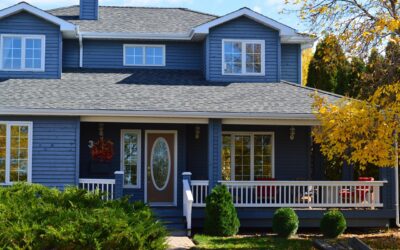
Drive through any American suburb and you’ll see five or six different exterior cladding materials within a single block — vinyl on one house, fiber cement on the next, brick veneer down the street. Tipos de siding — types of siding — is one of the most-searched home improvement questions in the US Spanish-speaking market because the choice affects every aspect of how your house performs and what it costs to maintain. Six categories cover roughly 95 percent of American homes, and the right pick depends on your climate, budget, and how long you plan to own the home.
Vinyl Siding
Vinyl is the most common siding in the United States, installed on roughly 27 percent of new homes. Cost runs $4 to $9 per square foot installed. The material is PVC, comes in dozens of profiles (Dutch lap, beaded, board-and-batten, shake), and is available in hundreds of colors with factory-baked finishes that resist fading for 25 to 40 years.
Pros: low cost, no painting needed, easy to clean with a garden hose. Cons: can crack in extreme cold, melts if a barbecue gets too close, and lower-grade panels look plasticky from up close. Mid-grade vinyl from CertainTeed Monogram or Mastic Structure stays the right side of that line.
Wood Siding
Wood siding includes cedar shingles, cedar shakes, clapboard, and tongue-and-groove planks. Costs run $7 to $15 per square foot installed for cedar, more for redwood. The look is unmatched — natural grain, ages to a silver patina if left unfinished, takes stain or paint cleanly.
The catch is maintenance. Wood siding needs repainting or restaining every 5 to 8 years depending on sun exposure. Insects, rot, and woodpeckers all cause problems if you neglect it. Best for owners who plan to stay 15-plus years and don’t mind the upkeep schedule.
Fiber Cement Siding
Fiber cement — most commonly James Hardie HardiePlank — is a composite of cement, sand, and cellulose fibers. Cost runs $8 to $14 per square foot installed. It looks like wood, costs slightly more than vinyl, and outlasts both.
- Lifespan: 50 years with proper maintenance
- Fire resistance: Class 1A noncombustible
- Insect resistance: Termites and carpenter ants don’t touch it
- Maintenance: Repaint every 12-15 years
Fiber cement is the default upgrade choice for homeowners replacing aging vinyl who want a longer-term solution. The boards are heavy, dust kicked up during cutting requires respirators, and installation takes specialty fasteners — meaning DIY is harder than with vinyl.
Stone and Stone Veneer
Natural stone siding is rare on full-house applications because of cost ($35 to $50 per square foot installed) and weight requirements. Stone veneer — manufactured stone applied to a wire-mesh and mortar substrate — runs $12 to $25 per square foot and gives the same look at a fraction of the structural demand.
Most homes use stone veneer as an accent on the front facade, water table, or chimney rather than across the entire exterior. Brands like Eldorado Stone and ProVia Stone Veneer dominate the residential market. Done well, it looks like real masonry. Done poorly — straight grout lines, repeated stone patterns, no weep screed — it looks fake immediately.
Brick and Brick Veneer
Modern residential brick is almost always brick veneer — a single wythe of brick anchored to a wood-framed wall with metal ties and an air gap. Cost runs $10 to $20 per square foot installed. Brick veneer is essentially permanent — 100-year lifespan, no painting needed, fireproof.
The trade-off is upfront cost and the difficulty of remodeling. Adding a window or changing window placement on a brick house requires masonry work that doubles the cost of the same change on a sided house. Brick is a long-haul choice for homes you intend to keep.
Stucco
Three-coat traditional stucco runs $7 to $12 per square foot installed and dominates the southwestern US market — Arizona, New Mexico, southern California, Texas. The material is portland cement, sand, lime, and water troweled over a metal lath.
Stucco handles heat well and is fire-resistant. In wet climates without proper flashing it traps moisture and rots the wall behind it — which is why stucco failures are rare in Phoenix and common in coastal Florida. EIFS (synthetic stucco) is a newer alternative with foam insulation built in but has had documented moisture issues in mixed-humidity climates.
Metal Siding
Metal siding — usually steel or aluminum with a baked-on finish — has moved from agricultural buildings into residential applications, especially in modern and farmhouse-style homes. Cost runs $7 to $15 per square foot installed for standing seam panels.
Pros: fireproof, won’t rot, 40 to 70 year lifespan, available in any color. Cons: dents from hail and stray baseballs, can show oil-canning waves on long flat panels, and conducts heat (needs proper insulation behind it). Most popular in the Midwest and Mountain West.
How to Choose
For most American homeowners on a 10-year ownership horizon, vinyl siding offers the best cost-to-performance ratio. Step up to fiber cement if you plan to stay 15-plus years and want lower long-term maintenance. Choose brick veneer or full masonry if your budget allows and you value permanence. Wood works for traditional architecture in dry climates with attentive owners. Stucco is the right answer in the desert Southwest and the wrong answer in humid coastal regions.
Before you commit, walk your neighborhood. Pay attention to which houses still look good after 15 years and which have failed. Local performance is the most reliable guide to which siding type makes sense for your specific climate.