A toilet should feel like a fixed part of the bathroom, so the moment yours wobbles, something is wrong. When a toilet moves side to side, it is more than an annoyance it is a warning sign that the seal underneath may be failing, which can lead to slow leaks, water damage, and even a rotted subfloor. The good news is that most rocking toilets are an easy DIY fix once you know the cause. This guide walks through why it happens and exactly how to make it solid again.
Part of our Bathroom Remodeling & Flooring guide — explore the full guide →
Why a Rocking Toilet Is a Real Problem
Every time a wobbly toilet shifts, it flexes the wax ring that seals it to the drain. Over time, that movement breaks the seal, allowing water and sewer gas to escape around the base. The leak is often slow and hidden, seeping under the toilet and into the subfloor where you cannot see it until the floor is soft or the ceiling below shows a stain.
Ignoring a rocking toilet can turn a five-dollar fix into a major repair involving the subfloor and flange. That is why you should address even a slight wobble promptly.
Common Causes of Side-to-Side Movement
Several issues can let a toilet rock, and identifying the right one saves you from a half-fix.
- Loose closet bolts: the two bolts anchoring the toilet to the floor flange can loosen over time, the simplest and most common cause.
- Uneven floor: tile, vinyl, or an out-of-level floor can leave gaps under the base that allow rocking.
- Worn or broken wax ring: a degraded seal lets the toilet sit unevenly and shift.
- Corroded or broken flange: if the flange that holds the bolts is cracked or rusted, the bolts cannot hold the toilet down.
- Flange too low: after new flooring, a recessed flange leaves the toilet sitting high and unstable.
Start with the easiest possibility, the bolts, before assuming the worst.
First Step: Check and Tighten the Bolts
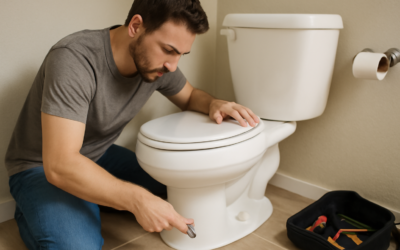
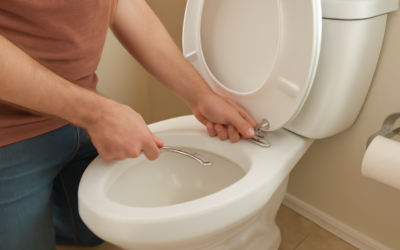
Pop off the plastic caps at the base of the toilet to expose the closet bolts. Using a wrench, tighten each nut a little at a time, alternating side to side so the toilet seats evenly. Go slowly and gently overtightening will crack the porcelain, and that crack is unrepairable.
If the bolts spin without tightening, they are likely stripped or the flange below has failed. If snugging the bolts stops the wobble, replace the caps and you are done. If the toilet still rocks even with tight bolts, the problem is the gap underneath, and shimming is the next step.
Shimming an Uneven Toilet
When the floor is uneven, the fix is to fill the gaps with shims. Plastic toilet shims are made for this; tap them gently into the gaps around the base until the toilet sits firm and level. Use a small level or simply press on the rim to confirm the rocking is gone before fully tightening the bolts.
Once stable, trim the excess shim flush with a utility knife and seal the base with a bead of 100% silicone caulk, leaving a small gap at the back. The caulk locks the shims in place, keeps the toilet from shifting, and stops mop water from seeping underneath. Never use wood shims that can rot in a wet environment.
When You Need to Re-Seat the Toilet
If tightening and shimming do not solve it, or if you smell sewer gas or see water at the base, the wax ring is likely compromised and the toilet needs to be pulled and re-seated. Shut off the water, drain the tank and bowl, disconnect the supply line, and lift the toilet off the bolts. Scrape away the old wax, inspect the flange for cracks, and check that it sits flush with the finished floor.
Replace the wax ring (or use a reusable rubber gasket), install fresh closet bolts, and lower the toilet straight down, pressing firmly to compress the seal. If the flange is broken, a repair ring or replacement flange is needed first. Re-seating sounds intimidating but is a manageable afternoon job.
Diagnosing the Real Cause
Before you start tightening and shimming, take a moment to diagnose so you fix the right thing. Push the toilet gently in several directions and note how it moves. If it rocks front to back, the flange or floor levelness is usually the culprit; if it shifts side to side, loose bolts are the most likely first suspect. Look for water at the base, a telltale sign the seal is already compromised, and sniff for sewer gas, which points to a broken seal or flange.
Run your finger around the base to feel for gaps between the porcelain and the floor; those gaps are where shims will go. Check whether the bolt caps are loose or the bolts spin freely when you turn them, which indicates stripped bolts or a failed flange. Pulling the toilet for a quick visual inspection of the flange is worthwhile if the simpler fixes do not hold, because a cracked flange will undo any amount of tightening.
Knowing the cause keeps you from chasing the wrong fix. Tightening bolts on a toilet that is really rocking because the flange is broken just delays the inevitable, and overtightening in that situation risks cracking the bowl. A two-minute diagnosis saves you from doing the job twice.
Preventing Future Wobble
After any fix, run several flushes and watch the base for leaks over the next day or two before caulking. A properly set toilet should not move at all when you push on it from any direction. Periodically check the bolts, since normal use can loosen them over months.
A toilet that moves side to side is your home’s way of flagging a problem early. Tighten the bolts, shim the gaps, and re-seat with a fresh seal if needed, and you will protect your floor from hidden water damage. Handle it now while it is a quick, inexpensive fix, and you will avoid the far costlier repair of a damaged subfloor down the road.