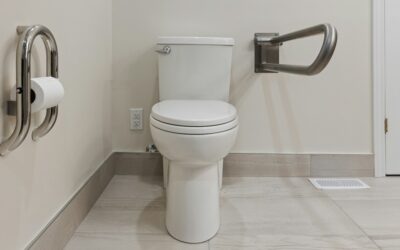
Most homeowners never think about this measurement until they install a new toilet and realize it feels wrong. The standard toilet seat height is 14 to 15 inches from the finished floor to the top of the seat, but comfort-height and ADA-compliant models sit at 17 to 19 inches. That seemingly small difference changes how your knees, hips, and back feel during every use of the toilet. Picking the right height for your household is a decision that affects daily life for as long as that toilet stays in place, which is typically 20 to 40 years.
Part of our Bathroom Remodeling & Flooring guide — explore the full guide →
- The Three Standard Heights
- Choosing the Right Height for Your Household
- Measuring Existing Toilets Correctly
- Installation Factors That Change Effective Height
- Toilet Seat Options and Their Height Contribution
- Rough-in Dimensions and Compatibility
- Pros and Cons Summary
- Remodel and Resale Considerations
- Installation Difficulty Either Way
The Three Standard Heights
Toilet manufacturers produce three distinct seat heights, each suited to different users and situations.
Standard Height (14 to 15 inches)
The traditional residential standard since the early 20th century. Seat tops sit 14 to 15 inches above the finished floor, which aligns well with shorter adults and children. Squatting mechanics are slightly better for digestion because the knees sit higher than the hips, but the posture requires more work from the legs to stand up. Models at this height cost $130 to $350 for quality two-piece toilets.
Comfort Height or Chair Height (17 to 19 inches)
Matches the seat height of a standard dining chair, hence the alternate name. This height dominates new construction and renovation installs, now representing roughly 75 percent of toilets sold in the United States. Easier on knees and hips, especially for taller adults and seniors. The trade-off is a less optimal squatting angle, which some people compensate for with a Squatty Potty footstool. Pricing runs $180 to $450 for similar-quality models.
ADA-Compliant Height (17 to 19 inches)
Required in commercial buildings and many public restrooms under the Americans with Disabilities Act. Seat height must be 17 to 19 inches above the floor to the top of the seat, measured per ADA Standard 604.4. Most comfort-height residential toilets meet ADA seat height requirements, but full ADA compliance also requires specific grab bar placement, clearances, and flush control location.
Choosing the Right Height for Your Household
Match the height to the people using it rather than defaulting to one standard. Practical recommendations:
- Adults under 5 feet 6 inches: Standard 14 to 15 inch models feel more natural
- Adults 5 feet 6 inches to 6 feet: Either height works, personal preference rules
- Adults over 6 feet tall: Comfort height saves knees and hips
- Households with young children: Standard height or a stool for the comfort-height model
- Seniors aging in place: Comfort height or ADA-compliant reduces fall risk
- Anyone with hip, knee, or back issues: Comfort height almost always wins
- Guest bathrooms: Comfort height suits the broadest range of visitors
Measuring Existing Toilets Correctly
Measure from the finished floor surface to the top of the closed seat lid. Not to the rim, not to the tank. That final measurement tells you exactly what any replacement needs to match or change. Pay attention to finished floor level, not subfloor, because a 3/4 inch thick tile installation changes the effective height of the bowl.
Installation Factors That Change Effective Height
Several variables affect how high the finished toilet sits even when the bowl itself is a known size.
- Wax ring or waxless seal thickness: Adds 1/4 to 3/8 inch
- Flange height relative to floor: Code requires flange on top of finished floor, not recessed
- Toilet seat type: Slow-close seats add 1/2 to 3/4 inch; regular seats add 1/4 to 1/2 inch
- Tile or flooring under toilet: Choice of flooring can change height by 1/4 to 3/4 inch
When replacing a toilet to match a specific seat elevation, buy the seat first and measure the assembled stack before drilling any new bolt holes.
Toilet Seat Options and Their Height Contribution
The seat itself adds varying amounts depending on design. Standard molded plastic seats add roughly 3/4 inch to the bowl rim. Padded or cushioned seats (sometimes called raised or elevated seats for medical use) can add 2 to 5 inches, bringing a standard toilet into comfort-height territory without replacing the fixture.
Dedicated raised toilet seat attachments designed for post-surgery recovery or mobility limitations install over the existing seat and add a removable 2, 4, or 6 inch lift. Models with integrated arms from brands like Drive Medical cost $45 to $130 and work as temporary solutions before committing to a comfort-height replacement.
Rough-in Dimensions and Compatibility
Changing the seat height when replacing a toilet is straightforward because nearly all residential toilets use the same floor flange and a standard 12-inch rough-in (distance from finished wall behind toilet to center of drain). Older homes may have 10-inch or 14-inch rough-ins, which limit replacement options but do not prevent height changes.
Verify rough-in by measuring from the wall to the center of the two bolts holding the existing toilet down. Plus or minus 1/4 inch is normal. Anything outside 12 inches rough-in needs either an offset flange or a toilet specifically made for non-standard rough-ins.
Pros and Cons Summary
Weighing the two main options at a glance:
- Standard height pros: Better squatting angle, fits children, lower cost, more design variety
- Standard height cons: Hard on knees and hips for tall or older adults, requires more effort to stand up
- Comfort height pros: Easier sitting and standing, better for most adults, ADA-compatible
- Comfort height cons: Children need a stool, slightly worse elimination mechanics, feet may not touch floor for shorter adults
Remodel and Resale Considerations
Real estate agents and appraisers confirm that comfort-height toilets slightly increase resale appeal, especially for buyers over 40. Homes with standard-height toilets in every bathroom sometimes face light buyer objections, though not enough to affect list price. If you are remodeling a forever home, pick based on the occupants. If you are flipping or updating for sale within five years, comfort height is the safer bet because it appeals to the largest buyer demographic.
Installation Difficulty Either Way
Replacing a toilet with a different-height model takes the same time and skill as replacing with the same height. Budget 90 minutes and about $20 in materials for wax ring, closet bolts, and supply line. No plumbing code variance is required for changing seat elevation as long as the drain connection remains correct. Most homeowners can complete this swap themselves with a helper and basic hand tools. The elevation decision is yours to make freely without structural constraints, so choose the height your body will thank you for thousands of times over the coming years.