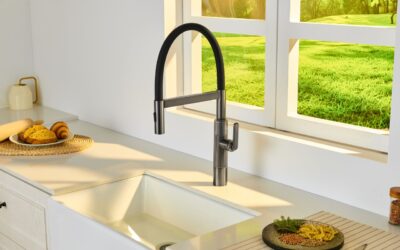
Wave your hand and the water flows, and there are no smudged handles, no cross-contamination, and no faucet left running while you scrub. A touchless bathroom sink faucet brings the hygiene and convenience of commercial restrooms into the home, and the technology has matured to the point where these faucets are reliable, affordable, and genuinely worth considering for any bathroom. They cut water waste, keep surfaces cleaner, and add a modern touch that guests notice. But sensor placement, power source, and reliability vary between models, so choosing well matters. This guide covers how they work, what to look for, and whether the upgrade fits your home.
Part of our Bathroom Remodeling & Flooring guide — explore the full guide →
Beyond the wow factor, the practical benefits are real. Families with kids, anyone concerned about germs, and households looking to trim their water bill all have reason to look closely at these faucets.
- How Touchless Faucets Work
- Key Benefits
- Sensor Types and Placement
- Power Options: Batteries vs. Hardwired
- Installation Considerations
- Price Ranges and What to Expect
- Temperature Control on Touchless Models
- Best Rooms and Uses for Touchless Faucets
- Caring for a Touchless Faucet
- Common Drawbacks to Consider
- Final Thoughts
How Touchless Faucets Work
A touchless faucet uses an infrared or motion sensor, usually mounted at the base of the spout, to detect your hands. When you place them within range, the sensor triggers a small solenoid valve that opens the water flow, and it shuts off when you pull away. Most models let you preset the temperature, or include a small manual lever or handle to adjust hot and cold. The sensor and valve are powered either by batteries or an AC adapter, and better units include an automatic timeout that stops the water after a set period to prevent accidental running.
The result is water that flows only when you need it, hands-free, with no handle to touch before or after washing.
Key Benefits
- Better hygiene: No touching a handle with dirty hands before you wash, or with clean hands after. Ideal for reducing the spread of germs.
- Water savings: Water runs only while your hands are present, cutting waste from faucets left running. Many models save 30 to 50 percent versus manual use.
- Convenience: Hands full or messy? Just wave. Great for kids, elderly users, and anyone with mobility challenges.
- Cleaner faucet: No fingerprints or toothpaste smears on the handle to wipe away.
- Modern appeal: A sleek, high-tech look that elevates a bathroom remodel.
Sensor Types and Placement
Where the sensor sits affects daily usability. Base-mounted sensors on the front of the spout are the most common and respond when you put hands directly under the water. Some models place the sensor on the side, which can reduce accidental activation when you reach across the sink. Look for a faucet with an adjustable detection range, so it does not trigger every time you reach for the soap or brush your teeth nearby. Reliable models from Moen, Kohler, and Delta have well-tuned sensors that avoid the frustrating false triggers cheaper units are known for.
Power Options: Batteries vs. Hardwired
This is a practical decision that affects long-term convenience:
- Battery-powered: Most residential models run on AA or C batteries, or a lithium pack, lasting one to two years. Easy to install anywhere since no outlet is needed, but you will replace batteries periodically.
- AC-powered (hardwired): Plugs into a nearby outlet or wires in, so no batteries to change. Requires an accessible power source under the sink.
- Hybrid: Some models use AC power with battery backup, offering the best of both.
For most bathrooms, a battery model is simplest. If you have an outlet under the vanity, hardwired eliminates the only real maintenance chore these faucets have.
Installation Considerations
Touchless faucets install much like standard faucets, with the added step of connecting the sensor’s control box and power source. Most fit a standard single-hole or three-hole sink, and manufacturers include mounting hardware and quick-connect lines. You will mount the faucet, connect the supply lines, attach the solenoid valve and control box under the sink, and insert batteries or plug in the adapter. Budget 45 to 90 minutes for a confident DIYer with basic tools: an adjustable wrench, a basin wrench, and a screwdriver. Confirm you have room under the sink for the small control box before buying.
Price Ranges and What to Expect
- $60 to $120: Entry-level touchless faucets. Functional but may have less refined sensors.
- $120 to $250: The reliable middle tier from major brands with solid-brass bodies, good sensors, and spot-resist finishes.
- $250 to $500+: Premium models with temperature memory, smart-home integration, and designer finishes.
As with most fixtures, a mid-range faucet from a reputable brand offers the best combination of dependable sensing, durability, and warranty support.
Temperature Control on Touchless Models
One question people always ask is how you set the water temperature when there is no traditional handle to turn. Touchless faucets handle this in a few ways. The simplest models include a small manual lever or a mixing valve, usually on the side or base, that you set once to a comfortable temperature, after which the sensor simply turns that pre-mixed flow on and off. More advanced faucets have temperature memory and let you adjust the mix, sometimes even through a small dial or a smart-home app. A few high-end units offer a swipe or gesture control to nudge the temperature warmer or cooler. When shopping, decide how much temperature control you want, since a basic single-temperature model is fine for a powder room but a primary bathroom may benefit from adjustable mixing.
Best Rooms and Uses for Touchless Faucets
While any bathroom can benefit, touchless faucets shine in certain situations. Guest and powder rooms are ideal, since visitors appreciate not touching a handle and the faucet always looks clean and smudge-free. Family bathrooms shared by children benefit hugely, because kids are notorious for leaving faucets running and for spreading germs, and the automatic shutoff solves both. Bathrooms used by elderly family members or anyone with arthritis or limited grip strength gain real accessibility, since waving a hand is far easier than gripping and turning a handle. Homes focused on water conservation see measurable savings across every sink. About the only place to think twice is a bathroom where you frequently fill containers or need precise, sustained flow, where a manual override becomes important.
Caring for a Touchless Faucet
Maintenance is minimal but not zero. Wipe the sensor window periodically with a soft damp cloth, since a film of soap scum or toothpaste over the infrared sensor can cause erratic detection or false triggers. Clean the aerator every few months to keep the flow strong, soaking it in vinegar if you have hard water. For battery models, note roughly when you installed the batteries so a slow response does not catch you off guard, since a fading battery is the most common cause of a sluggish sensor. Avoid harsh abrasive cleaners on the finish, and if the faucet ever stops responding entirely, check the battery or power connection first before assuming the electronics have failed, as that solves the vast majority of issues.
Common Drawbacks to Consider
Touchless faucets are not perfect. Cheaper units can suffer false triggers or fail to detect dark or fast-moving hands. Battery replacement is a minor recurring task. The electronic components mean there are more parts that could eventually fail than in a purely mechanical faucet, though quality models are quite reliable. And in a power or battery outage, some models default to off, though most include a manual override. Buying from an established brand mitigates nearly all of these concerns.
Final Thoughts
A touchless bathroom sink faucet delivers meaningful benefits in hygiene, water savings, and everyday convenience, and the technology is now dependable enough for confident home use. Choose a model with a well-tuned, adjustable sensor, decide between battery and hardwired power based on your under-sink setup, and stick with a trusted brand in the $120 to $250 range for the best reliability. Install it in an afternoon, and you get a cleaner, more efficient, and impressively modern faucet that your whole household will appreciate every single day.