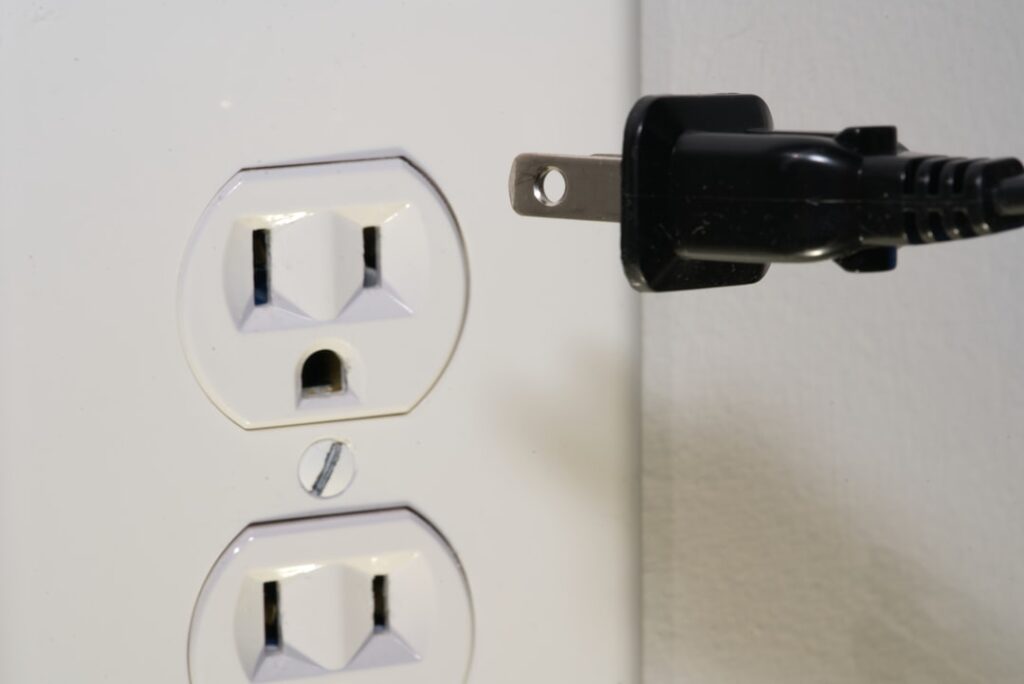
Reaching for a screwdriver to “check if a wire is hot” is how people end up in the emergency room. The right tool removes all guesswork, and understanding the types of electrical tester available helps you pick the one that matches your skill level and the job in front of you. From a $15 pen that beeps near live voltage to a $100 multimeter that reads exact numbers, each tool has a clear purpose. Knowing which is which keeps your DIY electrical work both accurate and safe.
- Non-Contact Voltage Testers
- Plug-In Outlet Testers
- Multimeters: The All-in-One Tool
- Continuity Testers
- Solenoid (Wiggy) Testers
- Receptacle Analyzers and GFCI Testers
- Voltage and Circuit Testers for the Panel
- Safety Practices for Every Tester
- Clamp Meters for Current Measurement
- Choosing the Right Tester for the Job
Non-Contact Voltage Testers
If you buy only one tester, make it this one. A non-contact voltage tester (NCVT) is a pen-shaped tool that lights up and beeps when it senses voltage, without touching any bare metal. You simply hold the tip near an outlet, switch, or wire. Models like the Klein NCVT-1 or Fluke 1AC run $15 to $30 and detect 50 to 1,000 volts AC.
They’re perfect for confirming a circuit is dead before you work on it. The one limitation is precision; an NCVT tells you voltage is present or absent, not how much. Always test it on a known live source first to confirm the battery and sensor work.
Plug-In Outlet Testers
These compact three-prong devices plug straight into a standard 120-volt receptacle and use a pattern of indicator lights to reveal wiring faults. A glance tells you whether an outlet is wired correctly, has an open ground, reversed polarity, or an open neutral. Many include a GFCI test button to confirm that protected outlets trip properly.
At $8 to $20, an outlet tester is the simplest way to audit every receptacle in a home, especially in an older house or a recent purchase where you don’t trust the previous wiring.
Multimeters: The All-in-One Tool
A digital multimeter is the most versatile tester you can own. It measures voltage (AC and DC), current in amps, and resistance in ohms, displaying exact numbers on a screen. That precision lets you diagnose problems an indicator light never could, like a voltage drop or a failing component.
- Budget models: $20 to $40, fine for basic household checks
- Mid-range (Fluke 101, Klein MM400): $50 to $100, durable and accurate
- Auto-ranging feature: picks the correct scale for you, ideal for beginners
The tradeoff is a learning curve. You need to know which setting to use and how to place the probes safely, so this is a tool for users ready to read a manual.
Continuity Testers
A continuity tester checks whether a complete electrical path exists between two points, useful for finding a broken wire, a blown fuse, or confirming a switch works. It sends a tiny current through a de-energized circuit and lights up or beeps if the path is intact. Standalone units cost under $10, though most multimeters include a continuity mode.
Critical safety note: only use a continuity tester on circuits with the power off. Testing a live circuit can damage the tool and shock you.
Solenoid (Wiggy) Testers
Favored by professional electricians, a solenoid voltage tester uses a vibrating mechanism rather than a battery to indicate voltage and rough magnitude. Because it draws a small load, it isn’t fooled by “ghost voltage” that can trick high-impedance digital meters. These rugged tools, often called Wiggys, handle the demanding conditions of commercial work but offer less precision than a multimeter.
Receptacle Analyzers and GFCI Testers
Beyond the basic plug-in tester, more advanced receptacle analyzers measure actual voltage, detect false grounds, and read line impedance to flag wiring that’s technically connected but unsafe under load. These run $40 to $80 and are popular with home inspectors. A dedicated GFCI tester confirms that ground-fault outlets in kitchens, bathrooms, and outdoor locations trip within the required time, which a standard outlet tester only checks roughly.
If you’re buying a home or have outlets that feel warm or spark, an analyzer gives you data a simple light pattern can’t.
Voltage and Circuit Testers for the Panel
Working at the breaker panel calls for tools rated to handle higher current safely. A two-pole voltage tester reads the exact voltage between conductors and is the standard for verifying that 240-volt circuits, like those for dryers and ranges, are truly de-energized. Always confirm the tester’s CAT rating matches the environment; a CAT III or CAT IV rating is required for panel work, where surge energy is far higher than at a wall outlet.
Safety Practices for Every Tester
No tool replaces good habits. Whatever device you reach for, follow the same core rules every time you work:
- Test before you trust: verify the tester works on a known live source first
- Check, then check again: confirm a circuit is dead before and after shutting the breaker
- Wear protection: insulated gloves and safety glasses for anything beyond a quick pen check
- Mind the CAT rating: match the tester to the voltage and location
- One hand rule: keep one hand in your pocket near live panels to avoid a path across your chest
Clamp Meters for Current Measurement
When you need to measure how much current a circuit or appliance draws without disconnecting anything, a clamp meter is the tool. You simply open the jaws around a single wire, and the meter reads the amperage flowing through it via magnetic induction. This is invaluable for diagnosing an overloaded circuit, a motor pulling too many amps, or an appliance that trips a breaker. Quality clamp meters run $40 to $100, and many newer models combine clamp current readings with standard multimeter functions in one tool.
For homeowners troubleshooting a breaker that keeps tripping, a clamp meter quickly reveals whether the circuit is genuinely overloaded or whether a faulty device is the cause.
Choosing the Right Tester for the Job
For most homeowners, the ideal kit is a non-contact voltage pen plus a plug-in outlet tester, covering the two most common tasks: confirming a wire is dead and verifying an outlet is wired right. Add a multimeter once you tackle appliance repair or troubleshooting. Whichever of the types of electrical tester you choose, always verify the tool works on a known live source first, wear insulated gloves for anything beyond a quick check, and shut off the breaker when in doubt. The right tester turns a dangerous guessing game into a safe, confident job.