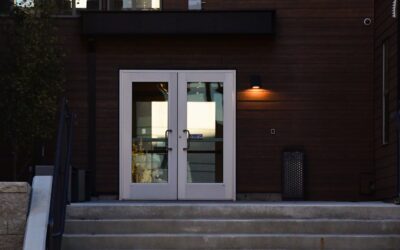
The front door is the only piece of your house that returns more than 100 percent of its installed cost at resale, according to the most recent Cost vs Value report. Yet most homeowners spend more time picking paint colors than choosing the actual door behind them. Understanding the types of exterior doors available in 2026 lets you balance security, energy efficiency, curb appeal, and budget on a purchase that lasts 25-50 years. There are more options than the big-box catalog suggests, and the right one depends on your climate, exposure, and how often the door gets used.
Part of our Windows & Doors guide — explore the full guide →
The Three Material Categories
Exterior doors come in three main material types, each with distinct performance and cost profiles. Style options layer on top of these base materials.
- Steel: 24-gauge to 16-gauge galvanized steel skins over a polyurethane foam core. Highest security, lowest cost, best for low-exposure entries. $250-$900 for a slab.
- Fiberglass: molded composite skins over a wood or steel frame with foam core. Best all-around for residential entries. $400-$1,800 for a slab.
- Wood: solid wood, engineered wood core, or stave-core construction. Premium feel and customization, requires the most maintenance. $700-$5,000+ for a slab.
Styles That Define Function
Material is the engineering choice. Style is the architectural choice. The eight most common styles cover nearly every residential application.
- Single entry door: standard 36 in x 80 in slab. The default front door.
- Door with sidelights: single door flanked by 12-14 inch glass panels. Adds light to entry foyers.
- Double or French entry doors: two operable doors meeting at the center. Wide openings 5-8 ft.
- Dutch door: horizontally split so the top half opens independently. Useful for kitchens and pet households.
- Sliding patio door: large glass panels on a track. Best for tight clearance situations.
- French patio door: hinged double doors with full-light glass panels.
- Folding or accordion door: multiple panels that stack against a jamb. Premium price for indoor-outdoor flow.
- Storm door: secondary protective door over the primary entry. $200-$500 typical.
Steel Doors: Strongest Value for Most Homes
Steel doors carry the highest security rating of any residential type. A 20-gauge steel skin over a foam core is genuinely difficult to kick in, and most modern steel doors meet the 1.6 inch ANSI A156.39 grade for forced entry resistance. The polyurethane foam core gives an R-value of about R-6 for a 1.75 inch thick door, comparable to a fiberglass slab.
The downsides are real. Steel dents easily from kid scooters and dog claws. South-facing exposure can run the surface temperature past 140°F, which transfers heat into the entry. And while modern steel doors do not rust the way 1980s steel did, scratches that reach the substrate need to be primed and repainted within months in coastal climates.
Recommended for: rear and side entries, garages with interior access, cost-conscious primary entries on shaded exposures.
Fiberglass: The Default Premium Choice
Fiberglass dominates the new construction market for good reason. The molded composite skin can be made to look convincingly like stained wood (Therma-Tru Classic Craft, Plastpro Mahogany Series) or a smooth painted finish (Pella Architect, ProVia Embarq). The core delivers R-7 to R-10, the highest of any standard door type.
Fiberglass does not warp, swell, rot, or rust. The textured wood-grain skins still need staining or painting, but a quality factory-applied finish can last 8-12 years before refresh. Composite frames eliminate the rot issues that plague wood-jamb doors after 15-20 years.
Recommended for: front entries on any exposure, particularly homes in the Sun Belt, coastal regions, or areas with extreme freeze-thaw cycles.
Wood Doors: When Authenticity Matters
A solid mahogany or knotty alder door is one of the few products that genuinely looks better at year 20 than year 1. The grain and grain figure of a top-quality wood entry are difficult to replicate in fiberglass, even at the high end. The premium pays off in heritage homes, farmhouse and Craftsman styles, and any project where the front door is the architectural focal point.
Realistic maintenance is yearly inspection of the finish, refinishing every 4-7 years depending on exposure, and full strip-and-refinish at year 12-15. Direct south or west exposure punishes wood doors faster than any other variable. A 36-inch deep porch overhang doubles the time between refinishes.
Engineered or stave-core construction (Simpson Performance Series, TruStile TM Series) resists warping better than solid lumber and costs roughly 20-30 percent less than solid wood while keeping the visual.
Patio and Specialty Door Decisions
Sliding glass doors maximize light and minimize swing clearance. Modern aluminum-clad wood frames (Marvin Ultimate Sliding, Andersen 400 Series) deliver U-factors as low as 0.27 with low-E glass packages. Vinyl-frame sliders run cheaper at $1,200-$3,500 installed for a 6-foot unit, while clad-wood premium models hit $4,500-$9,500.
French patio doors look elegant but lose floor space to swing arc. They work best where the indoor area can absorb 20-25 sq ft of clearance. For tight floor plans, sliding French doors (Andersen E-Series Frenchwood Gliding) combine the look with the space efficiency.
Folding or accordion doors (LaCantina, NanaWall) deliver dramatic indoor-outdoor flow but cost $1,200-$2,000 per linear foot installed. Reserve them for kitchens or great rooms with a real outdoor living area beyond.
Energy Efficiency Specs to Compare
Look at three numbers on the NFRC label.
- U-factor: rate of heat transfer. Lower is better. Aim for 0.30 or lower in cold climates, 0.40 or lower in hot.
- Solar Heat Gain Coefficient (SHGC): fraction of solar heat passing through. Lower is better in hot climates (under 0.30), higher in heating-dominated climates.
- Air leakage: cubic feet per minute per sq ft. ENERGY STAR requires 0.30 cfm or less.
Installation Cost and DIY Reality
Slab swap (existing frame stays) runs $250-$600 in labor. Pre-hung replacement (new frame and threshold) runs $400-$1,200. Full new opening with framing changes runs $800-$2,500. Add the door cost on top.
Slab swaps are within reach of a handy homeowner. Pre-hung replacement is challenging because plumb, level, and square tolerances are tight, and a poorly installed entry leaks air, water, and heat for the life of the door. For your front entry, hire a competent installer unless you have framed doors before.