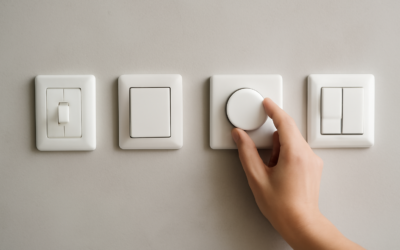
Light switches seem simple until you stand in the electrical aisle staring at 40 options. Single-pole, 3-way, 4-way, dimmer, timer, occupancy sensor, smart — each types of light switches serves a specific purpose, and installing the wrong one means the lights either will not work at all or will not work the way you expect. This guide explains every common switch type, when you need each one, and what they cost so you can make confident choices for new construction, renovations, or simple replacements.
Single-Pole Switches
The most basic and common switch in residential wiring. A single-pole switch controls one light or group of lights from one location. It has two terminals plus a ground — flip it up for on, down for off. If you walk into a room, flip one switch, and the light turns on, that is a single-pole switch.
Standard toggle single-pole switches cost $1-$3 each. Decorator-style rocker switches (the flat paddle type) cost $2-$5 and provide a cleaner, more modern look. Both function identically — the difference is purely aesthetic. Replacing a toggle with a rocker takes 10 minutes and uses the same wiring and wall box. Every homeowner should be comfortable swapping single-pole switches, as it is the simplest electrical task in a house.
Three-Way and Four-Way Switches
Three-way switches control one light from two different locations — the top and bottom of a staircase, both ends of a hallway, or two entrances to a room. They have three terminals (plus ground) and no on/off markings because the switch position depends on the other switch’s state. A pair of 3-way switches work together; one alone does nothing useful.
Four-way switches add a third control point between two 3-way switches. A long hallway with three entrances uses two 3-ways at the ends and one 4-way in the middle. Four-way switches have four terminals and install between the travelers of the 3-way pair. They cost $5-$8 each and are less common in typical homes, but essential in open floor plans with multiple entry points to a single room.
Dimmer Switches
Dimmers adjust light output from full brightness to a dim glow, saving energy and setting mood. Modern dimmers work with LED bulbs, but compatibility matters — not every dimmer handles every LED. Look for dimmers labeled “LED compatible” or “CL” (CFL/LED). The Lutron Diva CL ($20-$25) is the most widely recommended residential dimmer and works with virtually all dimmable LED bulbs.
Single-pole dimmers replace standard single-pole switches using the same wiring. Three-way dimmers replace one of the two 3-way switches in a pair — the other stays as a standard 3-way. You can dim from the dimmer location and toggle on/off from the other location. Smart dimmers from Lutron Caseta ($55-$65) and TP-Link Kasa ($25-$35) add app control and voice assistant integration while maintaining physical dimming capability.
Smart Switches
Smart switches connect to your home Wi-Fi or a proprietary hub and allow control through phone apps, voice assistants (Alexa, Google Home, Siri), and automated schedules. Unlike smart bulbs, smart switches control the entire fixture and work with any bulb type — you do not need specialty bulbs in every socket.
- Lutron Caseta ($50-$65): Requires a Lutron Smart Bridge hub ($80). Rock-solid reliability, works with all major voice assistants. The professional’s choice
- TP-Link Kasa Smart Switch ($20-$25): No hub required, connects directly to Wi-Fi. Good budget option with solid app
- Leviton Decora Smart ($35-$45): Wi-Fi-based with HomeKit support for Apple users. Available in dimmer and switch versions
- Inovelli Blue Series ($40-$50): Zigbee-based, requires a Zigbee hub (SmartThings, Hubitat). Advanced features including LED notification bar and scene control
Most smart switches require a neutral wire in the switch box — older homes (pre-1980) may not have one. Lutron Caseta and some Inovelli models work without a neutral wire, making them the best options for older wiring. Check your switch box before purchasing: pull the switch out and look for a white wire connected with a wire nut (not connected to the switch itself). That is the neutral.
Specialty Switches
Several niche switch types solve specific problems:
- Timer switches ($15-$25): Automatically turn off after a set time (5, 10, 15, 30, 60 minutes). Perfect for bathroom exhaust fans, closet lights, and garage lights
- Occupancy/vacancy sensors ($15-$30): Turn lights on when you enter and off when you leave. Leviton IPS02 ($20) detects motion up to 900 sq ft. Great for laundry rooms, pantries, and closets
- Pilot light switches ($8-$12): A small LED illuminates when the switch is on, confirming that a hidden light (attic, basement, exterior) is active
- Weatherproof switches ($10-$20): Enclosed in a waterproof cover for outdoor use. Required by code for exterior locations exposed to weather
Choosing the Right Switch Style
Beyond function, switch style affects your home’s aesthetic. Toggle switches (the traditional up-down lever) suit older and traditional homes. Decorator-style rocker switches (flat paddle) are the modern standard and come in the widest variety of colors and smart options. Screwless wall plates ($3-$5 each) upgrade the look of any switch by hiding the mounting screws behind a snap-on cover.
Match switch color to your wall plates and room design. White switches on white plates are the default. Light almond works better with cream or warm-toned walls. Black or dark bronze switches make a design statement on accent walls. Lutron offers 25+ colors across their product lines, letting you match switches precisely to any wall color.